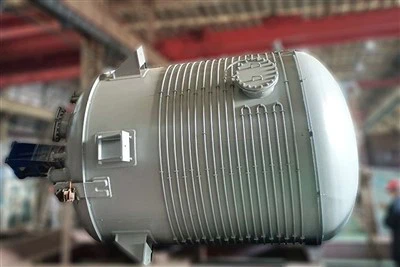
Hey there! As a supplier of Drying Towers, I've seen firsthand how crucial it is to understand the impact of pressure drop on these essential pieces of equipment. In this blog, I'm gonna break down what pressure drop is, why it matters for Drying Towers, and how it can affect your operations. So, let's dive in!
What's Pressure Drop Anyway?
Pressure drop is basically the difference in pressure between two points in a system. In the context of a Drying Tower, it's the decrease in pressure as the gas or air flows through the tower. You can think of it like water flowing through a pipe. If there's a blockage or a narrow section in the pipe, the water has to work harder to get through, and there's a drop in pressure. The same principle applies to the gas or air in a Drying Tower.
There are a few factors that can cause pressure drop in a Drying Tower. One of the main ones is the resistance of the packing material inside the tower. Packing is used to increase the surface area for mass transfer between the gas and the liquid (usually a desiccant) in the tower. But as the gas flows through the packing, it has to navigate around the pieces of packing, which creates friction and causes the pressure to drop.
Another factor is the flow rate of the gas. If the gas is flowing too fast, it can cause more turbulence and increase the pressure drop. On the other hand, if the flow rate is too slow, the drying process may not be efficient. So, finding the right balance is key.
Why Does Pressure Drop Matter?
Now, you might be wondering, "Why should I care about pressure drop in my Drying Tower?" Well, it turns out that pressure drop can have a big impact on the performance and efficiency of the tower, as well as on your overall operating costs.
Impact on Performance
A high pressure drop can reduce the efficiency of the drying process. When the pressure drop is too high, the gas may not flow evenly through the tower, which can lead to uneven drying. This means that some parts of the gas may not be dried properly, while others may be over-dried. As a result, the quality of the dried gas may not meet your requirements.
In addition, a high pressure drop can also increase the energy consumption of the system. The blower or compressor that is used to move the gas through the tower has to work harder to overcome the pressure drop. This means that more energy is required to maintain the desired flow rate, which can increase your operating costs.
Impact on Equipment Life
Pressure drop can also have an impact on the life of your Drying Tower and other equipment in the system. A high pressure drop can cause excessive stress on the tower and its components, which can lead to premature wear and tear. This can increase the frequency of maintenance and replacement, which can also add to your operating costs.


How to Manage Pressure Drop
So, what can you do to manage pressure drop in your Drying Tower? Here are a few tips:
Choose the Right Packing Material
The type of packing material you choose can have a big impact on the pressure drop in your Drying Tower. Some packing materials have a lower resistance to gas flow than others, which can help to reduce the pressure drop. When choosing a packing material, consider factors such as the surface area, porosity, and shape of the packing. You may also want to consult with a Drying Tower expert to get their recommendations.
Optimize the Flow Rate
As I mentioned earlier, finding the right flow rate is crucial for minimizing pressure drop. You need to balance the need for efficient drying with the need to keep the pressure drop within acceptable limits. This may require some trial and error, but with the right monitoring and control systems in place, you should be able to find the optimal flow rate for your system.
Regular Maintenance
Regular maintenance is essential for keeping your Drying Tower in good working condition and minimizing pressure drop. This includes cleaning the packing material, checking for any blockages or leaks in the system, and replacing any worn or damaged components. By keeping your Drying Tower well-maintained, you can ensure that it operates efficiently and effectively for years to come.
Related Equipment and Their Connection to Pressure Drop
It's also worth mentioning that pressure drop isn't just an issue for Drying Towers. It can also affect other types of equipment in your process, such as U-Tube Heat Exchanger, Storage Vessel, and Stripping Tower.
In a U-Tube Heat Exchanger, for example, pressure drop can affect the heat transfer efficiency. If the pressure drop is too high, the fluid may not flow evenly through the tubes, which can reduce the amount of heat transfer that occurs. Similarly, in a Storage Vessel, pressure drop can affect the filling and emptying rates, as well as the overall capacity of the vessel.
In a Stripping Tower, pressure drop can impact the separation efficiency. If the pressure drop is too high, the vapor may not be able to rise through the tower properly, which can lead to incomplete separation of the components.
So, when you're designing or operating a system that includes a Drying Tower, it's important to consider the impact of pressure drop on all the other equipment in the system as well.
Conclusion
In conclusion, pressure drop is an important factor to consider when it comes to the performance and efficiency of your Drying Tower. By understanding what causes pressure drop, why it matters, and how to manage it, you can ensure that your Drying Tower operates at its best and helps you to achieve your drying goals.
If you're in the market for a new Drying Tower or need help with optimizing the performance of your existing one, I'd love to hear from you. We're a leading supplier of Drying Towers and can provide you with high-quality equipment and expert advice. Just reach out to us to start the conversation about your specific needs.
References
- Perry, R. H., & Green, D. W. (Eds.). (1997). Perry's Chemical Engineers' Handbook. McGraw-Hill.
- Sinnott, R. K. (2005). Coulson & Richardson's Chemical Engineering: Volume 6 - Chemical Engineering Design. Butterworth-Heinemann.