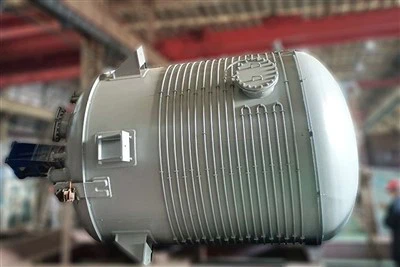
Hey there! As a supplier of Drying Towers, I've seen firsthand how crucial it is to keep these machines in tip - top shape. One of the most important maintenance tasks is knowing when a Drying Tower needs regeneration. In this blog, I'll share with you the signs that indicate it's time for a regeneration.
1. Reduced Moisture Removal Efficiency
The primary job of a Drying Tower is to remove moisture from the air or gas passing through it. When you start to notice that the output is moister than it should be, that's a big red flag. For example, if you're using the Drying Tower in a manufacturing process where dry air is essential for product quality, and you start seeing defects due to moisture, it's likely that the tower is losing its drying power.
This could be because the desiccant inside the tower has reached its saturation point. Desiccants are materials that absorb moisture, and over time, they can't hold any more. When this happens, they need to be regenerated to restore their moisture - absorbing capabilities.
2. Increased Pressure Drop
Another sign is an increased pressure drop across the Drying Tower. Pressure drop is the difference in pressure between the inlet and the outlet of the tower. As the desiccant gets saturated with moisture, it becomes more difficult for the air or gas to pass through. This causes the pressure at the inlet to increase while the pressure at the outlet remains relatively stable, resulting in a higher pressure drop.
You can measure the pressure drop using pressure gauges installed at the inlet and outlet of the tower. If you notice a steady increase in the pressure drop over time, it's a sign that the desiccant is getting clogged and needs regeneration. A high pressure drop not only indicates a problem with the drying efficiency but can also lead to increased energy consumption as the system has to work harder to push the air or gas through the tower.
3. Fluctuations in Product Quality
If your Drying Tower is used in an industrial process where the quality of the final product depends on dry conditions, any fluctuations in product quality can be a sign that the tower needs regeneration. For instance, in the pharmaceutical industry, where moisture can affect the stability and efficacy of drugs, a Drying Tower that isn't working properly can lead to inconsistent product quality.
You might start seeing variations in product weight, texture, or chemical composition. These changes can be costly in terms of production losses and potential regulatory issues. So, if you notice any unexpected changes in the quality of your products, it's worth checking the condition of your Drying Tower.
4. Longer Drying Cycles
Normally, your Drying Tower should be able to dry the air or gas within a specific time frame. However, if you start to notice that the drying cycles are taking longer than usual, it's a sign that something is wrong. This could be due to the desiccant being less effective at removing moisture, which means the system has to run for a longer period to achieve the desired level of dryness.
Longer drying cycles not only slow down the production process but also increase energy costs. If you find yourself constantly extending the drying times, it's a clear indication that the Drying Tower needs regeneration.
5. Visual Inspection of the Desiccant
A simple visual inspection of the desiccant can also provide clues about whether the Drying Tower needs regeneration. Over time, the desiccant can change color and texture. For example, some desiccants change from a light color to a darker one as they absorb moisture.
If you open the tower and see that the desiccant looks wet, clumped together, or has a different color than when it was new, it's likely that it needs to be regenerated. However, be careful when performing a visual inspection as some desiccants can be hazardous to handle. Always follow proper safety procedures.
How Regeneration Works
Regeneration is the process of removing the moisture from the desiccant so that it can be used again. There are different methods of regeneration, but the most common ones involve heating the desiccant or using a purge gas to remove the moisture.
When you heat the desiccant, the moisture evaporates, and the desiccant returns to its original state. This method is often used in industrial Drying Towers because it's relatively fast and effective. On the other hand, using a purge gas involves passing a dry gas through the desiccant to carry away the moisture.
Related Equipment
In a lot of industrial setups, Drying Towers work in conjunction with other equipment. For example, a Stripping Tower is often used to remove volatile components from a liquid stream. The Drying Tower can then be used to dry the gas that comes out of the Stripping Tower. Similarly, a Reactor might produce a gas that needs to be dried before further processing. And a Scrubber Tower can be used to clean the gas before it enters the Drying Tower.


Understanding how these different pieces of equipment interact is important for maintaining the overall efficiency of your industrial process. If one piece of equipment isn't working properly, it can affect the performance of the others.
Conclusion
In conclusion, keeping an eye out for the signs that a Drying Tower needs regeneration is essential for maintaining its efficiency and ensuring the quality of your products. Whether it's reduced moisture removal efficiency, increased pressure drop, fluctuations in product quality, longer drying cycles, or visual changes in the desiccant, these signs can help you determine when it's time for regeneration.
If you're in the market for a new Drying Tower or need help with the maintenance and regeneration of your existing one, don't hesitate to reach out. We're here to provide you with the best solutions and support for all your Drying Tower needs. Contact us to start a procurement discussion and let's work together to keep your industrial processes running smoothly.
References
- Perry, R. H., & Green, D. W. (Eds.). (1997). Perry's Chemical Engineers' Handbook. McGraw - Hill.
- Walas, S. M. (1988). Chemical Process Equipment: Selection and Design. Butterworth - Heinemann.