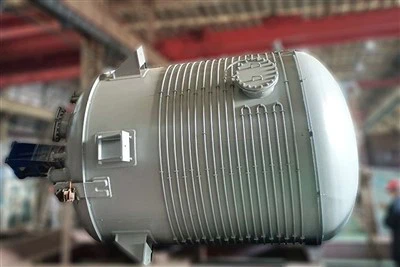
Hey there! As a supplier of Stripping Towers, I've had my fair share of experience dealing with different packing materials. And let me tell you, choosing the right packing material is crucial for the efficient operation of a Stripping Tower. So, in this blog, I'm gonna share with you the characteristics of good packing materials for a Stripping Tower.
First off, let's talk about surface area. A good packing material should have a large surface area. Why? Well, the larger the surface area, the more contact there is between the liquid and the gas in the tower. This increased contact allows for better mass transfer, which is the whole point of a Stripping Tower. When the liquid and gas have more opportunities to interact, the contaminants or substances you're trying to remove from the liquid can more easily transfer to the gas phase. For example, if you're stripping volatile organic compounds (VOCs) from water, a packing material with a large surface area will help those VOCs move from the water into the gas stream more effectively.
Another important characteristic is porosity. Porous packing materials are great because they allow the liquid and gas to flow through them easily. This means there's less resistance to the flow, which reduces the pressure drop across the tower. A lower pressure drop is a good thing because it saves energy. You don't want to waste a bunch of energy just pushing the liquid and gas through the tower. Plus, it also helps maintain a stable operation of the tower. Some common porous packing materials include ceramic saddles and metal rings. These materials have a lot of small holes and channels that allow for smooth flow.
Chemical resistance is also a must. The packing material has to be able to withstand the chemicals it comes into contact with in the Stripping Tower. If the material isn't chemically resistant, it can corrode or degrade over time. This can lead to a whole bunch of problems, like reduced efficiency, increased maintenance costs, and even tower failure. For instance, if you're using a Stripping Tower to treat acidic wastewater, you need a packing material that can resist the corrosive effects of the acid. Materials like polypropylene and Teflon are known for their excellent chemical resistance and are often used in such applications.
Mechanical strength is crucial too. The packing material needs to be strong enough to handle the weight of the liquid and the gas flowing through the tower, as well as any vibrations or shocks that might occur during operation. If the material is too weak, it can break or collapse, which will disrupt the flow and reduce the tower's performance. Metal packing materials, such as stainless steel, are usually very strong and can withstand high pressures and forces. They're a popular choice for large-scale Stripping Towers where mechanical strength is a major concern.
Good wetting properties are another key characteristic. The packing material should be able to get wet easily by the liquid. When the material is well-wetted, it forms a thin film of liquid on its surface. This film is important because it increases the contact area between the liquid and the gas, enhancing the mass transfer process. Some materials, like certain types of plastics, have good wetting properties and can be effectively used in Stripping Towers.


Now, let's talk about cost. Of course, you want a packing material that is cost - effective. You don't want to break the bank just to get the right packing for your Stripping Tower. While high - performance materials might be great, they can also be very expensive. So, you need to find a balance between performance and cost. Sometimes, a slightly less expensive material that still meets most of your requirements can be a good choice. You can also consider the long - term costs, such as maintenance and replacement costs, when evaluating the cost - effectiveness of a packing material.
In addition to these characteristics, the packing material should also be easy to install and remove. This makes maintenance and cleaning of the Stripping Tower much easier. You don't want to spend a lot of time and effort just to install or replace the packing. Some packing materials come in modular designs that can be quickly and easily installed or removed, which is a big plus.
When it comes to specific applications, different industries might have different requirements for packing materials. For example, in the petrochemical industry, where the Stripping Towers are often used to separate different hydrocarbons, the packing materials need to be able to handle high temperatures and pressures. In the food and beverage industry, the packing materials need to be food - grade and comply with strict hygiene standards.
Now, if you're in the market for a Stripping Tower or need to replace the packing materials in your existing tower, we've got you covered. We're a leading supplier of Stripping Towers, and we offer a wide range of high - quality packing materials that meet all the characteristics I've mentioned above. Whether you need a packing material with high surface area, excellent chemical resistance, or good mechanical strength, we can help you find the right one for your specific needs.
And by the way, if you're also interested in other types of pressure vessels, check out our U-Tube Heat Exchanger, Scrubber Tower, and Storage Vessel. These products are also designed to meet the highest industry standards and can be a great addition to your industrial setup.
If you have any questions or want to discuss your specific requirements, don't hesitate to reach out. We're always here to help you make the best decision for your Stripping Tower and packing materials. Let's work together to ensure the efficient and reliable operation of your industrial processes.
References
- Perry, R. H., & Green, D. W. (Eds.). (1997). Perry's Chemical Engineers' Handbook. McGraw - Hill.
- Sinnott, R. K. (2005). Coulson & Richardson's Chemical Engineering: Volume 6 - Chemical Engineering Design. Butterworth - Heinemann.