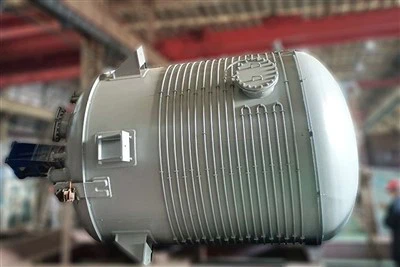
Polymerization is a fundamental process in the chemical industry, used to create a wide range of polymers with diverse properties and applications. At the heart of this process are polymerization reactors, which play a crucial role in controlling the reaction conditions and determining the quality of the final polymer product. There are two main types of polymerization reactors: batch and continuous. As a leading supplier of polymerization reactors, I have witnessed firsthand the unique characteristics and applications of each type. In this blog post, I will explore the key differences between batch and continuous polymerization reactors, highlighting their advantages and limitations.
Batch Polymerization Reactors
Batch polymerization reactors are the traditional workhorses of the polymer industry. In a batch process, a fixed amount of reactants is charged into the reactor at the beginning of the reaction. The reaction then proceeds under controlled conditions of temperature, pressure, and agitation until it reaches completion. Once the reaction is finished, the polymer product is discharged from the reactor, and the reactor is cleaned and prepared for the next batch.
One of the primary advantages of batch polymerization reactors is their flexibility. They can be easily adapted to produce small quantities of different polymers or to test new formulations. This makes them ideal for research and development, as well as for the production of specialty polymers with unique properties. Additionally, batch reactors offer better control over the reaction conditions, allowing for precise adjustment of temperature, pressure, and reaction time. This results in a higher degree of product consistency and quality.
However, batch polymerization reactors also have some limitations. One of the main drawbacks is their low productivity. Since the reactor must be emptied, cleaned, and recharged between batches, there is significant downtime between each production cycle. This can lead to higher production costs and lower overall efficiency. Additionally, batch reactors are more labor-intensive, as they require manual intervention for charging, discharging, and cleaning operations.
Continuous Polymerization Reactors
Continuous polymerization reactors, on the other hand, operate on a continuous basis. Reactants are continuously fed into the reactor, and the polymer product is continuously withdrawn. This allows for a continuous flow of production, eliminating the downtime associated with batch reactors. As a result, continuous reactors are much more productive and efficient than batch reactors, making them suitable for large-scale production.
Another advantage of continuous polymerization reactors is their ability to maintain a steady-state operation. This means that the reaction conditions, such as temperature, pressure, and reactant concentrations, remain constant throughout the process. This leads to a more uniform polymer product with consistent properties. Additionally, continuous reactors can be easily automated, reducing the need for manual labor and improving process safety.
However, continuous polymerization reactors also have some challenges. One of the main difficulties is the control of the reaction kinetics. Since the reactants are continuously fed into the reactor, it can be challenging to maintain the optimal reaction conditions and prevent side reactions. This requires careful design and optimization of the reactor system, as well as advanced control strategies. Additionally, continuous reactors are less flexible than batch reactors, as they are designed for a specific production rate and polymer type. Changing the production rate or switching to a different polymer may require significant modifications to the reactor system.
Key Differences in Design and Operation
The differences between batch and continuous polymerization reactors are also reflected in their design and operation. Batch reactors are typically smaller in size and have a simpler design. They are often equipped with a stirrer to ensure uniform mixing of the reactants and to control the heat transfer. The reactor is usually heated or cooled using a jacket or a coil, and the reaction temperature is controlled by adjusting the flow rate of the heating or cooling medium.
Continuous polymerization reactors, on the other hand, are larger and more complex in design. They can be classified into several types, including Continuous Stirred Tank Reactor (CSTR), tubular reactors, and loop reactors. CSTRs are the most commonly used type of continuous reactor. They consist of a tank with a stirrer and an inlet and outlet for the reactants and products. The stirrer ensures uniform mixing of the reactants, while the inlet and outlet allow for continuous flow of the materials. Tubular reactors, on the other hand, are long, narrow tubes where the reaction takes place as the reactants flow through the tube. Loop reactors are similar to tubular reactors, but they have a loop configuration that allows for better mixing and heat transfer.
In terms of operation, batch reactors are typically operated in a batch mode, where the reactants are charged into the reactor at the beginning of the reaction and the product is discharged at the end. The reaction time is determined by the desired degree of conversion and the reaction kinetics. Continuous reactors, on the other hand, are operated in a continuous mode, where the reactants are continuously fed into the reactor and the product is continuously withdrawn. The residence time of the reactants in the reactor is determined by the flow rate and the volume of the reactor.
Applications and Suitability
The choice between batch and continuous polymerization reactors depends on several factors, including the production volume, the type of polymer, and the desired product quality. Batch reactors are well-suited for small-scale production, research and development, and the production of specialty polymers. They offer flexibility and control over the reaction conditions, making them ideal for producing polymers with unique properties. Examples of polymers that are commonly produced in batch reactors include polyurethanes, polyesters, and some types of elastomers.
Continuous reactors, on the other hand, are more suitable for large-scale production of commodity polymers. They offer high productivity and efficiency, making them cost-effective for producing large quantities of polymers. Examples of polymers that are commonly produced in continuous reactors include polyethylene, polypropylene, and polystyrene.
Other Considerations
In addition to the differences in productivity, flexibility, and design, there are other considerations when choosing between batch and continuous polymerization reactors. One of the main considerations is the capital cost. Batch reactors are generally less expensive to purchase and install than continuous reactors. However, the operating cost of batch reactors can be higher due to the downtime between batches and the labor-intensive nature of the process. Continuous reactors, on the other hand, require a higher initial investment but offer lower operating costs in the long run.
Another consideration is the safety and environmental impact. Batch reactors are generally considered to be safer than continuous reactors, as they operate at lower pressures and temperatures. Additionally, batch reactors produce less waste and emissions, as the reactants are fully consumed in each batch. Continuous reactors, on the other hand, require more sophisticated safety systems and monitoring to ensure safe operation. They also produce more waste and emissions, as the continuous flow of reactants and products can lead to the formation of by-products and pollutants.


Conclusion
In conclusion, batch and continuous polymerization reactors have distinct differences in terms of productivity, flexibility, design, and applications. Batch reactors offer flexibility and control over the reaction conditions, making them suitable for small-scale production and research and development. Continuous reactors, on the other hand, offer high productivity and efficiency, making them ideal for large-scale production of commodity polymers. As a supplier of polymerization reactors, we understand the unique requirements of each type of reactor and can provide customized solutions to meet the specific needs of our customers.
If you are considering purchasing a polymerization reactor for your production process, we encourage you to contact us for a detailed consultation. Our team of experts will work with you to understand your requirements and recommend the most suitable reactor type and configuration. We also offer a range of related products, such as Hydrogenation Reactor and Mechanical Seal Stirred Reactor, to ensure the smooth and efficient operation of your polymerization process.
References
- Ray, W. H. (1972). Kinetics of polymerization reactions in continuous stirred tank reactors. Chemical Engineering Science, 27(7), 1299-1324.
- Hamielec, A. E., MacGregor, J. F., & Penlidis, A. (1992). Copolymerization in continuous stirred tank reactors. Advances in Polymer Science, 101, 33-75.
- Doraiswamy, L. K., & Sharma, M. M. (1984). Heterogeneous Reactions: Analysis, Examples, and Reactor Design. John Wiley & Sons.