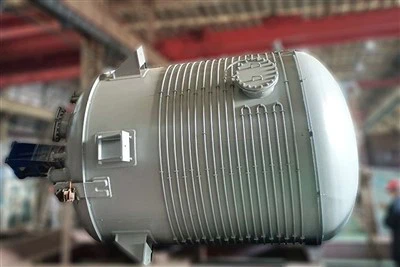
Optimizing the baffle spacing in a U-Tube Heat Exchanger is a critical aspect that can significantly enhance its performance and efficiency. As a leading supplier of U-Tube Heat Exchanger, we understand the importance of this parameter and have extensive experience in providing solutions to meet various industrial needs.
Understanding the Role of Baffles in U-Tube Heat Exchangers
Baffles play a crucial role in U-Tube Heat Exchangers. They are installed inside the shell side of the heat exchanger to direct the flow of the shell-side fluid. By creating a tortuous path for the fluid, baffles increase the fluid's velocity and turbulence, which in turn enhances the heat transfer coefficient. This means that more heat can be transferred between the tube-side and shell-side fluids in a given amount of time.
In addition to improving heat transfer, baffles also help to support the tubes. They prevent the tubes from vibrating due to the fluid flow, which can cause damage over time. Properly designed baffles can also reduce the pressure drop across the shell side, ensuring that the heat exchanger operates efficiently without consuming excessive energy.
Factors Affecting Baffle Spacing
Several factors need to be considered when determining the optimal baffle spacing in a U-Tube Heat Exchanger.


Heat Transfer Requirements
The primary goal of a heat exchanger is to transfer heat effectively. The baffle spacing directly affects the heat transfer coefficient. A smaller baffle spacing generally results in higher turbulence and a greater heat transfer coefficient. However, if the spacing is too small, it can lead to a significant increase in pressure drop, which may not be desirable in some applications. On the other hand, a larger baffle spacing may reduce the heat transfer efficiency but can also lower the pressure drop. Therefore, a balance needs to be struck between heat transfer and pressure drop based on the specific heat transfer requirements of the process.
Fluid Properties
The properties of the fluids flowing through the heat exchanger, such as viscosity, density, and thermal conductivity, also influence the baffle spacing. For highly viscous fluids, a larger baffle spacing may be required to ensure that the fluid can flow smoothly through the shell side. In contrast, for low-viscosity fluids, a smaller baffle spacing can be used to increase turbulence and enhance heat transfer.
Tube Layout
The arrangement of the tubes in the heat exchanger, known as the tube layout, can affect the baffle spacing. Different tube layouts, such as triangular, square, or rotated square, have different flow characteristics. The baffle spacing needs to be designed to work in harmony with the tube layout to optimize the flow pattern and heat transfer.
Shell Size
The size of the shell in the U-Tube Heat Exchanger is another important factor. A larger shell may require a different baffle spacing compared to a smaller shell. In general, larger shells can accommodate a wider range of baffle spacings, but the spacing still needs to be carefully selected to ensure uniform flow distribution and efficient heat transfer.
Methods for Optimizing Baffle Spacing
Computational Fluid Dynamics (CFD) Analysis
CFD analysis is a powerful tool for optimizing baffle spacing. It allows us to simulate the fluid flow and heat transfer inside the heat exchanger under different baffle spacing conditions. By analyzing the CFD results, we can visualize the flow patterns, temperature distributions, and pressure drops. This information helps us to identify the optimal baffle spacing that maximizes heat transfer while minimizing pressure drop.
Experimental Testing
Experimental testing is another effective method for optimizing baffle spacing. We can build prototypes of the U-Tube Heat Exchanger with different baffle spacings and conduct tests under real operating conditions. By measuring the heat transfer performance and pressure drop of each prototype, we can compare the results and select the best baffle spacing. Experimental testing also provides valuable data for validating the CFD models and improving the accuracy of the optimization process.
Industry Standards and Guidelines
There are several industry standards and guidelines available that provide recommendations for baffle spacing in U-Tube Heat Exchangers. These standards, such as the Tubular Exchanger Manufacturers Association (TEMA) standards, are based on extensive research and practical experience. While these standards serve as a good starting point, they may need to be adjusted based on the specific requirements of each application.
Case Studies
Let's take a look at some real-world case studies where optimizing the baffle spacing in U-Tube Heat Exchangers has led to significant improvements in performance.
Case Study 1: Chemical Processing Plant
In a chemical processing plant, a U-Tube Heat Exchanger was used to cool a hot process fluid. The original baffle spacing was causing a high pressure drop, which was increasing the energy consumption of the system. By using CFD analysis, we identified a new baffle spacing that reduced the pressure drop by 30% while maintaining the same heat transfer efficiency. This resulted in significant energy savings for the plant.
Case Study 2: Power Generation Plant
In a power generation plant, a U-Tube Heat Exchanger was used to preheat the feedwater. The existing baffle spacing was not providing sufficient heat transfer, which was affecting the overall efficiency of the power generation process. Through experimental testing, we found an optimal baffle spacing that increased the heat transfer coefficient by 20%. This led to an improvement in the plant's overall efficiency and reduced operating costs.
Conclusion
Optimizing the baffle spacing in a U-Tube Heat Exchanger is a complex but essential task. By considering the factors such as heat transfer requirements, fluid properties, tube layout, and shell size, and using methods like CFD analysis, experimental testing, and industry standards, we can achieve the optimal baffle spacing that maximizes the performance and efficiency of the heat exchanger.
As a supplier of U-Tube Heat Exchangers, we are committed to providing our customers with high-quality heat exchangers that are optimized for their specific applications. Whether you need a heat exchanger for a Storage Vessel, a Stripping Tower, or any other industrial process, we have the expertise and experience to deliver the best solution.
If you are interested in learning more about our U-Tube Heat Exchangers or would like to discuss your specific requirements, please do not hesitate to contact us. We look forward to the opportunity to work with you and help you optimize your heat transfer processes.
References
- Incropera, F. P., & DeWitt, D. P. (2002). Fundamentals of Heat and Mass Transfer. John Wiley & Sons.
- TEMA Standards, Tubular Exchanger Manufacturers Association.