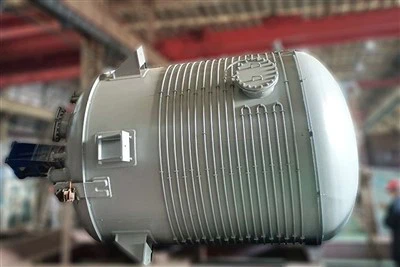
Can an Absorption Tower be used for water treatment?
Hey there! I'm a supplier of absorption towers, and I often get asked this question: Can an absorption tower be used for water treatment? Well, let's dive right in and explore this topic.
First off, what the heck is an absorption tower? In simple terms, it's a piece of equipment that uses a liquid absorbent to remove certain components from a gas stream. The basic principle involves the gas coming into contact with the absorbent liquid, and the target components in the gas dissolve or react with the liquid.
Now, when it comes to water treatment, the goal is usually to remove impurities, contaminants, or unwanted substances from water. So, can an absorption tower fit the bill? The answer is a resounding yes, and here's how.
One of the main applications of an absorption tower in water treatment is for the removal of dissolved gases. For example, water can contain gases like carbon dioxide, hydrogen sulfide, or ammonia. These gases can cause all sorts of problems, such as corrosion in pipes and equipment, bad odors, and even affect the taste of the water. An absorption tower can be used to scrub these gases out of the water.


Let's say we're dealing with carbon dioxide. We can use an alkaline absorbent in the absorption tower. When the water containing carbon dioxide passes through the tower and comes into contact with the absorbent, a chemical reaction occurs. The carbon dioxide reacts with the alkaline substance to form a soluble salt, which can then be easily removed from the water.
Another important aspect is the removal of volatile organic compounds (VOCs). VOCs are often found in industrial wastewater or contaminated groundwater. These compounds are not only harmful to the environment but can also pose health risks to humans. An absorption tower can be designed to use a suitable absorbent to capture these VOCs. The absorbent has an affinity for the VOCs, and as the water passes through the tower, the VOCs are transferred from the water phase to the absorbent phase.
The design of an absorption tower for water treatment is crucial. There are different types of absorption towers, such as packed towers and tray towers. Packed towers are filled with packing materials that provide a large surface area for the gas - liquid or liquid - liquid contact. This increased surface area enhances the mass transfer process, which is essential for effective removal of contaminants. Tray towers, on the other hand, have a series of trays where the contact between the phases occurs. Each type has its own advantages and disadvantages, and the choice depends on factors like the type of contaminants, the flow rate of the water, and the required removal efficiency.
When compared to other water treatment equipment, absorption towers have some unique benefits. For instance, compared to a U-Tube Heat Exchanger, which is mainly used for heat transfer, an absorption tower focuses on mass transfer. While a heat exchanger can be used in some water treatment processes to adjust the temperature, it can't directly remove contaminants like an absorption tower can.
Similarly, a Reactor is used for chemical reactions, but an absorption tower can perform both physical and chemical removal of substances. And a Filter Tower is great for removing solid particles, but it may not be as effective in removing dissolved gases or VOCs as an absorption tower.
However, like any piece of equipment, absorption towers also have their limitations. One of the main challenges is the regeneration of the absorbent. Once the absorbent is saturated with the contaminants, it needs to be regenerated so that it can be reused. This regeneration process can be energy - intensive and may require additional equipment and chemicals. Also, the initial investment for an absorption tower system can be relatively high, especially for large - scale water treatment plants.
But despite these challenges, the benefits of using an absorption tower in water treatment often outweigh the drawbacks. It can provide a reliable and efficient way to remove a wide range of contaminants from water, ensuring that the treated water meets the required quality standards.
If you're in the market for water treatment solutions and are considering an absorption tower, I'd love to have a chat with you. Whether you're running a small industrial facility or a large municipal water treatment plant, we can work together to find the right absorption tower for your specific needs. We have a team of experts who can help with the design, installation, and maintenance of the absorption tower system.
In conclusion, an absorption tower can definitely be used for water treatment. It offers a versatile and effective method for removing various contaminants from water. If you're interested in learning more or discussing a potential purchase, don't hesitate to reach out. Let's work together to make your water treatment process more efficient and sustainable.
References
- Perry's Chemical Engineers' Handbook, 8th Edition
- Water Treatment Principles and Design, 2nd Edition