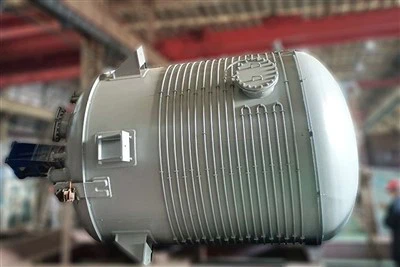
As a provider of Hydrogenation Reactors, I've witnessed firsthand the intricate dance of variables that influence the performance of these critical pieces of equipment. One such variable that holds significant sway over the operation and efficiency of a hydrogenation reactor is the hydrogen flow rate. In this blog post, I'll delve into the effects of hydrogen flow rate on a hydrogenation reactor, exploring how it impacts reaction kinetics, product quality, and overall reactor performance.
Reaction Kinetics
The hydrogen flow rate plays a crucial role in determining the rate at which hydrogenation reactions occur within the reactor. At the heart of any hydrogenation process is the interaction between hydrogen molecules and the substrate being hydrogenated. This interaction is governed by the principles of chemical kinetics, which dictate that the rate of a reaction is proportional to the concentration of the reactants and the frequency of their collisions.
In a hydrogenation reactor, the hydrogen flow rate directly affects the concentration of hydrogen within the reaction medium. A higher hydrogen flow rate leads to a greater concentration of hydrogen molecules in the reactor, increasing the likelihood of collisions between hydrogen and the substrate. This, in turn, accelerates the reaction rate, allowing for faster conversion of the substrate into the desired product.
Conversely, a lower hydrogen flow rate results in a lower concentration of hydrogen in the reactor, reducing the frequency of collisions and slowing down the reaction rate. In some cases, a very low hydrogen flow rate may even lead to incomplete hydrogenation, where only a fraction of the substrate is converted into the desired product.
It's important to note that the relationship between hydrogen flow rate and reaction rate is not always linear. At very high hydrogen flow rates, the reaction rate may reach a maximum value, beyond which further increases in hydrogen flow rate have little to no effect on the reaction rate. This phenomenon is known as mass transfer limitation, where the rate of the reaction is limited by the rate at which hydrogen can be transferred from the gas phase to the liquid phase and then to the active sites on the catalyst.


Product Quality
The hydrogen flow rate also has a significant impact on the quality of the products produced in a hydrogenation reactor. In many hydrogenation processes, the selectivity of the reaction is of utmost importance, as it determines the proportion of the desired product relative to other by-products.
A well-controlled hydrogen flow rate can help to optimize the selectivity of the hydrogenation reaction. By adjusting the hydrogen flow rate, it's possible to control the reaction conditions in such a way that the desired product is formed preferentially over other by-products. For example, in the hydrogenation of unsaturated fats, a carefully controlled hydrogen flow rate can help to minimize the formation of trans fats, which are known to have negative health effects.
On the other hand, an improper hydrogen flow rate can lead to poor product quality. A too-high hydrogen flow rate may cause over-hydrogenation, where the substrate is hydrogenated beyond the desired level, resulting in the formation of unwanted by-products. Conversely, a too-low hydrogen flow rate may lead to incomplete hydrogenation, leaving behind unreacted substrate or intermediate products that can affect the quality and stability of the final product.
Reactor Performance
In addition to its effects on reaction kinetics and product quality, the hydrogen flow rate also influences the overall performance of the hydrogenation reactor. A properly optimized hydrogen flow rate can help to ensure efficient operation of the reactor, maximizing its productivity and minimizing energy consumption.
One of the key factors affecting reactor performance is the heat transfer within the reactor. Hydrogenation reactions are often exothermic, meaning that they release heat. A high hydrogen flow rate can help to remove this heat from the reactor more effectively, preventing overheating and maintaining a stable reaction temperature. This is particularly important in large-scale hydrogenation reactors, where the heat generated by the reaction can be significant.
Another aspect of reactor performance that is affected by the hydrogen flow rate is the mixing efficiency within the reactor. A sufficient hydrogen flow rate is necessary to ensure proper mixing of the reactants, which is essential for achieving uniform reaction conditions and maximizing the reaction rate. Inadequate mixing can lead to hot spots within the reactor, where the reaction rate is much higher than in other parts of the reactor, resulting in uneven product quality and potentially reducing the overall efficiency of the reactor.
Practical Considerations
When it comes to setting the hydrogen flow rate in a hydrogenation reactor, there are several practical considerations that need to be taken into account. These include the type of reaction being carried out, the properties of the substrate and the catalyst, the design of the reactor, and the desired product specifications.
In general, the hydrogen flow rate should be optimized based on the specific requirements of the hydrogenation process. This may involve conducting a series of experiments to determine the optimal hydrogen flow rate for a given set of reaction conditions. It's also important to monitor the hydrogen flow rate continuously during the operation of the reactor and make adjustments as needed to ensure consistent performance.
Conclusion
In conclusion, the hydrogen flow rate is a critical parameter that has a profound impact on the performance of a hydrogenation reactor. By carefully controlling the hydrogen flow rate, it's possible to optimize the reaction kinetics, improve product quality, and enhance the overall efficiency of the reactor. As a Hydrogenation Reactor supplier, we understand the importance of providing our customers with reactors that are designed to operate at optimal hydrogen flow rates. Our Mechanical Seal Stirred Reactor and Polymerization Reactor are engineered to provide precise control over the hydrogen flow rate, ensuring reliable and efficient operation in a wide range of hydrogenation applications.
If you're interested in learning more about our hydrogenation reactors or have any questions about the effects of hydrogen flow rate on reactor performance, please don't hesitate to contact us. Our team of experts is always ready to assist you in finding the right solution for your specific needs.
References
- Smith, J. M., Van Ness, H. C., & Abbott, M. M. (2005). Introduction to Chemical Engineering Thermodynamics (7th ed.). McGraw-Hill.
- Levenspiel, O. (1999). Chemical Reaction Engineering (3rd ed.). Wiley.
- Fogler, H. S. (2006). Elements of Chemical Reaction Engineering (4th ed.). Prentice Hall.