


Hey there! I'm an absorption tower supplier, and I'm super stoked to chat about the role of a control system in an absorption tower. Absorption towers are pretty crucial in a bunch of industries, like chemical processing, power generation, and environmental control. They're used to remove specific components from a gas stream by transferring them into a liquid phase. And that's where the control system comes in super handy.
What's an Absorption Tower Anyway?
Before we dive into the control system, let's quickly go over what an absorption tower does. It's a vertical column where a gas stream and a liquid absorbent flow counter - currently. The gas enters at the bottom, and the liquid absorbent is introduced at the top. As the gas rises and the liquid falls, the target components in the gas dissolve into the liquid. This process helps in things like removing pollutants from industrial exhaust gases or recovering valuable substances.
The Big Deal about the Control System
A control system in an absorption tower is like the brain of the whole operation. It makes sure everything runs smoothly and efficiently. Here are some of the key roles it plays:
Flow Rate Control
One of the most important jobs of the control system is to manage the flow rates of both the gas and the liquid. If the gas flow rate is too high, the contact time between the gas and the liquid might be too short for effective absorption. On the other hand, if it's too low, the process becomes inefficient. Similarly, the liquid flow rate needs to be just right. If there's not enough liquid, it won't be able to absorb all the target components. And if there's too much, it can lead to excessive energy consumption.
The control system uses sensors to measure the flow rates and then adjusts the valves accordingly. For example, if the gas flow rate is higher than the set point, the control system will open the valve on the liquid side a bit more to ensure proper absorption.
Temperature Control
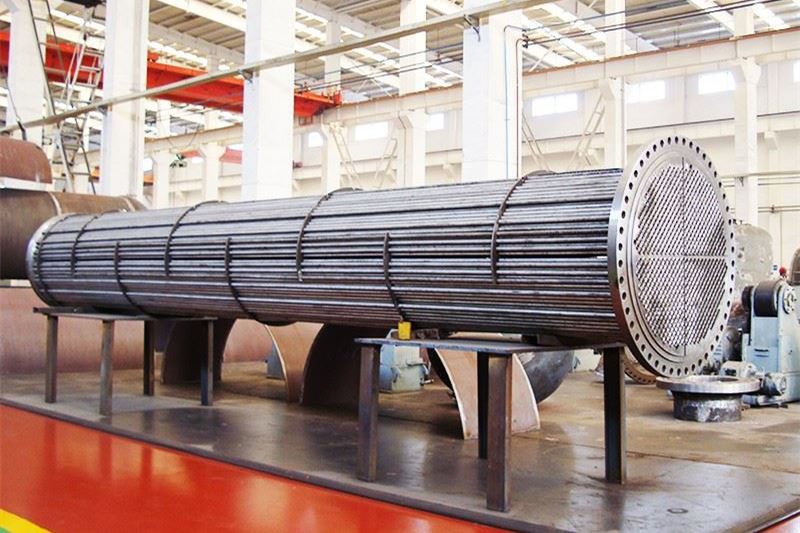
Temperature has a huge impact on the absorption process. In most cases, the absorption is more effective at lower temperatures. The control system monitors the temperature inside the tower using thermocouples or other temperature sensors. If the temperature starts to rise, it can activate cooling mechanisms, such as a [Fixed Tube Sheet Heat Exchanger](/pressure - vessels/fixed - tube - sheet - heat - exchanger.html) that cools the liquid absorbent before it re - enters the tower. This helps maintain the optimal temperature for absorption.
Pressure Control
Maintaining the right pressure in the absorption tower is also essential. If the pressure is too high, it can cause mechanical stress on the tower and its components. If it's too low, the gas might not flow through the tower properly, or the absorption efficiency can drop. The control system continuously monitors the pressure and adjusts the gas inlet and outlet valves to keep the pressure within the desired range.
Composition Control
The control system also keeps an eye on the composition of both the gas and the liquid. It uses analyzers to measure the concentration of the target components in the gas before and after absorption and in the liquid. Based on these measurements, it can adjust the operating parameters. For instance, if the concentration of the target component in the gas leaving the tower is still too high, the control system can increase the liquid flow rate or change the type of absorbent being used.
How the Control System Works
The control system in an absorption tower typically consists of three main parts: sensors, controllers, and actuators.
Sensors
Sensors are the eyes and ears of the control system. They measure various parameters like flow rate, temperature, pressure, and composition. There are different types of sensors for different parameters. For example, flow meters measure the flow rate, thermocouples measure temperature, pressure transducers measure pressure, and gas analyzers measure the composition of the gas.
Controllers
The controllers are the decision - makers. They receive the data from the sensors and compare it with the set points (the desired values). Based on this comparison, they calculate the appropriate actions to take. For example, if the temperature is higher than the set point, the controller will send a signal to activate the cooling system.
Actuators
Actuators are the muscle of the control system. They carry out the actions decided by the controllers. They can be things like valves, pumps, and fans. For example, when the controller sends a signal to increase the liquid flow rate, the actuator (a valve) will open wider to allow more liquid to flow.
Real - World Applications
In the chemical industry, absorption towers are used to remove harmful gases from the production process. The control system ensures that the emissions meet the environmental regulations. For example, in a sulfuric acid production plant, an absorption tower is used to remove sulfur dioxide from the exhaust gas. The control system makes sure that the sulfur dioxide concentration in the exhaust is below the legal limit.
In the power generation industry, absorption towers are used to remove pollutants like nitrogen oxides and sulfur dioxide from the flue gas. The control system helps optimize the absorption process, reducing the environmental impact of power plants.

Other Related Equipment
Absorption towers often work in conjunction with other types of equipment. For example, a [Filter Tower](/pressure - vessels/filter - tower.html) can be used upstream of the absorption tower to remove solid particles from the gas stream. This helps protect the absorption tower and improve its efficiency. A [Scrubber Tower](/pressure - vessels/scrubber - tower.html) can also be used in combination with an absorption tower. Scrubber towers are designed to remove large amounts of pollutants from a gas stream, and the absorption tower can then be used for more precise removal of specific components.
Why You Should Choose Our Absorption Towers
Our absorption towers come with state - of - the - art control systems. We've designed them to be highly reliable and easy to operate. The control systems are fully automated, which means you don't have to constantly monitor and adjust the parameters manually. This saves you time and reduces the risk of human error.

We also offer custom - made control systems to meet your specific requirements. Whether you need a system for a small - scale operation or a large industrial plant, we've got you covered. Our team of experts can work with you to design the perfect control system for your absorption tower.
Time to Talk Business
If you're in the market for an absorption tower or looking to upgrade your existing one, I'd love to chat with you. Our control systems can make a huge difference in the efficiency and performance of your absorption tower. Don't hesitate to reach out for a consultation and let's see how we can work together to meet your needs.
References
- Perry, R. H., & Green, D. W. (1997). Perry's Chemical Engineers' Handbook. McGraw - Hill.
- Sinnott, R. K. (2005). Coulson & Richardson's Chemical Engineering: Volume 6 - Chemical Engineering Design. Butterworth - Heinemann.


