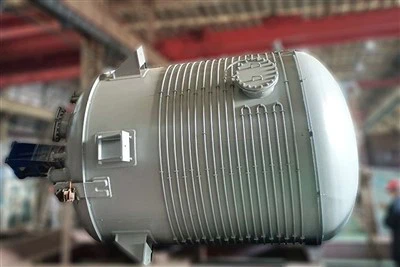
As a supplier of Filter Towers, I've witnessed firsthand the diverse needs and concerns of our clients in various industries. One question that frequently arises is about the impact of the diameter of a Filter Tower on its performance. In this blog, I'll delve into this topic, exploring how the diameter affects different aspects of a Filter Tower's operation.
Understanding the Basics of a Filter Tower
Before we discuss the impact of diameter, let's briefly understand what a Filter Tower is. A Filter Tower is a crucial piece of equipment used in many industrial processes for separating solids from liquids or gases. It operates on the principle of filtration, where the medium to be filtered passes through a filtering material, leaving the impurities behind. You can find more information about our Filter Towers on our website Filter Tower.


Flow Rate and Throughput
One of the most significant impacts of the diameter of a Filter Tower is on the flow rate and throughput. A larger diameter generally allows for a higher flow rate of the fluid or gas being filtered. This is because a wider cross - sectional area provides more space for the medium to pass through.
When the flow rate is higher, the Filter Tower can process a larger volume of the medium in a given time. For example, in a water treatment plant, a Filter Tower with a larger diameter can filter more water per hour compared to a smaller one. This increased throughput can be a critical factor for industries that require high - volume filtration, such as chemical manufacturing or power generation.
However, it's important to note that simply increasing the diameter doesn't always guarantee a proportional increase in flow rate. Other factors, such as the pressure drop across the filter media and the resistance of the filtering material, also play a role. If the filter media is too dense or the pressure drop is too high, the flow rate may not increase as expected, even with a larger diameter.
Pressure Drop
Pressure drop is another important performance parameter affected by the diameter of a Filter Tower. Pressure drop refers to the difference in pressure between the inlet and the outlet of the Filter Tower. A lower pressure drop is generally desirable as it indicates less resistance to the flow of the medium.
A larger diameter Filter Tower typically has a lower pressure drop compared to a smaller one, assuming the same flow rate and filter media. This is because the larger cross - sectional area distributes the flow more evenly, reducing the velocity of the medium and thus the frictional forces. As a result, less energy is required to push the medium through the filter, which can lead to cost savings in terms of pumping power.
On the other hand, a smaller diameter Filter Tower may experience a higher pressure drop. This can cause problems such as reduced flow rate, increased wear on the pumping equipment, and even damage to the filter media if the pressure becomes too high. Therefore, when designing a Filter Tower system, it's essential to consider the diameter in relation to the acceptable pressure drop for the application.
Filtration Efficiency
Filtration efficiency is a measure of how effectively a Filter Tower removes impurities from the medium. The diameter of the Filter Tower can have an impact on filtration efficiency in several ways.
A larger diameter Filter Tower can provide a more uniform flow distribution across the filter media. This ensures that all parts of the filter media are utilized evenly, which can improve the overall filtration efficiency. When the flow is evenly distributed, the impurities are more likely to come into contact with the filter media and be trapped, rather than bypassing the filter in areas of high - velocity flow.
In contrast, a smaller diameter Filter Tower may have a more uneven flow distribution. This can lead to areas of the filter media being over - utilized while others are under - utilized. As a result, the filtration efficiency may be reduced, and the filter media may need to be replaced more frequently.
Maintenance and Cleaning
The diameter of a Filter Tower also affects maintenance and cleaning operations. A larger diameter Filter Tower generally offers more accessibility for maintenance tasks. It's easier to inspect, clean, and replace the filter media in a tower with a larger diameter. Workers can enter the tower more easily to perform maintenance, and there is more space to maneuver tools and equipment.
In addition, a larger diameter can also accommodate larger filter elements, which may require less frequent replacement compared to smaller ones. This can reduce the downtime associated with maintenance and cleaning, improving the overall productivity of the filtration system.
Conversely, a smaller diameter Filter Tower may pose challenges for maintenance and cleaning. Limited access can make it difficult to reach all parts of the tower, and the process of replacing the filter media may be more time - consuming and labor - intensive.
Cost Considerations
When it comes to cost, the diameter of the Filter Tower has both upfront and operational implications. A larger diameter Filter Tower typically has a higher upfront cost due to the increased material requirements for construction. The larger size also means that more space is needed for installation, which may require additional infrastructure or modifications to the existing facility.
However, from an operational perspective, a larger diameter Filter Tower may offer cost savings in the long run. As mentioned earlier, it can have a lower pressure drop, which reduces the energy consumption of the pumping system. It may also require less frequent maintenance and filter media replacement, resulting in lower maintenance costs.
On the other hand, a smaller diameter Filter Tower has a lower upfront cost and requires less space for installation. But it may have higher operational costs due to increased energy consumption and more frequent maintenance.
Comparison with Other Pressure Vessels
It's interesting to compare Filter Towers with other pressure vessels, such as Fixed Tube Sheet Heat Exchanger and Scrubber Tower. While each of these vessels has its unique functions, the concept of diameter affecting performance is similar.
In a Fixed Tube Sheet Heat Exchanger, the diameter of the shell can impact the heat transfer efficiency and the flow distribution of the fluids. A larger diameter may provide more space for the tubes and a more uniform flow, improving the heat transfer rate.
Similarly, in a Scrubber Tower, the diameter affects the gas - liquid contact and the removal efficiency of pollutants. A larger diameter can allow for better dispersion of the scrubbing liquid and a more even flow of the gas, enhancing the overall performance of the scrubbing process.
Conclusion
In conclusion, the diameter of a Filter Tower has a significant impact on its performance in terms of flow rate, pressure drop, filtration efficiency, maintenance, and cost. A larger diameter generally offers advantages such as higher throughput, lower pressure drop, better filtration efficiency, and easier maintenance. However, it also comes with a higher upfront cost.
When selecting a Filter Tower for your application, it's essential to carefully consider your specific requirements, such as the desired flow rate, acceptable pressure drop, and budget. By understanding the relationship between the diameter and performance, you can make an informed decision that meets your needs and maximizes the efficiency of your filtration system.
If you're interested in learning more about our Filter Towers or discussing your specific filtration requirements, we encourage you to contact us for a detailed consultation. Our team of experts is ready to assist you in finding the best solution for your application.
References
- Perry, R. H., & Green, D. W. (1997). Perry's Chemical Engineers' Handbook. McGraw - Hill.
- McCarthy, J. F. (2005). Filtration and Separation Technology. Wiley - Interscience.