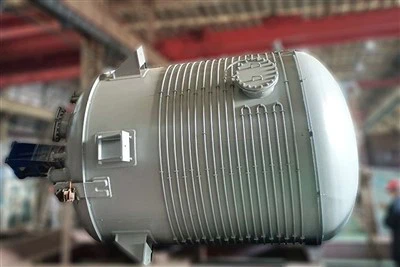
Yo, folks! As a supplier of Scrubber Towers, I'm super stoked to dive into the topic of "What is the efficiency of a Scrubber Tower?" It's a question that a lot of our customers ask, and it's crucial to understand if you're in the market for one.
First off, let's talk about what a Scrubber Tower actually does. In simple terms, a Scrubber Tower is a piece of equipment used to remove pollutants from industrial exhaust gases. It works by bringing the dirty gas into contact with a liquid, usually water or a chemical solution. The pollutants in the gas dissolve or react with the liquid, and voila! You get cleaner gas coming out the other end.
Now, when we're talking about the efficiency of a Scrubber Tower, there are a few key factors that come into play. One of the most important ones is the removal efficiency of pollutants. This is basically how well the Scrubber Tower can get rid of the bad stuff in the gas. For example, if you're dealing with sulfur dioxide (SO₂) emissions from a power plant, you want a Scrubber Tower that can remove as much of that SO₂ as possible.
The removal efficiency depends on a bunch of things. The type of scrubbing liquid is a biggie. Different chemicals have different affinities for different pollutants. For instance, a sodium hydroxide (NaOH) solution is great for removing acidic gases like SO₂ and hydrogen chloride (HCl). The contact time between the gas and the liquid also matters. The longer they're in contact, the more time the pollutants have to dissolve or react with the liquid. So, Scrubber Towers are designed to maximize this contact time.
Another factor that affects efficiency is the gas flow rate. If the gas is moving too fast through the Scrubber Tower, there might not be enough time for the pollutants to be removed effectively. On the other hand, if the flow rate is too slow, it can lead to other problems like clogging or reduced throughput. So, finding the right balance is crucial.
The design of the Scrubber Tower itself also plays a huge role. There are different types of Scrubber Towers, like packed bed scrubbers, spray tower scrubbers, and venturi scrubbers. Each type has its own advantages and disadvantages when it comes to efficiency.

Packed bed scrubbers are pretty popular. They have a bed of packing material, like plastic or ceramic rings, inside the tower. The gas flows through this packed bed, and the liquid is sprayed over it. The packing material provides a large surface area for the gas and liquid to come into contact, which helps improve the removal efficiency. However, they can be prone to clogging if the gas contains a lot of particulate matter.
Spray tower scrubbers, as the name suggests, use sprays of liquid to clean the gas. They're relatively simple in design and can handle high gas flow rates. But they might not have as high a removal efficiency as packed bed scrubbers because the contact time between the gas and liquid is shorter.
Venturi scrubbers are really good at removing particulate matter. They work by accelerating the gas through a narrow throat, which creates a high - velocity jet. The liquid is injected into this jet, and the high - velocity mixing helps to capture the particles. But they can be energy - intensive because of the need to create that high - velocity flow.
Now, let's talk about how we can measure the efficiency of a Scrubber Tower. One common way is to measure the inlet and outlet concentrations of the pollutants. You take a sample of the gas before it enters the Scrubber Tower and another sample after it comes out. Then, you calculate the percentage reduction in the pollutant concentration. For example, if the inlet concentration of SO₂ is 1000 parts per million (ppm) and the outlet concentration is 100 ppm, the removal efficiency is 90%.
But it's not just about removing pollutants. A Scrubber Tower also needs to be efficient in terms of energy consumption. Running a Scrubber Tower can use a lot of energy, especially if you're pumping large amounts of liquid or creating high - velocity gas flows. So, we're always looking for ways to make our Scrubber Towers more energy - efficient.
One way to do this is by using advanced control systems. These systems can adjust the flow rate of the liquid and the gas based on the actual pollutant levels in the gas. That way, you're not using more energy than you need to. We also use high - efficiency pumps and fans to reduce energy consumption.
In addition to energy efficiency, we also focus on the durability and maintenance requirements of our Scrubber Towers. A Scrubber Tower that breaks down all the time or requires a lot of maintenance is not very efficient in the long run. That's why we use high - quality materials and design our towers to be easy to maintain.
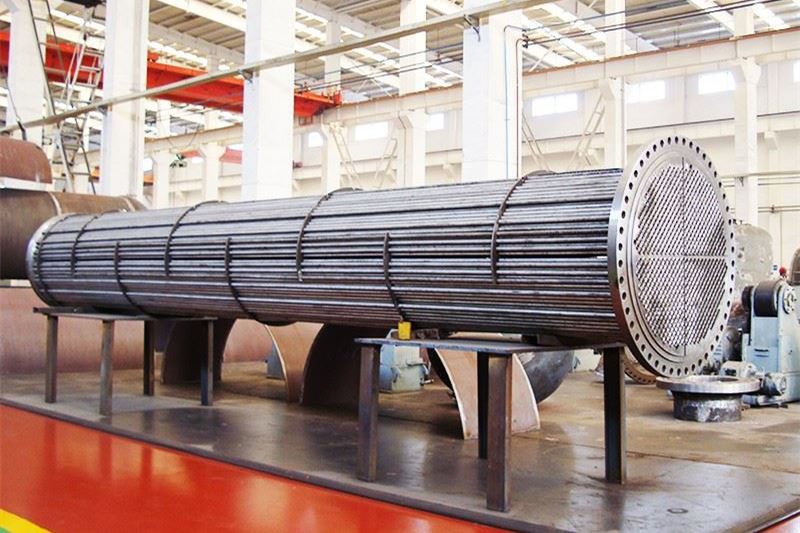
Now, I know you might be thinking, "This all sounds great, but how does it compare to other equipment?" Well, let's take a look at some related equipment. You might have heard of Fixed Tube Sheet Heat Exchanger. These are used to transfer heat between two fluids. While they have a completely different function than a Scrubber Tower, they also need to be efficient in terms of heat transfer and energy consumption.
Another piece of equipment is the Reactor. Reactors are used to carry out chemical reactions. They need to be efficient in terms of reaction rates and product yields. And then there's the Stripping Tower, which is used to separate components from a liquid mixture. Each of these pieces of equipment has its own efficiency metrics, but they all share the common goal of getting the most out of the input resources.
So, if you're in the market for a Scrubber Tower, you want to look for one that offers high removal efficiency, low energy consumption, and easy maintenance. At our company, we've spent years perfecting our Scrubber Tower designs to meet these criteria. We've worked with all kinds of industries, from power plants to chemical factories, and we know what it takes to get the job done right.
If you're interested in learning more about our Scrubber Towers or have any questions about their efficiency, don't hesitate to reach out. We're always happy to have a chat and help you find the best solution for your needs. Whether you're looking to upgrade an existing system or install a brand - new one, we've got you covered.
In conclusion, the efficiency of a Scrubber Tower is a multi - faceted concept. It's not just about removing pollutants; it's also about energy consumption, durability, and maintenance. By understanding these factors, you can make an informed decision when it comes to choosing a Scrubber Tower for your industrial processes. So, if you're ready to take the next step, give us a shout, and let's start the conversation!
References
- Perry, R. H., & Green, D. W. (Eds.). (1997). Perry's Chemical Engineers' Handbook. McGraw - Hill.
- Cheremisinoff, N. P. (2002). Air Pollution Control Technology Handbook. Butterworth - Heinemann.