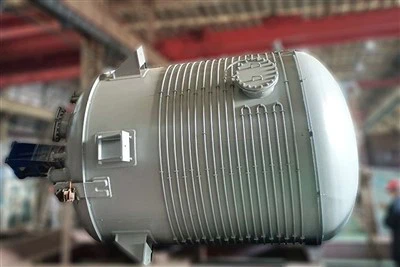
Yo! I'm stoked to chat with you about the latest technologies in pressure vessel design. As a pressure vessels supplier, I've seen a ton of cool advancements in this field over the years. And let me tell ya, it's an exciting time to be in the business!
New Materials, New Possibilities
First off, let's talk about materials. Traditional materials like carbon steel and stainless steel have been the go - to for ages, but now, we're seeing some really interesting alternatives. Composite materials are starting to make a big splash. They're lightweight, corrosion - resistant, and can handle high pressures just as well as metal vessels in many cases.
For example, fiberglass - reinforced polymers (FRPs) are being used more and more. They're great for applications where weight is a concern, like in offshore oil and gas platforms or aerospace. Since they don't corrode like metal, they also have a longer lifespan, which means less maintenance and replacement costs in the long run.
Another cool material is titanium. It's super strong and has excellent corrosion resistance, especially in harsh chemical environments. Titanium pressure vessels are a bit more expensive, but when you need that extra durability and performance, they're definitely worth the investment.
Advanced Design Software
The software used for pressure vessel design has come a long way too. Back in the day, engineers had to do a lot of manual calculations and drawings. But now, we've got some seriously powerful design software.
These programs can simulate how a pressure vessel will behave under different conditions. They can analyze stress, fatigue, and thermal effects, allowing us to optimize the design before we even start building. This not only saves time but also reduces the risk of failure.
For instance, finite element analysis (FEA) software can break down the vessel into tiny elements and calculate the forces acting on each one. This gives us a detailed picture of where the stress points are and how the vessel will respond to pressure changes. We can then make adjustments to the design to ensure it's as safe and efficient as possible.
Smart Monitoring Systems
One of the biggest game - changers in pressure vessel technology is the development of smart monitoring systems. These systems use sensors to collect data on things like pressure, temperature, and vibration in real - time.
The data is then sent to a central control system, where it can be analyzed. If there's any sign of a problem, like a sudden drop in pressure or an abnormal increase in temperature, an alert can be sent to the operators. This allows for quick action to be taken, preventing potential disasters.
For example, in a Drying Tower, smart monitoring can detect if the drying process is causing too much stress on the vessel walls. Operators can then adjust the drying parameters to avoid any damage.
Improved Manufacturing Techniques
Manufacturing techniques have also improved significantly. Precision machining has become more accurate, allowing for tighter tolerances in the production of pressure vessels. This means better - fitting components and a more reliable final product.
Automated welding processes have also made a big difference. Welding is a critical part of pressure vessel construction, and automated systems can produce consistent, high - quality welds. They can also work faster than human welders, increasing production efficiency.
Energy - Efficient Designs
In today's world, energy efficiency is a top priority. Pressure vessel designers are now focusing on creating vessels that use less energy.
For example, in a Stripping Tower, new designs are being developed to reduce the amount of energy needed for the stripping process. This can be achieved through better insulation, more efficient heat transfer mechanisms, and optimized internal flow paths.
Enhanced Safety Features
Safety is always a major concern when it comes to pressure vessels. New technologies are being developed to enhance safety even further.
One such technology is the use of rupture discs and relief valves that are more reliable. These devices are designed to release pressure in case of an over - pressurization event. Newer models are more accurate and have a longer lifespan, reducing the risk of failure.
Another safety feature is the use of double - walled vessels. These vessels have an outer wall that acts as a secondary containment in case the inner wall fails. This provides an extra layer of protection, especially for vessels that contain hazardous materials.
Customization and Modular Design
Customers are increasingly looking for customized pressure vessels to meet their specific needs. Thanks to modern design and manufacturing techniques, we can now offer a high level of customization.
We can also use modular design concepts. This means that the pressure vessel can be made up of pre - fabricated modules that can be easily assembled on - site. This reduces construction time and allows for easier maintenance and upgrades in the future.
The Future of Pressure Vessel Design
The future of pressure vessel design looks bright. I expect to see even more advancements in materials science, with the development of new super - strong and lightweight materials.

The integration of artificial intelligence (AI) and machine learning into design and monitoring systems is also on the horizon. AI can analyze large amounts of data faster and more accurately than humans, allowing for even better decision - making when it comes to pressure vessel design and operation.
Get in Touch
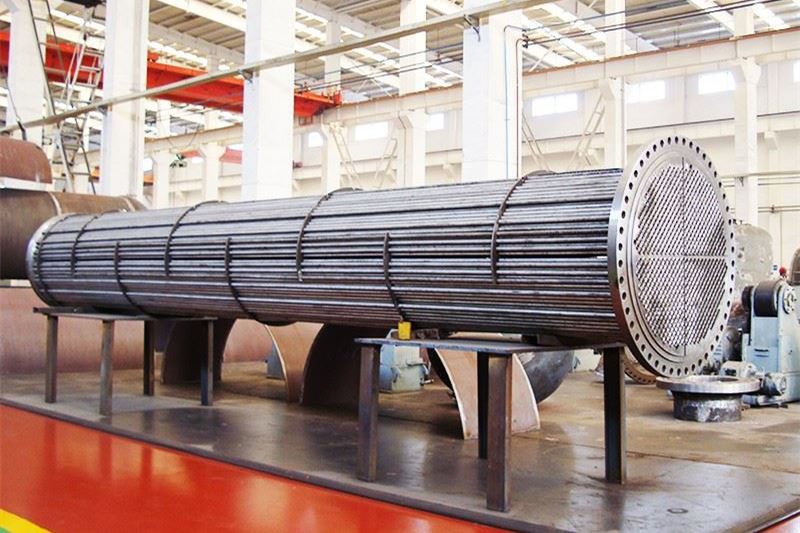
If you're in the market for a pressure vessel, whether it's a Fixed Tube Sheet Heat Exchanger, a drying tower, or something else entirely, I'd love to chat with you. We've got the latest technologies at our disposal to ensure you get a high - quality, reliable, and cost - effective pressure vessel. Don't hesitate to reach out for a consultation and let's start working on your project together!
References
- ASME Boiler and Pressure Vessel Code.
- International Institute of Welding (IIW) publications on welding technology.
- Various research papers on composite materials in pressure vessel design.