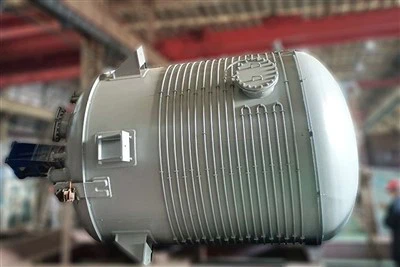
Stainless steel clad plate is a composite material that has gained significant attention in various industries due to its unique combination of properties. As a supplier of Stainless Steel Clad Plate, I am excited to share in - depth knowledge about its definition, manufacturing, applications, and advantages.
Definition of Stainless Steel Clad Plate
A stainless steel clad plate is a type of composite metal plate that consists of two or more layers of different metals bonded together. Typically, it has a base layer and a cladding layer. The base layer is usually made of a carbon steel or low - alloy steel, which provides the strength and structural support. The cladding layer is made of stainless steel, which offers excellent corrosion resistance, aesthetic appeal, and other beneficial properties.
The bonding between the base layer and the cladding layer is crucial. It should be strong enough to ensure the two layers act as a single unit under normal operating conditions. This bonding can be achieved through different methods, such as explosive welding, roll bonding, and diffusion bonding. Each method has its own characteristics and is suitable for different applications and production requirements.
Manufacturing Methods
Explosive Welding
Explosive welding is a popular method for manufacturing stainless steel clad plates. In this process, an explosive charge is placed on top of the cladding material, which is then positioned above the base material. When the explosive is detonated, a high - velocity impact occurs between the two materials. This impact generates a high - pressure shock wave that causes the atoms of the two metals to intermix at the interface, forming a strong metallurgical bond. The advantage of explosive welding is that it can produce clad plates with a large area and can bond a wide range of metal combinations. You can find more information about our explosive - welded Stainless Steel Clad Plate on our website Stainless Steel Clad Plate.
Roll Bonding
Roll bonding involves heating the base and cladding materials to a suitable temperature and then passing them through a set of rollers. The pressure applied by the rollers causes the two materials to bond together. This method is suitable for continuous production and can produce clad plates with a relatively uniform thickness. However, the bonding strength may be affected by factors such as surface cleanliness and rolling parameters.
Diffusion Bonding
Diffusion bonding is a process where the base and cladding materials are placed in contact with each other and heated to a high temperature under pressure. At this high temperature, the atoms of the two metals diffuse across the interface, forming a bond. Diffusion bonding can produce high - quality bonds, but it usually requires a long processing time and a controlled atmosphere.
Properties of Stainless Steel Clad Plate
Corrosion Resistance
One of the most significant advantages of stainless steel clad plates is their excellent corrosion resistance. The stainless steel cladding layer acts as a protective barrier, preventing the base material from being exposed to corrosive environments. This makes stainless steel clad plates suitable for use in industries such as chemical processing, marine engineering, and food processing, where corrosion is a major concern.
Mechanical Properties
The base layer of the stainless steel clad plate provides the necessary strength and toughness. The combination of the strong base layer and the corrosion - resistant cladding layer results in a material with good overall mechanical properties. Stainless steel clad plates can withstand high - stress applications and have good fatigue resistance.
Cost - Effectiveness
Compared to using solid stainless steel plates, stainless steel clad plates offer a cost - effective solution. Since only a thin layer of stainless steel is used as the cladding, the amount of expensive stainless steel required is reduced. This makes stainless steel clad plates a more economical choice for large - scale projects without sacrificing the corrosion - resistant properties.
Applications of Stainless Steel Clad Plate
Chemical Industry
In the chemical industry, stainless steel clad plates are widely used in the construction of reactors, storage tanks, and pipelines. The corrosion resistance of the stainless steel cladding layer protects the equipment from the corrosive chemicals, ensuring long - term operation and reducing maintenance costs.
Marine Industry
The marine environment is highly corrosive due to the presence of saltwater. Stainless steel clad plates are used in the construction of ship hulls, offshore platforms, and other marine structures. The corrosion - resistant cladding layer helps to prevent rusting and extends the service life of the structures.
Food Processing Industry
In the food processing industry, hygiene and corrosion resistance are of utmost importance. Stainless steel clad plates are used in the manufacturing of food storage containers, processing equipment, and conveyor systems. The smooth surface of the stainless steel cladding is easy to clean and does not contaminate the food products.
Power Generation Industry
Stainless steel clad plates are also used in the power generation industry, especially in nuclear power plants and fossil - fuel power plants. They are used in the construction of heat exchangers, condensers, and other components that are exposed to high - temperature and corrosive environments.
Comparison with Other Clad Plates
Copper Steel Clad Plate
Copper Steel Clad Plate combines the high electrical and thermal conductivity of copper with the strength of steel. While copper steel clad plates are mainly used in electrical and electronic applications, stainless steel clad plates are more focused on corrosion - resistant applications.
Nickel - base Steel Clad Plate
Nickel - base Steel Clad Plate offers excellent high - temperature resistance and corrosion resistance in harsh environments. Stainless steel clad plates are more commonly used in general - purpose corrosion - resistant applications due to their relatively lower cost and good overall performance.
Quality Control and Standards
As a supplier of stainless steel clad plates, we adhere to strict quality control measures. We conduct various tests on our products, including ultrasonic testing to detect any bonding defects, shear strength testing to ensure the bonding strength, and corrosion resistance testing to verify the performance of the cladding layer. Our products also comply with international standards such as ASTM, ASME, and GB, which ensures their quality and reliability.
Conclusion
In conclusion, stainless steel clad plate is a versatile composite material that combines the strength of steel with the corrosion resistance of stainless steel. Its unique properties make it suitable for a wide range of applications in different industries. Whether you are in the chemical, marine, food processing, or power generation industry, stainless steel clad plates can provide a cost - effective and reliable solution.


If you are interested in our Stainless Steel Clad Plate products and would like to discuss your specific requirements, we welcome you to contact us for procurement and further technical consultations. Our team of experts is ready to assist you in finding the most suitable clad plate solutions for your projects.
References
- ASM Handbook Committee. ASM Handbook Volume 6: Welding, Brazing, and Soldering. ASM International, 1993.
- Welding Handbook Committee. Welding Handbook. American Welding Society, 2007.
- T. L. Anderson. Fracture Mechanics: Fundamentals and Applications. CRC Press, 2005.