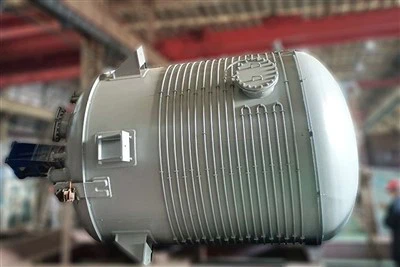
Hey there! I'm a supplier of coal chemical pilot plants, and I've been in this industry for quite a while. Over the years, I've seen firsthand the differences between a coal chemical pilot plant and a full - scale plant. So, I thought I'd share my insights with you all.
Scale and Capacity
The most obvious difference between a coal chemical pilot plant and a full - scale plant is the scale and capacity. A pilot plant is like a small - scale version of the real deal. It's designed to test and optimize processes on a relatively small level. For example, if we're talking about producing a certain coal - derived chemical, a pilot plant might produce only a few kilograms or tons per day.
On the other hand, a full - scale plant is built to produce large quantities of products. It can churn out hundreds or even thousands of tons of chemicals every day. This difference in scale means that the equipment used in each type of plant is also quite different. In a pilot plant, the equipment is smaller and more flexible, allowing for easy modifications and adjustments. For instance, we offer Hydrogenation Test Unit which is perfect for small - scale hydrogenation processes in a pilot plant setting. These units are designed to be compact and easy to operate, making them ideal for testing new reaction conditions.
In a full - scale plant, the equipment is much larger and more specialized. It's built to handle high - volume production and requires a significant investment. The infrastructure around the full - scale plant, such as storage facilities and transportation systems, also needs to be much more extensive to deal with the large amounts of raw materials and finished products.
Purpose and Function
The purpose of a coal chemical pilot plant is mainly for research, development, and process optimization. It's a place where scientists and engineers can test new ideas, experiment with different reaction conditions, and evaluate the feasibility of a new process. For example, if a company wants to develop a new method of converting coal into synthetic fuels, they'll first build a pilot plant. Here, they can study how different catalysts work, what the optimal temperature and pressure are, and how to control the reaction to get the best yield.
We also offer Polymer Rubber Test Unit which can be used in a pilot plant to test the production of polymer - based rubber materials from coal - derived feedstocks. This helps in understanding the properties of the final product and making any necessary adjustments to the process.
A full - scale plant, however, is focused on commercial production. Once a process has been successfully tested and optimized in a pilot plant, it's time to scale it up and start making products for the market. The full - scale plant has to operate continuously and efficiently to meet the demand for the products. It has to adhere to strict quality control standards and production schedules.
Cost and Investment
Building and operating a coal chemical pilot plant is generally much less expensive than a full - scale plant. The initial investment for a pilot plant is relatively low because the equipment is smaller and the infrastructure requirements are not as extensive. The operating costs are also lower since the production volume is small. This makes it accessible for research institutions, small - to - medium - sized companies, and startups to conduct research and development in the coal chemical field.
In contrast, a full - scale plant requires a huge amount of capital. The cost of purchasing large - scale equipment, building a large - scale production facility, and setting up the necessary infrastructure can run into millions or even billions of dollars. There are also high operating costs associated with a full - scale plant, including the cost of raw materials, energy, labor, and maintenance.
Flexibility and Adaptability
Pilot plants are extremely flexible. They can be easily reconfigured to test different processes or products. If a new idea comes up, the pilot plant can quickly be adjusted to accommodate the new research. For example, if a team wants to switch from testing one type of coal - based chemical to another, they can change the catalysts, adjust the reaction conditions, and modify the equipment in a relatively short time. Our Simulation and Semi - industrial Pilot Plant is designed with this flexibility in mind. It allows for a wide range of simulations and semi - industrial scale tests, making it easy to adapt to different research needs.
Full - scale plants, on the other hand, are much less flexible. Once the plant is built and the production process is set up, it's very difficult and expensive to make major changes. Any modification to the production process might require significant downtime, which can result in lost production and revenue. So, it's crucial that the process is well - tested and optimized in the pilot plant before scaling up to a full - scale operation.
Safety and Environmental Considerations
Both pilot plants and full - scale plants need to pay attention to safety and environmental issues. In a pilot plant, although the scale of production is small, safety is still a top priority. The chemicals used in coal chemical processes can be hazardous, and proper safety measures need to be in place to protect the workers. Since the pilot plant is often used for testing new processes, there might be more uncertainties, and additional precautions need to be taken.
In a full - scale plant, the safety risks are magnified due to the large volume of chemicals and the high - energy processes involved. There are also more workers on - site, which means more people are at risk. The environmental impact of a full - scale plant is also much more significant. The large - scale production can generate a lot of waste, emissions, and wastewater. Therefore, full - scale plants need to have advanced environmental protection systems in place to comply with environmental regulations.
Technical Challenges
Pilot plants face their own set of technical challenges. One of the main challenges is scaling up the process from the pilot - scale to the full - scale. Just because a process works well in a pilot plant doesn't mean it will work the same way in a full - scale plant. There are issues such as heat transfer, mass transfer, and fluid dynamics that can be different at different scales.
Full - scale plants, on the other hand, have to deal with issues related to long - term operation and maintenance. The large - scale equipment is more prone to wear and tear, and breakdowns can cause significant disruptions to production. Ensuring the reliability and efficiency of the production process over a long period of time is a major technical challenge for full - scale plants.
Conclusion
In conclusion, a coal chemical pilot plant and a full - scale plant have many differences in terms of scale, purpose, cost, flexibility, safety, and technical challenges. Pilot plants are essential for research and development, allowing companies to test new ideas and optimize processes before making a large - scale investment. Full - scale plants, on the other hand, are the workhorses of the industry, producing large quantities of products for the market.


If you're interested in exploring the world of coal chemical pilot plants, whether it's for research, development, or small - scale production, we're here to help. We offer a wide range of high - quality pilot plant equipment and solutions. Don't hesitate to reach out for more information and to start a conversation about your specific needs. Let's work together to drive innovation in the coal chemical industry!
References
- Smith, J. (2018). Coal Chemical Engineering: Principles and Applications. Publisher Name.
- Johnson, A. (2019). Scale - up Challenges in Chemical Processes. Journal of Chemical Engineering.
- Brown, C. (2020). Safety and Environmental Considerations in Coal Chemical Plants. Environmental Science Review.