


Ensuring the reproducibility of results from a Catalytic Cracking Test Unit is crucial for reliable research, process development, and quality control in the field of catalysis and petrochemical engineering. As a supplier of Catalytic Cracking Test Units, I understand the significance of reproducibility and have gathered valuable insights on how to achieve it.
1. Equipment Design and Calibration
The design of the Catalytic Cracking Test Unit plays a fundamental role in result reproducibility. A well - designed unit should have precise control over key parameters such as temperature, pressure, flow rate, and catalyst loading. For example, accurate temperature control is essential because the cracking reaction is highly temperature - dependent. A small deviation in temperature can lead to significant differences in product yields and selectivities.
Calibration of the equipment is equally important. All sensors, including thermocouples, pressure gauges, and flow meters, should be calibrated regularly according to international standards. This ensures that the measured values are accurate and consistent over time. For instance, if a flow meter is not calibrated correctly, the feed rate of the reactants may vary, affecting the reaction kinetics and ultimately the reproducibility of the results.
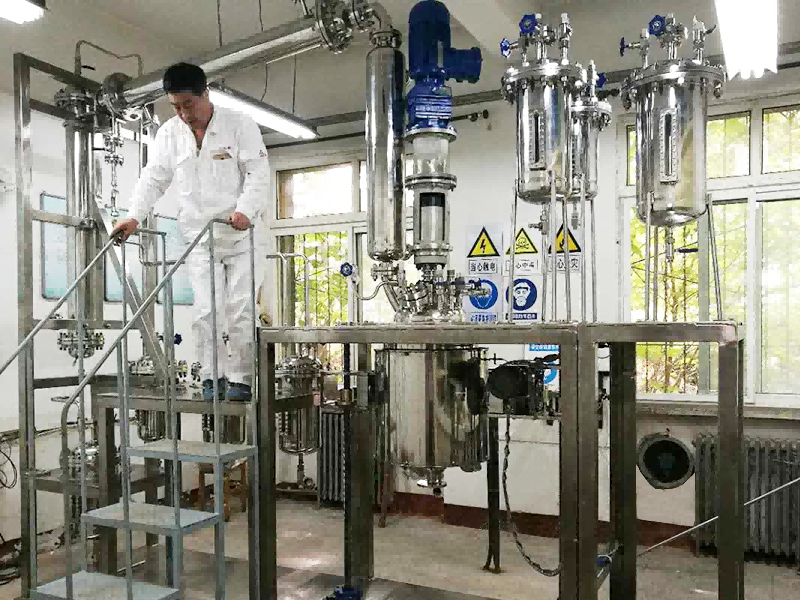
Our Catalytic Cracking Test Units are designed with state - of - the - art technology to provide precise control and are calibrated before delivery to ensure accurate and reproducible results. Additionally, we offer calibration services and support to our customers to maintain the accuracy of the equipment over its lifetime.
2. Catalyst Preparation and Handling
The catalyst is the heart of the catalytic cracking process. Consistent catalyst preparation is vital for result reproducibility. The catalyst should be prepared using well - defined procedures, including the choice of raw materials, the method of synthesis, and the activation conditions. Any variation in these steps can lead to differences in the catalyst's activity, selectivity, and stability.
For example, the calcination temperature during catalyst preparation can significantly affect its pore structure and surface area, which in turn influence the cracking performance. Therefore, strict control of the preparation conditions is necessary.
Proper catalyst handling is also crucial. Catalysts should be stored in a controlled environment to prevent contamination and degradation. Before use, the catalyst should be pre - treated according to the standard protocol to ensure its reproducible performance.
Our company provides detailed guidelines on catalyst preparation and handling to our customers. We also offer high - quality catalysts that are prepared under strict quality control measures to ensure consistent performance in our Catalytic Cracking Test Units.
3. Feedstock Quality and Pretreatment
The quality of the feedstock used in the catalytic cracking test has a direct impact on the reproducibility of the results. Feedstocks can vary in composition, purity, and physical properties, which can affect the reaction mechanism and product distribution.
For example, the presence of impurities such as sulfur, nitrogen, and metals in the feedstock can poison the catalyst, reducing its activity and selectivity. Therefore, feedstock pretreatment is often necessary to remove these impurities.
The feedstock should also be characterized thoroughly before use. Parameters such as density, viscosity, boiling point range, and elemental composition should be measured accurately. This information can be used to adjust the operating conditions of the test unit to ensure reproducible results.
We recommend our customers to use high - quality feedstocks and provide support in feedstock pretreatment and characterization. Our Catalytic Cracking Test Units can be customized to handle different types of feedstocks, ensuring flexibility and reproducibility in the testing process.
4. Operating Conditions and Protocol
Maintaining consistent operating conditions is essential for result reproducibility. This includes parameters such as temperature, pressure, feed rate, and catalyst - to - feed ratio. A standard operating protocol should be established and followed strictly during each test.

For example, the heating and cooling rates during the reaction should be controlled precisely to avoid thermal shock to the catalyst and the reactor. The reaction time should also be accurately measured to ensure consistent product formation.

In addition, the order of operations, such as the sequence of feeding the reactants and purging the system, should be standardized. Any deviation from the protocol can lead to variations in the results.
Our company provides a comprehensive operating manual for our Catalytic Cracking Test Units, which includes detailed instructions on setting up the operating conditions and following the standard protocol. We also offer training services to our customers to ensure they can operate the equipment correctly and obtain reproducible results.
5. Data Acquisition and Analysis
Accurate data acquisition and analysis are crucial for evaluating the reproducibility of the results. The data should be collected at regular intervals during the test and recorded accurately. This includes data on temperature, pressure, flow rate, product composition, and conversion.
The data analysis method should also be standardized. Statistical methods can be used to evaluate the variability of the results and determine if they are reproducible. For example, the standard deviation and confidence intervals can be calculated to assess the precision of the data.
Our Catalytic Cracking Test Units are equipped with advanced data acquisition systems that can collect and store data automatically. We also provide software for data analysis, which includes built - in statistical tools to help our customers evaluate the reproducibility of their results.
6. Maintenance and Monitoring
Regular maintenance of the Catalytic Cracking Test Unit is necessary to ensure its proper functioning and result reproducibility. This includes cleaning the reactor, replacing worn - out parts, and checking the integrity of the piping and valves.
Monitoring the performance of the equipment over time is also important. Trends in key parameters such as temperature, pressure, and product yields can be analyzed to detect any potential issues before they affect the reproducibility of the results.
We offer a comprehensive maintenance service for our Catalytic Cracking Test Units, including regular inspections, part replacements, and software updates. Our technical support team is available 24/7 to assist our customers with any maintenance or monitoring issues.
Additional Resources and Related Products
In addition to our Catalytic Cracking Test Units, we also offer a range of related products that can enhance the research and development process. For example, our [Lab Autoclave](pilot - plants/lab - autoclave.html) can be used for high - pressure and high - temperature reactions, which may be relevant for some catalytic cracking studies. The [Distillation Adsorption Extraction Facility](pilot - plants/distillation - adsorption - extraction - facility.html) can be used for product separation and purification, and the [Coal Chemical Pilot Plant](pilot - plants/coal - chemical - pilot - plant.html) can be used for coal - based catalytic cracking research.
Conclusion
Ensuring the reproducibility of results from a Catalytic Cracking Test Unit requires a comprehensive approach that includes equipment design and calibration, catalyst preparation and handling, feedstock quality and pretreatment, operating conditions and protocol, data acquisition and analysis, and maintenance and monitoring. As a supplier of Catalytic Cracking Test Units, we are committed to providing our customers with high - quality equipment, detailed support, and training to help them achieve reproducible results in their research and development work.
If you are interested in our Catalytic Cracking Test Units or related products and services, we invite you to contact us for more information and to discuss your specific requirements. Our team of experts is ready to assist you in finding the best solutions for your research and production needs.
References
- Satterfield, C. N. Heterogeneous Catalysis in Industrial Practice. McGraw - Hill, 1991.
- Gates, B. C. Catalytic Chemistry. Wiley, 1992.
- Thomas, J. M., & Thomas, W. J. Principles and Practice of Heterogeneous Catalysis. VCH, 1997.


