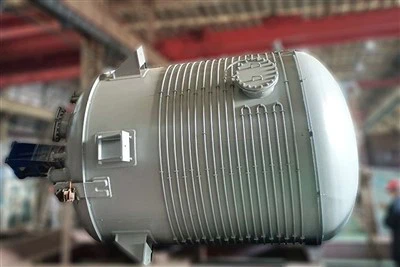
How to Control the Flow Rate in a U - Tube Heat Exchanger
As a trusted supplier of U - Tube Heat Exchangers, I understand the significance of controlling the flow rate in these crucial pieces of equipment. The flow rate within a U - Tube Heat Exchanger plays a pivotal role in determining its overall performance, efficiency, and the quality of heat transfer. In this blog, I will delve into the various methods and considerations for effectively controlling the flow rate in a U - Tube Heat Exchanger.
Understanding the Importance of Flow Rate Control
Before we explore the control methods, it's essential to understand why flow rate control is so important. The flow rate directly affects the heat transfer coefficient. A higher flow rate generally leads to a higher heat transfer coefficient, which means more efficient heat transfer. However, an excessively high flow rate can result in increased pressure drop, higher energy consumption, and potential mechanical damage to the heat exchanger components. On the other hand, a low flow rate may lead to poor heat transfer, fouling, and reduced overall efficiency.
The flow rate also impacts the temperature distribution within the heat exchanger. Proper flow rate control ensures that the temperature difference between the hot and cold fluids is maintained within an optimal range, maximizing the heat transfer effectiveness.
Factors Affecting Flow Rate
Several factors can influence the flow rate in a U - Tube Heat Exchanger. These include the pump characteristics, the pressure drop across the heat exchanger, the fluid properties (such as viscosity and density), and the physical dimensions of the heat exchanger tubes.

The pump is responsible for providing the necessary energy to move the fluid through the heat exchanger. The pump's flow - rate and pressure - head characteristics are crucial. A pump with a higher flow - rate capacity can potentially deliver more fluid through the heat exchanger, but it also needs to be able to overcome the pressure drop.
The pressure drop across the heat exchanger is determined by the fluid flow path, the tube diameter, the tube length, and the number of tube passes. A larger pressure drop requires more pump energy to maintain the desired flow rate.
Fluid properties such as viscosity and density can significantly affect the flow rate. High - viscosity fluids require more energy to flow, resulting in a lower flow rate for a given pump power. Density also plays a role, as heavier fluids may require more force to move.
The physical dimensions of the heat exchanger tubes, such as the inner diameter and length, can impact the flow rate. Smaller tube diameters generally result in higher flow velocities but also higher pressure drops.
Methods of Controlling Flow Rate
1. Pump Control
One of the most common ways to control the flow rate is through pump control. There are several pump control methods available:
- Throttle Control: This method involves adjusting a valve in the pump discharge line. By throttling the valve, the flow area is reduced, which increases the resistance to flow and decreases the flow rate. However, this method can be energy - inefficient as it dissipates energy in the form of heat across the valve.
- Variable - Speed Drive (VSD): A VSD allows the pump speed to be adjusted. By reducing the pump speed, the flow rate can be decreased. This method is more energy - efficient than throttle control as it reduces the power consumption of the pump in proportion to the decrease in flow rate.
2. Bypass Control
Bypass control involves diverting a portion of the fluid around the heat exchanger. A bypass line with a control valve is installed parallel to the heat exchanger. By adjusting the valve in the bypass line, the amount of fluid flowing through the heat exchanger can be controlled. This method is useful when precise flow rate control is required, especially in situations where the pump cannot be easily adjusted.
3. Tube Design Modification
Modifying the tube design of the U - Tube Heat Exchanger can also affect the flow rate. For example, increasing the number of tube passes can increase the flow velocity and the pressure drop, which may require a more powerful pump to maintain the desired flow rate. Conversely, reducing the number of tube passes can decrease the pressure drop and potentially increase the flow rate.
4. Flow Meter and Control System
Installing a flow meter in the fluid line is essential for accurate flow rate measurement. A flow meter can provide real - time information about the flow rate, which can be used to adjust the control valves or pump speed. A control system, such as a Programmable Logic Controller (PLC), can be used to automate the flow rate control process. The PLC can receive signals from the flow meter and adjust the control elements accordingly to maintain the desired flow rate.
Considerations for Flow Rate Control
1. System Compatibility
When implementing flow rate control methods, it's important to ensure that the control system is compatible with the overall U - Tube Heat Exchanger system. The pump, valves, and control devices should be selected based on the specific requirements of the heat exchanger, such as the fluid type, flow rate range, and pressure drop.
2. Safety
Safety is a top priority when controlling the flow rate. Excessive flow rates can cause mechanical stress on the heat exchanger components, leading to potential failures. It's important to set appropriate flow rate limits and install safety devices, such as pressure relief valves, to prevent over - pressurization.

3. Maintenance
Regular maintenance of the flow control components is essential to ensure their proper functioning. Valves should be inspected and lubricated regularly, and flow meters should be calibrated to ensure accurate measurements.
Applications and Related Equipment
U - Tube Heat Exchangers are widely used in various industries, including chemical, petrochemical, power generation, and food processing. In these industries, the flow rate control is often integrated with other equipment. For example, in a chemical plant, a U - Tube Heat Exchanger may be used in conjunction with a [Reactor](/pressure - vessels/reactor.html). The flow rate of the reactants and products through the heat exchanger needs to be carefully controlled to ensure the proper operation of the reactor.
In the water treatment industry, a U - Tube Heat Exchanger may be used in combination with a [Filter Tower](/pressure - vessels/filter - tower.html). Controlling the flow rate through the heat exchanger is crucial for maintaining the efficiency of the filtration process.
Another related piece of equipment is the [Fixed Tube Sheet Heat Exchanger](/pressure - vessels/fixed - tube - sheet - heat - exchanger.html). While the U - Tube Heat Exchanger has its unique advantages, such as the ability to handle thermal expansion, the principles of flow rate control are similar to those of the fixed tube sheet heat exchanger.
Conclusion
Controlling the flow rate in a U - Tube Heat Exchanger is a complex but essential task. By understanding the factors affecting the flow rate and implementing appropriate control methods, we can ensure the optimal performance, efficiency, and longevity of the heat exchanger. Whether through pump control, bypass control, tube design modification, or the use of a flow meter and control system, each method has its own advantages and considerations.
If you are in the market for a U - Tube Heat Exchanger or need assistance with flow rate control for your existing heat exchanger, I invite you to reach out for a procurement discussion. Our team of experts is ready to provide you with the best solutions tailored to your specific needs.
References
- Incropera, F. P., & DeWitt, D. P. (2002). Fundamentals of Heat and Mass Transfer. John Wiley & Sons.
- Green, D. W., & Perry, R. H. (2007). Perry's Chemical Engineers' Handbook. McGraw - Hill.
- Shah, R. K., & Sekulic, D. P. (2003). Fundamentals of Heat Exchanger Design. John Wiley & Sons.