


Heat exchangers are crucial components in various industrial processes, facilitating the transfer of heat between two or more fluids. Among the different types of heat exchangers available in the market, the U - Tube Heat Exchanger stands out due to its unique design and functionality. As a U - Tube Heat Exchanger supplier, I am well - versed in the differences between this type of heat exchanger and others. In this blog, I will delve into these distinctions to help you understand why a U - Tube Heat Exchanger might be the best choice for your specific needs.
Design and Construction
One of the most significant differences between a U - Tube Heat Exchanger and other types lies in its design. A U - Tube Heat Exchanger consists of a bundle of U - shaped tubes that are housed within a shell. The tubes are bent into a U - shape, which allows for thermal expansion and contraction without causing excessive stress on the tubes or the shell. This design feature makes U - Tube Heat Exchangers particularly suitable for applications where there are significant temperature differences between the two fluids.
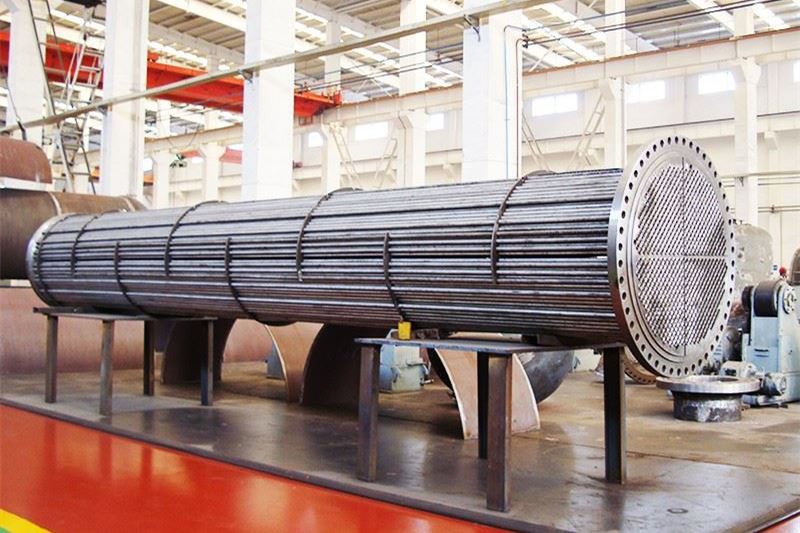

In contrast, a Fixed Tube Sheet Heat Exchanger has tubes that are fixed at both ends to tube sheets. This design is simpler and more cost - effective for applications with relatively small temperature differences. However, it lacks the flexibility to accommodate large thermal expansions, which can lead to tube failures or leaks in high - temperature applications.
Another type of heat exchanger, the shell - and - tube heat exchanger with floating heads, has a more complex design. The floating head allows the tube bundle to expand and contract freely within the shell. While this design offers excellent thermal expansion capabilities, it is more expensive and requires more maintenance compared to the U - Tube Heat Exchanger.
Thermal Performance
The thermal performance of a heat exchanger is determined by its ability to transfer heat efficiently between the two fluids. U - Tube Heat Exchangers offer good thermal performance due to their unique tube arrangement. The U - shaped tubes provide a longer flow path for the fluid inside the tubes, which increases the residence time and enhances heat transfer.
Plate heat exchangers, on the other hand, are known for their high heat transfer coefficients. They consist of a series of thin plates with channels for the fluids to flow through. The large surface area provided by the plates allows for efficient heat transfer. However, plate heat exchangers are more prone to fouling, especially when dealing with fluids that contain suspended solids or have a high viscosity. U - Tube Heat Exchangers are less susceptible to fouling because of their relatively large tube diameters, which makes them a better choice for applications with dirty or viscous fluids.
Maintenance and Cleaning
Maintenance and cleaning are important considerations when choosing a heat exchanger. U - Tube Heat Exchangers are relatively easy to maintain. Since the tube bundle can be removed from the shell, it is possible to inspect and clean the tubes individually. This makes it easier to remove any fouling or deposits that may accumulate over time.
In comparison, plate heat exchangers require more frequent disassembly for cleaning. The gaskets between the plates need to be replaced regularly, which can be time - consuming and costly. Additionally, the small channels in plate heat exchangers can be easily blocked by debris, making them more difficult to clean compared to U - Tube Heat Exchangers.
Pressure Drop
Pressure drop is another factor that affects the performance of a heat exchanger. U - Tube Heat Exchangers generally have a lower pressure drop compared to some other types of heat exchangers. The smooth flow path inside the U - shaped tubes reduces the resistance to fluid flow, resulting in a lower pressure drop.
Spiral heat exchangers, for example, have a higher pressure drop because of their spiral flow path. The fluid has to travel in a curved path, which increases the frictional resistance and leads to a higher pressure drop. A lower pressure drop in a U - Tube Heat Exchanger means less energy is required to pump the fluids through the heat exchanger, resulting in lower operating costs.
Applications
U - Tube Heat Exchangers are widely used in various industries, including chemical, petrochemical, power generation, and food processing. In the chemical industry, they are used for heating, cooling, and condensing processes. The ability to handle high - temperature and high - pressure applications makes them suitable for use in refineries and chemical plants.
In the food processing industry, U - Tube Heat Exchangers are used for pasteurization and sterilization processes. Their ease of cleaning and low fouling characteristics make them a popular choice for handling food products.
Other types of heat exchangers are also used in specific applications. Plate heat exchangers are commonly used in HVAC systems and in applications where a compact design is required. Shell - and - tube heat exchangers with floating heads are often used in power plants for steam condensation.
Cost
The cost of a heat exchanger is an important consideration for any industrial application. U - Tube Heat Exchangers offer a good balance between cost and performance. They are generally less expensive than heat exchangers with floating heads, which have a more complex design. At the same time, they are more durable and require less maintenance compared to plate heat exchangers, which can result in lower long - term costs.
Conclusion
In conclusion, U - Tube Heat Exchangers differ from other types of heat exchangers in several key aspects, including design, thermal performance, maintenance, pressure drop, applications, and cost. Their unique U - shaped tube design allows for thermal expansion, making them suitable for high - temperature applications. They offer good thermal performance, are easy to maintain, have a low pressure drop, and are less prone to fouling.
If you are in the market for a heat exchanger and are considering the best option for your specific application, I encourage you to contact us for a detailed discussion. Our team of experts can help you evaluate your needs and determine if a U - Tube Heat Exchanger is the right choice for you. We can also provide you with customized solutions based on your requirements. Whether you need a heat exchanger for a Storage Vessel or a Filter Tower, we have the expertise and experience to deliver a high - quality product.
References
- Incropera, F. P., & DeWitt, D. P. (2002). Fundamentals of Heat and Mass Transfer. John Wiley & Sons.
- Shah, R. K., & Sekulic, D. P. (2003). Fundamentals of Heat Exchanger Design. John Wiley & Sons.
- Green, D. W., & Perry, R. H. (2007). Perry's Chemical Engineers' Handbook. McGraw - Hill.


