Hey there! As a supplier of Absorption Towers, I often get asked about all sorts of technical details. One question that pops up quite a bit is, "What is the liquid - to - gas ratio in an Absorption Tower?" Well, let's dig into this topic and break it down in a way that's easy to understand.
First off, what's an Absorption Tower anyway? It's a crucial piece of equipment used in many industrial processes. The main job of an Absorption Tower is to remove certain components from a gas stream by transferring them into a liquid phase. This is super important in industries like chemical manufacturing, environmental control, and natural gas processing.
Now, let's talk about the liquid - to - gas ratio. Simply put, it's the ratio of the mass or volume of the liquid flowing through the tower to the mass or volume of the gas flowing through it. This ratio plays a huge role in how well the absorption process works.
Why is the liquid - to - gas ratio so important? Well, if the ratio is too low, there might not be enough liquid to effectively absorb all the target components from the gas. This means that some of the unwanted substances will remain in the gas, and the overall efficiency of the absorption process will be poor. On the other hand, if the ratio is too high, it can lead to increased operating costs. You'll be using more liquid than necessary, which means higher pumping costs, more energy consumption, and potentially more waste to deal with.
So, how do you determine the right liquid - to - gas ratio? There are several factors to consider. One of the most important is the solubility of the target component in the liquid. If the component is highly soluble, you might be able to get away with a lower liquid - to - gas ratio. But if it's not very soluble, you'll need a higher ratio to ensure good absorption.
The flow rate of the gas also matters. If the gas is flowing through the tower at a high rate, you'll need more liquid to keep up and absorb the target components. Additionally, the temperature and pressure in the tower can affect the solubility and the overall absorption process, so these factors need to be taken into account as well.
Let's take a look at some real - world examples. In a natural gas sweetening process, where we're trying to remove hydrogen sulfide (H₂S) from the gas, the liquid - to - gas ratio is carefully optimized. The liquid used in this case is usually an amine solution, which has a good affinity for H₂S. By adjusting the liquid - to - gas ratio, we can ensure that the H₂S is removed to an acceptable level while keeping the operating costs down.
In the chemical manufacturing industry, when producing certain chemicals that involve gas - liquid reactions in an Absorption Tower, the liquid - to - gas ratio can impact the yield and quality of the final product. For example, if we're making a particular acid by absorbing a gas into a liquid reactant, the right ratio is essential for getting the desired product purity and quantity.
Now, as a supplier of Absorption Towers, we understand that each application is unique. That's why we offer customized solutions. We work closely with our customers to analyze their specific requirements, including the type of gas, the target components to be removed, the flow rates, and the operating conditions. Based on this information, we can design an Absorption Tower with the optimal liquid - to - gas ratio for their needs.
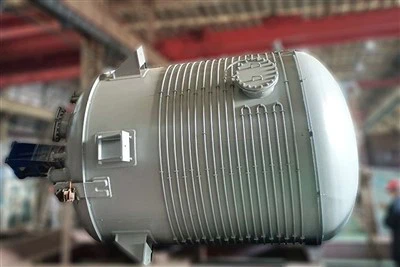
When it comes to our Absorption Towers, we also pay attention to other related equipment. For instance, we often integrate Reactor systems with our towers. Reactors can be used to further process the absorbed components or to carry out additional chemical reactions. This combination can enhance the overall efficiency of the process and open up new possibilities for our customers.

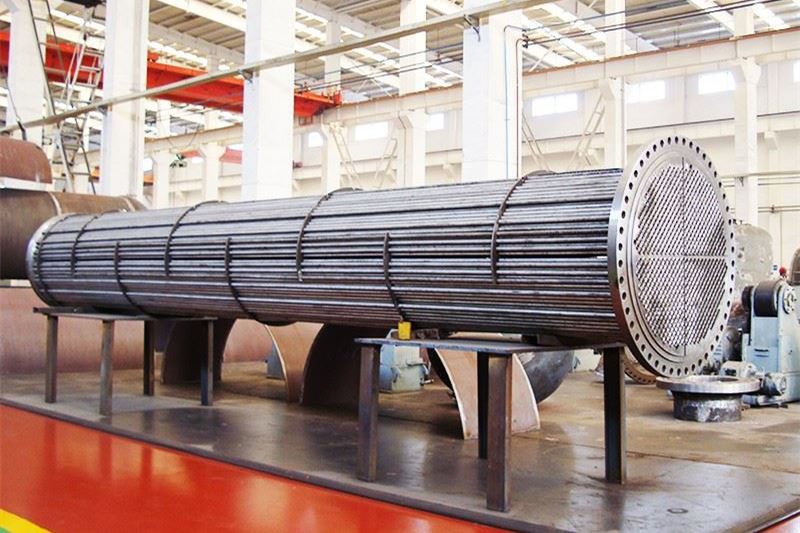
Another important piece of equipment is the Fixed Tube Sheet Heat Exchanger. Heat exchangers are used to control the temperature in the Absorption Tower. Since temperature can have a significant impact on the solubility and reaction rates, maintaining the right temperature is crucial for the success of the absorption process. Our heat exchangers are designed to work seamlessly with our Absorption Towers, ensuring stable and efficient operation.
We also offer Filter Tower solutions. Filter towers can be used to remove any solid particles or impurities that might be present in the gas or liquid streams. This helps to protect the Absorption Tower and other equipment from damage and ensures the quality of the final products.
If you're in the market for an Absorption Tower or need to optimize the liquid - to - gas ratio in your existing system, we're here to help. Our team of experts has years of experience in designing and manufacturing high - quality Absorption Towers. We use the latest technology and materials to ensure that our towers are reliable, efficient, and cost - effective.
We believe in providing not just a product but a complete solution. From the initial design and engineering to installation, commissioning, and after - sales support, we're with you every step of the way. Whether you're a small - scale operation or a large industrial plant, we can tailor our solutions to meet your specific needs.
So, if you're interested in learning more about our Absorption Towers or have any questions about the liquid - to - gas ratio, don't hesitate to get in touch. We're always happy to have a chat and discuss how we can help you improve your process and achieve your goals.
References
- Perry, R. H., & Green, D. W. (1997). Perry's Chemical Engineers' Handbook. McGraw - Hill.
- Treybal, R. E. (1980). Mass - Transfer Operations. McGraw - Hill.