


In the realm of chemical engineering and materials science, hydrogenation reactions hold a pivotal position. These reactions are used extensively in various industries, from petrochemicals to food processing, for their ability to transform unsaturated compounds into saturated ones. A Hydrogenation Test Unit is an essential tool for researchers and industry professionals to study and optimize these reactions. As a leading Hydrogenation Test Unit supplier, I've witnessed firsthand the critical role solvents play in these processes. In this blog, I'll delve into the effects of solvents on hydrogenation reactions within a Hydrogenation Test Unit.
Solvent as a Reaction Medium
Solvents serve as the medium in which hydrogenation reactions take place. They provide a homogeneous environment where reactants, catalysts, and hydrogen can interact effectively. The choice of solvent can significantly influence the reaction rate, selectivity, and overall efficiency of the hydrogenation process.
One of the primary functions of a solvent is to dissolve the reactants and the catalyst. This is crucial because a well - dissolved system ensures that all components are in close proximity, facilitating the collision between reactant molecules and catalyst active sites. For example, in the hydrogenation of vegetable oils, solvents like hexane are commonly used. Hexane can dissolve the unsaturated triglycerides present in the oil, allowing them to come into contact with the hydrogenation catalyst, such as nickel or palladium.
The polarity of the solvent also plays a vital role. Polar solvents, such as water or alcohols, can solvate polar reactants and catalysts more effectively. In some cases, the presence of a polar solvent can enhance the activity of the catalyst by stabilizing the intermediate species formed during the reaction. On the other hand, non - polar solvents are better suited for non - polar reactants. For instance, in the hydrogenation of aromatic compounds, non - polar solvents like toluene can provide a more favorable environment for the reaction.
Impact on Reaction Kinetics
The solvent can have a profound impact on the reaction kinetics of hydrogenation. The viscosity of the solvent is an important factor. A highly viscous solvent can impede the diffusion of reactants and hydrogen to the catalyst surface, thereby slowing down the reaction rate. For example, in a Hydrogenation Test Unit, if a thick and viscous solvent is used, the mass transfer of hydrogen from the gas phase to the liquid phase and then to the catalyst can be significantly hindered. This can lead to longer reaction times and lower yields.
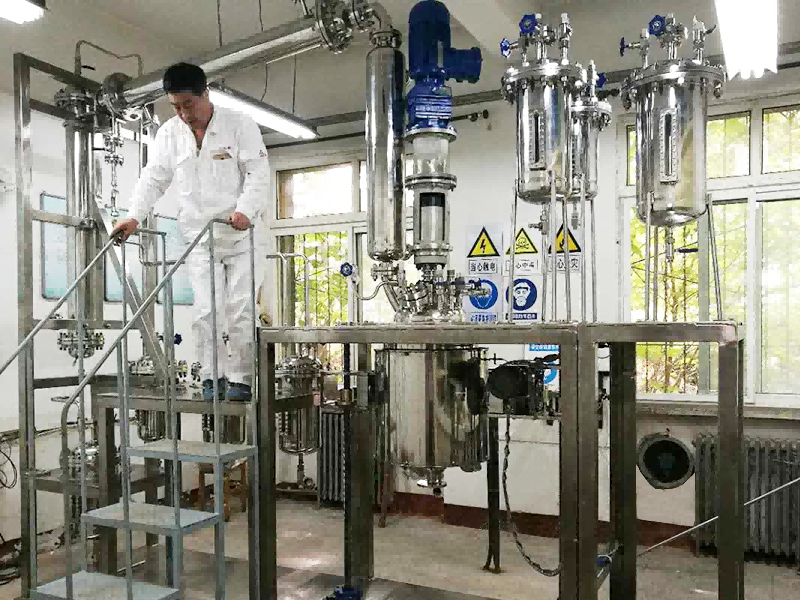

The dielectric constant of the solvent also affects the reaction kinetics. A solvent with a high dielectric constant can stabilize charged species formed during the reaction. In some hydrogenation reactions, charged intermediates are involved. By stabilizing these intermediates, the solvent can lower the activation energy of the reaction, leading to an increased reaction rate. However, a very high dielectric constant can also cause the catalyst to aggregate, reducing its active surface area and thus decreasing the reaction rate.
Selectivity in Hydrogenation Reactions
Selectivity is a crucial aspect of hydrogenation reactions. In many cases, there are multiple unsaturated bonds in the reactant molecule, and the goal is to selectively hydrogenate only specific bonds. The solvent can play a key role in achieving this selectivity.
Solvents can interact with the reactant molecules in different ways, influencing their orientation on the catalyst surface. For example, in the hydrogenation of conjugated dienes, a solvent can preferentially solvate one of the double bonds, making it more accessible to the catalyst. This can lead to selective hydrogenation of that particular double bond.
The solubility of the reaction products in the solvent also affects selectivity. If the product of a particular hydrogenation step is more soluble in the solvent than the reactant, it can be removed from the catalyst surface more quickly, preventing further hydrogenation. This can help in achieving high selectivity towards the desired product.
Solvent and Catalyst Performance
The solvent can have a significant impact on the performance and stability of the catalyst. Some solvents can cause catalyst poisoning. For example, certain sulfur - containing solvents can adsorb strongly on the catalyst surface, blocking the active sites and reducing the catalyst's activity.
The solvent can also affect the dispersion of the catalyst. A good solvent should be able to keep the catalyst particles well - dispersed in the reaction medium. If the solvent causes the catalyst to agglomerate, the active surface area of the catalyst will decrease, leading to a lower reaction rate.
In a Hydrogenation Test Unit, it is essential to choose a solvent that is compatible with the catalyst. This can be determined through a series of experiments, where different solvents are tested with the same catalyst and reactants.
Examples of Solvent Effects in Different Hydrogenation Reactions
In the hydrogenation of alkenes, solvents like ethanol are often used. Ethanol can dissolve both the alkene and the hydrogenation catalyst, such as platinum on carbon. It has a moderate polarity and viscosity, which allows for good mass transfer and reaction kinetics. The presence of ethanol can also enhance the selectivity towards the formation of the corresponding alkane.
In the hydrogenation of nitro compounds to amines, water is sometimes used as a solvent. Water can solvate the nitro compound and the catalyst effectively. It can also participate in the reaction mechanism, acting as a proton donor or acceptor in some cases. The high dielectric constant of water can stabilize the charged intermediates formed during the reaction, leading to an increased reaction rate.
Conclusion and Call to Action
As a Hydrogenation Test Unit supplier, I understand the importance of choosing the right solvent for hydrogenation reactions. The solvent can have a far - reaching impact on the reaction rate, selectivity, and catalyst performance. By carefully selecting the solvent, researchers and industry professionals can optimize their hydrogenation processes and achieve better results.
If you are involved in hydrogenation research or industrial production and are looking for a reliable Hydrogenation Test Unit, we can provide you with high - quality equipment. Our test units are designed to meet the diverse needs of different hydrogenation reactions. Whether you are working on small - scale research projects or large - scale industrial trials, our units can provide accurate and reliable data.
For more information about our Hydrogenation Test Unit, as well as other related products such as Polymer Rubber Test Unit and Distillation Adsorption Extraction Facility, please feel free to contact us. We are ready to assist you in your hydrogenation journey and help you make the most informed decisions regarding solvent selection and test unit operation.
References
- Smith, J. M., Van Ness, H. C., & Abbott, M. M. (2005). Introduction to Chemical Engineering Thermodynamics. McGraw - Hill.
- Pines, H. (1981). The Chemistry of Catalytic Hydrocarbon Conversions. Academic Press.
- Rylander, P. N. (1985). Hydrogenation Methods. Academic Press.


