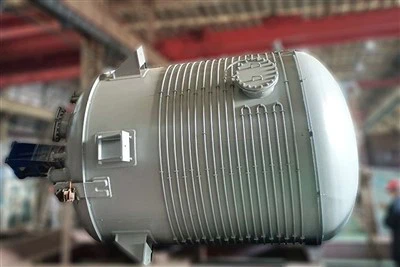
Hey there! As a supplier of stirred reactors, I've had my fair share of experiences with these nifty pieces of equipment. Today, I'm gonna walk you through the startup procedures for stirred reactors. It's gonna be a bit of a technical ride, but I'll try to keep it as simple and easy - to - understand as possible.


Pre - Startup Checks
Before you even think about firing up a stirred reactor, there are a bunch of checks you need to do. First off, take a good look at the reactor itself. Check for any visible damage like cracks, dents, or leaks. A damaged reactor can lead to all sorts of problems, from product contamination to safety hazards. You don't want that, trust me!
Next, look at the stirring mechanism. Make sure the stirrer is properly installed and that all the connections are tight. Loose connections can cause the stirrer to vibrate excessively, which not only affects the mixing efficiency but can also damage the reactor over time. Spin the stirrer by hand (if it's safe to do so) to see if it rotates smoothly. Any resistance or strange noises could indicate a problem.
The temperature and pressure sensors are also crucial. These sensors help you monitor the conditions inside the reactor. Check if they are calibrated correctly. An inaccurate sensor can give you false readings, leading to improper control of the reaction. You don't want to be running a reaction at the wrong temperature or pressure, as it can mess up the entire process.
The piping and valves connected to the reactor need some attention too. Inspect the pipes for any blockages or signs of corrosion. A blocked pipe can disrupt the flow of reactants in and out of the reactor. And for the valves, make sure they open and close properly. You don't want a valve that's stuck open or closed when you're trying to run a reaction.
Filling the Reactor
Once you've completed all the pre - startup checks and everything looks good, it's time to fill the reactor. But you can't just pour in the reactants willy - nilly. First, decide on the order of adding the reactants. In some cases, the order can have a significant impact on the reaction. For example, if you're mixing two chemicals that react violently, adding them in the wrong order can cause an explosion.
Use the appropriate pumps or transfer systems to fill the reactor. Make sure the flow rate is controlled. Too high a flow rate can cause splashing or turbulence that might not be ideal for the reaction. And don't overfill the reactor. Leave some headspace to allow for expansion during the reaction, especially if the reaction generates gas or heat.
Starting the Stirrer
After filling the reactor, it's time to start the stirrer. But don't just switch it on at full speed right away. Start at a low speed and gradually increase it. This helps to avoid any sudden jolts that could damage the stirrer or the reactor. A slow start also allows the reactants to start mixing gently.
As the stirrer runs, keep an eye on its performance. Check the power consumption. A sudden increase in power consumption could mean that the stirrer is working harder than it should, perhaps due to a problem with the mixing or a mechanical issue. Also, listen for any unusual noises. Grinding, rattling, or screeching sounds are not good signs and should be investigated immediately.
Heating or Cooling
Depending on the reaction requirements, you may need to heat or cool the reactor. If heating is required, start the heating system slowly. Just like with the stirrer, a sudden increase in temperature can cause problems. For example, it can lead to uneven heating, which might affect the reaction kinetics.
Use the temperature sensors to monitor the temperature closely. Set the desired temperature and adjust the heating or cooling rate as needed. Some reactions are very sensitive to temperature changes, so precise control is essential. If you're using a cooling system, make sure the coolant is flowing properly and that the cooling rate is appropriate.
Monitoring and Control
Throughout the startup and operation of the stirred reactor, continuous monitoring is key. Keep an eye on the temperature, pressure, and stirring speed. If any of these parameters go out of the desired range, take immediate action. For example, if the temperature is rising too fast, you might need to reduce the heating rate or increase the cooling.
You can use automation systems to help with the monitoring and control. These systems can be programmed to adjust the parameters automatically based on pre - set values. But even with automation, it's still important to keep a manual check on things. Sometimes, the automation system might malfunction, and you need to be able to step in and take control.
Different Types of Stirred Reactors
We offer different types of stirred reactors, each with its own unique startup procedures. For example, the Polymerization Reactor is used for polymerization reactions. These reactions often require precise temperature and pressure control. The startup of a polymerization reactor might involve a more careful pre - heating step to ensure the monomers are in the right state before the reaction starts.
The Continuous Stirred Tank Reactor is designed for continuous operation. When starting a CSTR, you need to establish a steady - state flow of reactants and products. This means carefully adjusting the flow rates and ensuring that the mixing is uniform throughout the reactor.
The Magnetically Driven Stirred Reactor uses a magnetic coupling to drive the stirrer. When starting this type of reactor, you need to make sure the magnetic field is properly aligned. Any misalignment can cause the stirrer to malfunction.
Safety Considerations
Safety should always be your top priority when starting up a stirred reactor. Make sure all safety devices are in place and working. This includes pressure relief valves, rupture disks, and emergency stop buttons. These devices can prevent accidents in case something goes wrong.
Wear appropriate personal protective equipment (PPE). This might include safety goggles, gloves, and lab coats. If the reaction involves toxic or hazardous chemicals, additional protection like respirators might be necessary.
Conclusion
Starting up a stirred reactor involves a series of careful steps. From pre - startup checks to monitoring and control, every step is important for a successful reaction. Whether you're using a Polymerization Reactor, a Continuous Stirred Tank Reactor, or a Magnetically Driven Stirred Reactor, following the correct startup procedures is crucial.
If you're in the market for a stirred reactor or have any questions about the startup procedures, don't hesitate to reach out. We're here to help you get the most out of your reactor and ensure a smooth and safe operation.
References
- Levenspiel, O. (1999). Chemical Reaction Engineering. Wiley.
- Fogler, H. S. (2016). Elements of Chemical Reaction Engineering. Pearson.