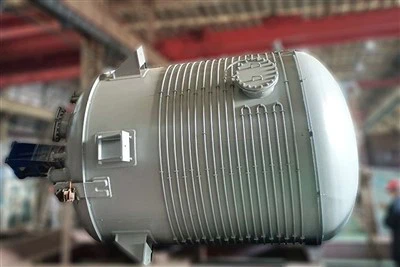
Hey there! As a supplier of Absorption Towers, I'm super excited to break down the main components of these amazing pieces of equipment for you. Absorption towers are crucial in various industries, from chemical processing to environmental protection. They're used to remove specific components from gas streams by transferring them into a liquid phase. So, let's dive right in and take a look at what makes an Absorption Tower tick.
1. Tower Shell
The tower shell is like the backbone of the Absorption Tower. It's the outer structure that holds all the other components together. Made from materials like carbon steel, stainless steel, or even fiberglass-reinforced plastic (FRP), depending on the application and the chemicals involved. The shell needs to be strong enough to withstand the pressure and temperature inside the tower, as well as any external forces.
For example, in a chemical plant where corrosive gases are being processed, a stainless steel or FRP shell would be a great choice because they're resistant to corrosion. The size of the shell also matters. It's designed based on the flow rate of the gas and liquid, the type of packing used, and the efficiency required. A larger shell might be needed for high-flow applications to ensure proper contact between the gas and the liquid.
2. Packing Material
Packing material is a key component that significantly affects the performance of an Absorption Tower. Its main job is to increase the surface area for contact between the gas and the liquid. There are two main types of packing: random packing and structured packing.
Random packing consists of small, individual pieces like Raschig rings, Pall rings, or Berl saddles. These pieces are randomly dumped into the tower. They're great because they're easy to install and can handle a wide range of flow rates. Structured packing, on the other hand, is made up of pre - fabricated sheets or corrugated plates. It offers a more efficient and uniform gas - liquid contact, which can lead to higher absorption efficiency.
The choice between random and structured packing depends on factors like the type of gas and liquid, the required efficiency, and the cost. For instance, if you need a high - efficiency absorption process and cost isn't a major concern, structured packing might be the way to go. But if you're looking for a more cost - effective solution for a less demanding application, random packing could be sufficient.
3. Liquid Distribution System
A good liquid distribution system is essential for ensuring that the liquid is evenly spread across the packing material. If the liquid isn't distributed properly, some parts of the packing might not get enough liquid, which can reduce the absorption efficiency.
There are different types of liquid distribution systems, such as spray nozzles, trough distributors, and drip trays. Spray nozzles are commonly used because they can create a fine mist of liquid, which increases the contact area between the gas and the liquid. Trough distributors are great for larger towers as they can handle high liquid flow rates. Drip trays are simple and cost - effective, but they might not be as efficient as the other two in some cases.
The design of the liquid distribution system also needs to take into account the properties of the liquid, such as its viscosity and surface tension. For example, a more viscous liquid might require a different type of distributor to ensure proper spreading.
4. Gas Inlet and Outlet
The gas inlet and outlet are the points where the gas enters and leaves the Absorption Tower. The gas inlet is usually located at the bottom of the tower, and it's designed to introduce the gas evenly into the tower. A well - designed gas inlet can help to prevent channeling, which is when the gas flows through only certain parts of the packing instead of spreading out evenly.


The gas outlet is typically at the top of the tower. It's important to have a proper outlet design to ensure that the treated gas can leave the tower smoothly without causing any backpressure. The size and shape of the inlet and outlet are determined by the flow rate and pressure of the gas.
5. Liquid Inlet and Outlet
Similar to the gas inlet and outlet, the liquid inlet and outlet are crucial for the proper operation of the Absorption Tower. The liquid inlet is usually at the top of the tower, allowing the liquid to flow down through the packing. The liquid outlet is at the bottom, where the liquid that has absorbed the target components is collected.
The liquid inlet needs to be designed to distribute the liquid evenly, as mentioned earlier. The liquid outlet should be sized correctly to handle the flow rate of the liquid and to prevent any blockages. Sometimes, a liquid level control system is also installed at the outlet to maintain a proper liquid level in the tower.
6. Mist Eliminator
A mist eliminator is an important component that is often installed near the gas outlet. Its main function is to remove any liquid droplets that might be carried along with the gas as it leaves the tower. These droplets can contain the absorbed components or other contaminants, and if they're not removed, they can cause problems in the downstream equipment.
There are different types of mist eliminators, such as wire mesh mist eliminators, vane mist eliminators, and cyclone mist eliminators. Wire mesh mist eliminators are the most common because they're simple and effective. They work by capturing the liquid droplets on the wire mesh, which then drain back into the tower.
7. Support Structures
Support structures are needed to hold the packing material, the liquid distribution system, and other internal components in place. They also need to support the weight of the liquid and the gas inside the tower. These structures can be made of steel or other strong materials.
The design of the support structures depends on the type and weight of the components they need to support. For example, if you're using heavy structured packing, you'll need a more robust support structure compared to using light random packing.
Related Equipment
Absorption Towers often work in conjunction with other equipment. For example, a Stripping Tower can be used to remove the absorbed components from the liquid after it leaves the Absorption Tower. A Storage Vessel might be needed to store the treated liquid or the recovered components. And a Reactor could be used to further process the components before or after the absorption process.
If you're in the market for an Absorption Tower or have any questions about these components, I'd love to hear from you. Whether you're in the chemical, environmental, or any other industry that requires gas - liquid separation, we can provide you with high - quality Absorption Towers tailored to your specific needs. Reach out to us to start a conversation about your project and let's work together to find the best solution for you.
References
- Perry, R. H., & Green, D. W. (Eds.). (1997). Perry's Chemical Engineers' Handbook. McGraw - Hill.
- Sinnott, R. K. (2005). Coulson & Richardson's Chemical Engineering: Volume 6 - Chemical Engineering Design. Elsevier.