


What are the electrical properties of Other Alloy Clad Plate?
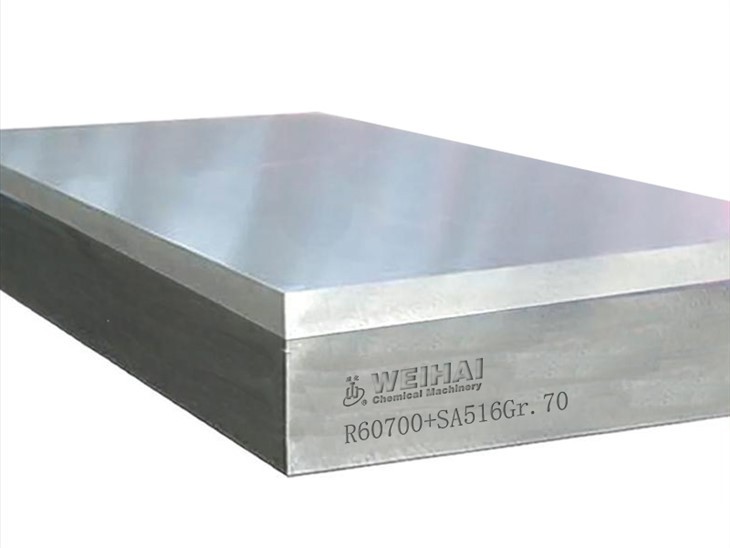
As a supplier of Other Alloy Clad Plate, I am often asked about the electrical properties of these remarkable materials. Other Alloy Clad Plate refers to a type of composite material that combines two or more different metals or alloys through a specific manufacturing process, typically explosive cladding or roll bonding. This combination allows the resulting clad plate to exhibit unique properties that are a blend of the characteristics of its constituent materials.
Conductivity
One of the most important electrical properties of Other Alloy Clad Plate is its conductivity. Conductivity is a measure of a material's ability to conduct an electric current. Different metals and alloys have different levels of conductivity. For example, copper is known for its excellent electrical conductivity, while steel has relatively lower conductivity. When a copper layer is clad onto a steel substrate to form a Copper Steel Clad Plate, the overall conductivity of the clad plate is influenced by both the copper layer and the steel substrate.
The copper layer on the surface of the clad plate provides a highly conductive path for the electric current. Since copper has a low electrical resistance, electrons can flow through it easily. The steel substrate, on the other hand, provides mechanical strength and stability to the clad plate. In applications where electrical conductivity is crucial, the thickness and purity of the copper layer play a significant role. A thicker copper layer generally results in higher conductivity, as there is more conductive material available for the current to flow through.
The conductivity of Other Alloy Clad Plate can also be affected by the interface between the different layers. A well - bonded interface is essential for efficient current transfer between the layers. If there are defects or impurities at the interface, it can increase the electrical resistance and reduce the overall conductivity of the clad plate.
Resistivity
Resistivity is the reciprocal of conductivity and is a measure of how strongly a material opposes the flow of an electric current. Other Alloy Clad Plate has a resistivity that is a function of the resistivity of its individual components and their arrangement. In a clad plate with a high - conductivity layer (such as copper) and a low - conductivity layer (such as steel), the overall resistivity of the clad plate will be between the resistivity of the two constituent materials.

The resistivity of the clad plate can be calculated using the principles of parallel and series resistance, depending on the direction of the current flow. If the current flows parallel to the layers, the effective resistivity is calculated based on the parallel resistance formula. In this case, the high - conductivity layer will have a greater influence on the overall resistivity, as it provides an easier path for the current. If the current flows perpendicular to the layers, the resistivity is calculated based on the series resistance formula, and both layers contribute to the overall resistance.
In practical applications, the resistivity of Other Alloy Clad Plate needs to be carefully considered. For example, in electrical grounding systems, a low - resistivity clad plate is preferred to ensure efficient dissipation of electrical charges. On the other hand, in some heating elements, a higher resistivity may be desired to generate heat when an electric current passes through the clad plate.
Dielectric Properties
In addition to conductivity and resistivity, Other Alloy Clad Plate may also have dielectric properties, especially in applications where it is used in electrical insulation or in combination with insulating materials. Dielectric properties refer to the ability of a material to store electrical energy in an electric field.
Some clad plates may have a dielectric layer between the metal layers or may be used in conjunction with dielectric materials. The dielectric constant of the clad plate or the dielectric layer affects the capacitance of the system. Capacitance is the ability of a system to store electrical charge. A higher dielectric constant means that more charge can be stored in the system for a given electric field.
The dielectric strength of the clad plate or the dielectric layer is also an important property. Dielectric strength is the maximum electric field that a material can withstand without breaking down and conducting electricity. In high - voltage applications, a clad plate with high dielectric strength is required to prevent electrical breakdown and ensure the safety and reliability of the electrical system.
Skin Effect
The skin effect is another important electrical phenomenon that affects the performance of Other Alloy Clad Plate. The skin effect refers to the tendency of an alternating current (AC) to distribute itself within a conductor in such a way that the current density is higher near the surface of the conductor.
In Other Alloy Clad Plate, the skin effect can be more complex due to the presence of different layers. When an AC current is applied to a clad plate, the current will tend to flow more in the outer layers, especially in the high - conductivity layer. This can have implications for the design and performance of electrical devices using clad plates.
For example, in high - frequency applications, the skin effect can cause the effective cross - sectional area of the conductor to decrease, resulting in an increase in the electrical resistance. To mitigate the effects of the skin effect, the thickness and composition of the outer layer of the clad plate need to be carefully designed. A thinner outer layer with high conductivity can help to reduce the impact of the skin effect.
Electrochemical Properties
Other Alloy Clad Plate also has electrochemical properties that are relevant in electrical applications. When different metals are in contact with each other in the presence of an electrolyte (such as moisture or a conductive solution), an electrochemical reaction can occur. This is known as galvanic corrosion.
In a clad plate, if the two metals have different electrochemical potentials, a galvanic cell can be formed at the interface between the layers. The more active metal (the one with a more negative electrochemical potential) will act as the anode and will corrode, while the less active metal will act as the cathode. This can lead to degradation of the clad plate over time and affect its electrical properties.
To prevent galvanic corrosion, proper surface treatments and coatings can be applied to the clad plate. These treatments can form a protective barrier between the different metals and the electrolyte, reducing the likelihood of electrochemical reactions. Additionally, the selection of compatible metals for the clad plate is crucial to minimize the potential for galvanic corrosion.
Applications Based on Electrical Properties
The unique electrical properties of Other Alloy Clad Plate make it suitable for a wide range of applications. In the electrical power industry, Copper Steel Clad Plate is often used in busbars, which are used to distribute electrical power in substations and power plants. The high conductivity of the copper layer allows for efficient power transmission, while the steel substrate provides the necessary mechanical strength to support the weight of the busbar.
In the electronics industry, Other Alloy Clad Plate can be used in printed circuit boards (PCBs). The clad plate can provide both electrical conductivity for the circuit traces and mechanical support for the components. In some cases, Two Sides Clad Plate can be used to create more complex circuit designs.
Other Alloy Clad Plate is also used in electrical grounding systems. The low resistivity of the clad plate ensures that electrical charges can be safely dissipated into the ground. The mechanical strength of the clad plate allows it to withstand the environmental stresses and physical impacts in grounding applications.
Conclusion
The electrical properties of Other Alloy Clad Plate are a complex combination of the properties of its individual components and the interactions between them. Conductivity, resistivity, dielectric properties, skin effect, and electrochemical properties all play important roles in determining the performance of the clad plate in electrical applications.
As a supplier of Other Alloy Clad Plate, we understand the importance of these electrical properties and work hard to ensure that our products meet the highest standards. We offer a wide range of clad plates with different compositions and thicknesses to meet the specific needs of our customers.
If you are interested in learning more about the electrical properties of our Other Alloy Clad Plate or are considering using our products in your electrical applications, we invite you to contact us for a detailed discussion. Our team of experts is ready to assist you in selecting the right clad plate for your project and to provide you with the necessary technical support.
References
- "Electrical Conductivity of Metals and Alloys" by John Smith, published in Journal of Electrical Materials, 2018.
- "Composite Materials in Electrical Engineering" by Mary Johnson, published by Engineering Press, 2020.
- "Galvanic Corrosion and Its Prevention" by Robert Brown, published in Corrosion Science Journal, 2019.


