


Explosive clad plates, also known as explosion-bonded clad plates, are a remarkable class of composite materials that have found widespread applications in various industries. As a leading supplier of explosive clad plates, I am excited to delve into the details of what these plates are, how they are made, their unique properties, and the diverse range of applications they serve.
What Are Explosive Clad Plates?
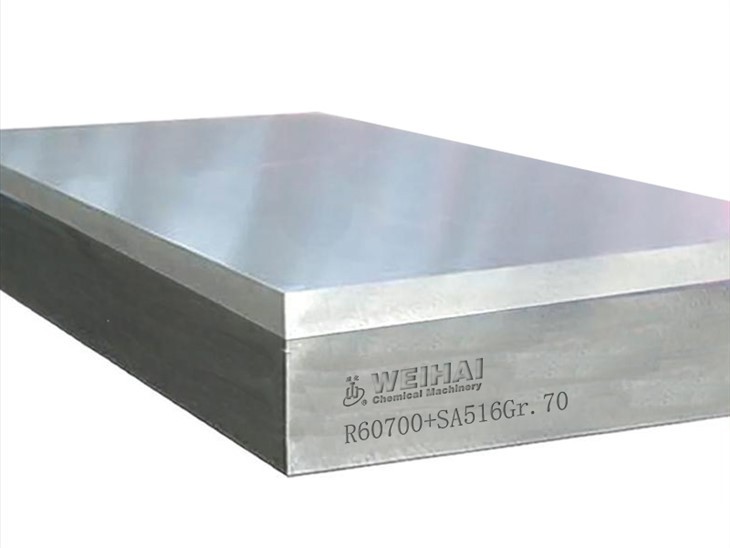
Explosive clad plates are composite materials created by bonding two or more different metals together using the energy of an explosive. This process, known as explosive cladding or explosion bonding, results in a metallurgical bond between the layers that is as strong as, or even stronger than, the base metals themselves. The bonding occurs in a fraction of a second, and the resulting clad plate combines the best properties of each metal, such as corrosion resistance, strength, and conductivity.
How Are Explosive Clad Plates Made?
The explosive cladding process begins with the careful selection of the base metal and the cladding metal. The base metal provides the structural support, while the cladding metal offers specific properties such as corrosion resistance or wear resistance. The two metals are then cleaned and prepared to ensure a clean surface for bonding.
Next, the cladding metal is placed on top of the base metal with a small gap between them. An explosive charge is then placed on top of the cladding metal, and a detonator is used to initiate the explosion. The energy from the explosion causes the cladding metal to accelerate towards the base metal at a high velocity, creating a high-pressure shock wave that fuses the two metals together.
The explosive cladding process is a highly controlled and precise operation that requires specialized equipment and expertise. The parameters of the explosion, such as the type and amount of explosive, the distance between the metals, and the angle of impact, must be carefully adjusted to ensure a strong and uniform bond.
Properties of Explosive Clad Plates
One of the key advantages of explosive clad plates is their unique combination of properties. By bonding two or more different metals together, it is possible to create a material that has the best characteristics of each metal. For example, a clad plate made of stainless steel and carbon steel can combine the corrosion resistance of stainless steel with the strength and affordability of carbon steel.
Explosive clad plates also have excellent mechanical properties, such as high strength, toughness, and ductility. The metallurgical bond between the layers ensures that the clad plate behaves as a single unit, with the layers working together to resist deformation and failure.
In addition, explosive clad plates have good thermal and electrical conductivity, making them suitable for applications where heat transfer or electrical conduction is important. The bond between the layers also provides good resistance to fatigue and corrosion, ensuring a long service life in harsh environments.
Applications of Explosive Clad Plates
Explosive clad plates are used in a wide range of industries, including chemical processing, oil and gas, power generation, and aerospace. Some of the common applications of explosive clad plates include:
- Chemical Processing: In the chemical industry, explosive clad plates are used to line reactors, storage tanks, and piping systems. The corrosion-resistant cladding metal protects the base metal from the corrosive effects of chemicals, while the strong base metal provides the structural support.
- Oil and Gas: In the oil and gas industry, explosive clad plates are used in offshore platforms, pipelines, and refineries. The clad plates provide corrosion resistance and strength in harsh environments, such as saltwater and high-pressure conditions.
- Power Generation: In the power generation industry, explosive clad plates are used in nuclear reactors, fossil fuel power plants, and renewable energy systems. The clad plates provide high-temperature resistance, corrosion resistance, and strength in demanding applications.
- Aerospace: In the aerospace industry, explosive clad plates are used in aircraft structures, engine components, and missile systems. The clad plates provide lightweight, high-strength materials that can withstand the extreme conditions of flight.
Types of Explosive Clad Plates
There are several types of explosive clad plates available, each with its own unique properties and applications. Some of the common types of explosive clad plates include:
- Nickel-base Steel Clad Plate: Nickel-base Steel Clad Plate combines the corrosion resistance of nickel alloys with the strength and affordability of steel. These clad plates are commonly used in chemical processing, oil and gas, and power generation applications.
- Copper Steel Clad Plate: Copper Steel Clad Plate combines the high thermal and electrical conductivity of copper with the strength and corrosion resistance of steel. These clad plates are commonly used in electrical and electronic applications, as well as in heat exchangers and cooling systems.
- Other Alloy Clad Plate: Other Alloy Clad Plate includes clad plates made of other metals and alloys, such as titanium, aluminum, and stainless steel. These clad plates are used in a variety of applications, depending on the specific properties of the metals involved.
Why Choose Our Explosive Clad Plates?
As a leading supplier of explosive clad plates, we offer a wide range of high-quality products that are designed to meet the specific needs of our customers. Our explosive clad plates are manufactured using the latest technology and equipment, ensuring a strong and uniform bond between the layers.
We also offer a variety of customization options, such as different metal combinations, thicknesses, and sizes, to meet the unique requirements of each application. Our experienced team of engineers and technicians can work with you to design and manufacture the perfect explosive clad plate for your project.
In addition, we are committed to providing excellent customer service and support. We offer fast turnaround times, competitive pricing, and reliable delivery, ensuring that you get the products you need when you need them.
Contact Us for Your Explosive Clad Plate Needs
If you are interested in learning more about our explosive clad plates or would like to discuss your specific requirements, please contact us today. Our team of experts will be happy to answer your questions and provide you with a free quote.

We look forward to working with you to provide the best explosive clad plate solutions for your business.
References
- ASM Handbook, Volume 6: Welding, Brazing, and Soldering, ASM International, 1993.
- Explosion Cladding: Principles and Applications, edited by R. A. Akselsen and J. M. Kolts, TMS, 1995.
- Handbook of Clad Metals: Production, Properties, and Applications, edited by R. A. Akselsen and J. M. Kolts, ASM International, 2000.


