


Hey there! As a supplier of Catalytic Cracking Test Units, I often get asked about how to choose the right catalyst support for these units. It's a crucial decision that can significantly impact the performance and efficiency of your catalytic cracking process. So, let's dive right in and explore the key factors you should consider when making this choice.
First off, let's understand what a catalyst support is. In a nutshell, a catalyst support is a material that provides a high surface area for the active catalyst component to be dispersed on. It helps to increase the contact between the reactants and the catalyst, thereby enhancing the reaction rate. Additionally, it can improve the mechanical strength and stability of the catalyst, allowing it to withstand the harsh conditions of the catalytic cracking process.
One of the most important factors to consider when choosing a catalyst support is its surface area. A high surface area means more active sites for the reactants to interact with the catalyst, which can lead to better catalytic performance. Materials like alumina, silica, and zeolites are commonly used as catalyst supports due to their high surface areas. For example, activated alumina can have a surface area of up to 300 m²/g, providing ample space for the active catalyst to be dispersed.
Another crucial factor is the pore structure of the catalyst support. The pores in the support material play a vital role in facilitating the diffusion of reactants and products to and from the active sites of the catalyst. There are two main types of pores: micropores (less than 2 nm in diameter) and mesopores (2 - 50 nm in diameter). Micropores are excellent for providing a high surface area, but they can also restrict the diffusion of larger molecules. On the other hand, mesopores allow for better diffusion of reactants and products, especially for reactions involving large molecules. Therefore, depending on the nature of your reactants and the reaction conditions, you may need to choose a catalyst support with an appropriate pore structure.
The thermal stability of the catalyst support is also an important consideration. Catalytic cracking processes often involve high temperatures, and the support material needs to be able to withstand these conditions without undergoing significant structural changes. Materials like alumina and zirconia are known for their good thermal stability, making them suitable for high-temperature catalytic cracking applications.
In addition to these physical properties, the chemical compatibility between the catalyst support and the active catalyst component is crucial. The support material should not react with the active catalyst in a way that reduces its activity or selectivity. For example, if you're using a metal-based catalyst, you need to ensure that the support material does not form stable compounds with the metal, which could deactivate the catalyst.
Now, let's talk about some specific types of catalyst supports and their applications. Alumina is one of the most widely used catalyst supports due to its high surface area, good thermal stability, and chemical inertness. It's commonly used in fluid catalytic cracking (FCC) processes, which are widely employed in the petroleum refining industry to convert heavy hydrocarbons into lighter, more valuable products.
Silica is another popular choice, especially for applications where a high surface area and good thermal stability are required. It's often used in combination with other materials to form composite supports, which can offer enhanced properties. For example, silica-alumina composites are commonly used in FCC catalysts to improve their activity and selectivity.
Zeolites are also important catalyst supports, particularly for applications involving shape-selective catalysis. Zeolites have a well-defined pore structure that can selectively allow certain molecules to enter and react, while excluding others. This makes them ideal for reactions where specific product selectivity is desired, such as in the production of high-octane gasoline.
When choosing a catalyst support for your Catalytic Cracking Test Unit, it's also important to consider the cost and availability of the material. Some high-performance catalyst supports can be quite expensive, which may not be feasible for small-scale or research applications. Therefore, you need to balance the performance requirements with the cost and availability of the support material.
In addition to the catalyst support itself, the method of preparing the catalyst can also have a significant impact on its performance. The way the active catalyst component is loaded onto the support can affect its dispersion and interaction with the support material. There are several methods for preparing catalysts, including impregnation, precipitation, and sol-gel techniques. Each method has its own advantages and disadvantages, and the choice of method depends on the specific requirements of your application.

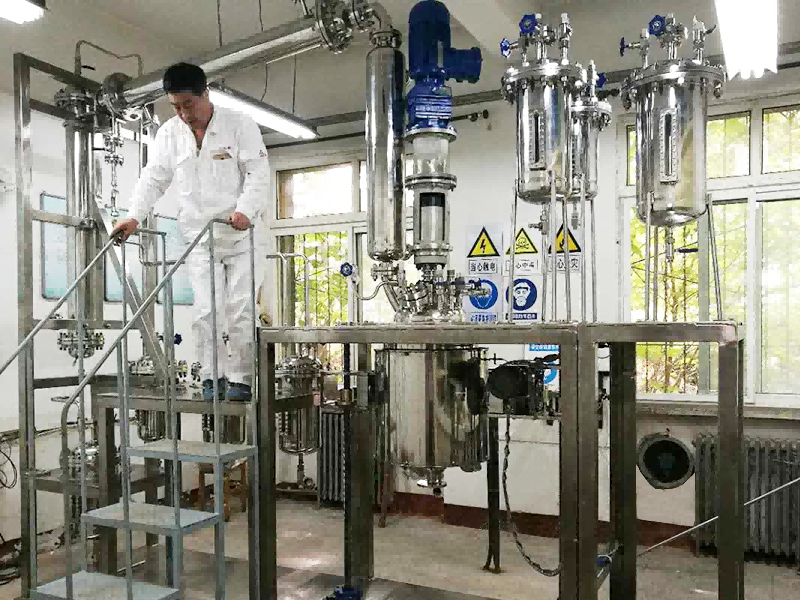
If you're interested in learning more about other types of pilot plants, we also offer Distillation Adsorption Extraction Facility, Hydrogenation Test Unit, and Simulation and Semi-industrial Pilot Plant. These facilities can provide valuable insights and data for your research and development projects.
In conclusion, choosing the right catalyst support for your Catalytic Cracking Test Unit is a complex decision that requires careful consideration of several factors, including the surface area, pore structure, thermal stability, chemical compatibility, cost, and availability of the support material. By taking these factors into account and conducting thorough research, you can select a catalyst support that will optimize the performance and efficiency of your catalytic cracking process.
If you're in the market for a Catalytic Cracking Test Unit or have any questions about catalyst supports, don't hesitate to reach out. We're here to help you make the best choice for your specific needs.
References
- Satterfield, C. N. (1991). Heterogeneous Catalysis in Industrial Practice. McGraw-Hill.
- Thomas, J. M., & Thomas, W. J. (1997). Principles and Practice of Heterogeneous Catalysis. VCH Publishers.
- Ertl, G., Knözinger, H., & Weitkamp, J. (1997). Handbook of Heterogeneous Catalysis. Wiley-VCH.


