


Selecting the right catalyst for a Catalytic Cracking Test Unit is a crucial decision that can significantly impact the efficiency, productivity, and overall success of your catalytic cracking operations. As a supplier of Catalytic Cracking Test Units, I understand the complexities involved in this process and am here to provide you with valuable insights to help you make an informed choice.
Understanding Catalytic Cracking and the Role of Catalysts
Catalytic cracking is a key process in the petroleum refining industry that breaks down large hydrocarbon molecules into smaller, more valuable ones. This process is essential for producing high - quality gasoline, diesel, and other petroleum products. Catalysts play a central role in catalytic cracking by lowering the activation energy of the reaction, increasing the reaction rate, and enhancing the selectivity towards the desired products.
In a Catalytic Cracking Test Unit, the effectiveness of the catalyst directly influences the ability of the unit to mimic and optimize the real - world cracking process. A well - chosen catalyst can lead to higher yields of valuable products, improved energy efficiency, and reduced environmental impact.
Factors to Consider When Choosing a Catalyst
1. Feedstock Properties
The nature of the feedstock used in the catalytic cracking process is one of the primary factors to consider when selecting a catalyst. Different feedstocks, such as heavy crude oil, vacuum gas oil, or residua, have varying compositions in terms of hydrocarbon types (paraffins, naphthenes, aromatics), metal content, and sulfur and nitrogen levels.
For example, if the feedstock has a high metal content, a catalyst with good metal - tolerance properties is required. Metals like nickel and vanadium can deposit on the catalyst surface, reducing its activity and selectivity over time. Some catalysts are designed with specific pore structures and active sites that can resist metal poisoning and maintain their performance.
On the other hand, if the feedstock is rich in aromatics, a catalyst that can effectively break the aromatic rings and convert them into lighter hydrocarbons is needed. The acidity and pore size distribution of the catalyst play important roles in this regard.
2. Product Slate Requirements
The desired product slate is another critical factor. Depending on the market demand, refineries may aim to maximize the production of gasoline, diesel, or light olefins (such as ethylene and propylene). Different catalysts have different selectivities towards these products.
Catalysts with a high silica - to - alumina ratio and medium - sized pores often exhibit good selectivity towards gasoline production. They can promote the cracking of large hydrocarbons into the appropriate size range for gasoline blending components.
For the production of light olefins, zeolite - based catalysts with specific framework structures are commonly used. These catalysts can selectively crack hydrocarbons to form ethylene and propylene through a series of acid - catalyzed reactions.
3. Catalyst Activity and Stability
Catalyst activity refers to its ability to initiate and accelerate the catalytic cracking reaction. A highly active catalyst can lower the reaction temperature and increase the conversion rate of the feedstock. However, activity alone is not sufficient; catalyst stability is also crucial.
Stability is determined by the catalyst's resistance to deactivation mechanisms such as coking, sintering, and poisoning. Coking occurs when carbonaceous deposits build up on the catalyst surface, blocking the active sites and reducing its activity. Catalysts with high hydrothermal stability are more resistant to sintering, which is the growth of catalyst particles at high temperatures, leading to a decrease in surface area and activity.
4. Cost - effectiveness
Cost is an important consideration in any industrial process. The price of the catalyst, its lifetime, and the associated operating costs all contribute to the overall cost - effectiveness. A more expensive catalyst may offer better performance and longer lifetime, resulting in lower operating costs in the long run.
However, it is essential to balance the initial investment with the expected benefits. Conducting a cost - benefit analysis considering the product yields, energy consumption, and maintenance requirements can help in making a cost - effective decision.
Types of Catalysts for Catalytic Cracking
There are several types of catalysts commonly used in catalytic cracking, each with its own characteristics and applications.
1. Zeolite - based Catalysts
Zeolites are crystalline aluminosilicates with well - defined pore structures and high acidity. They are the most widely used catalysts in modern catalytic cracking units. Y - type zeolites, such as ultrastable Y (USY) zeolites, are commonly used due to their high activity, good selectivity towards gasoline production, and relatively high stability.
Zeolite - based catalysts can be modified by ion - exchange, dealumination, and the addition of other metals to enhance their performance. For example, the addition of rare - earth metals can improve the hydrothermal stability and coke - resistance of the zeolite.
2. Amorphous Silica - Alumina Catalysts
Amorphous silica - alumina catalysts have been used in catalytic cracking for a long time. They have a more open pore structure compared to zeolites, which allows for the cracking of larger hydrocarbon molecules. However, they generally have lower activity and selectivity compared to zeolite - based catalysts.
These catalysts are often used in combination with zeolites to provide a broader range of cracking capabilities, especially for feedstocks with a wide range of molecular sizes.
3. Metal - loaded Catalysts
In some cases, catalysts are loaded with metals such as platinum, palladium, or nickel to enhance their hydrogenation or dehydrogenation capabilities. For example, metal - loaded catalysts can be used to reduce the sulfur and nitrogen content in the feedstock during the cracking process, improving the quality of the products.
Our Services and Other Related Units
As a supplier of Catalytic Cracking Test Units, we not only offer high - quality test equipment but also provide professional advice on catalyst selection. Our team of experts has in - depth knowledge of the catalytic cracking process and can help you choose the most suitable catalyst based on your specific requirements.
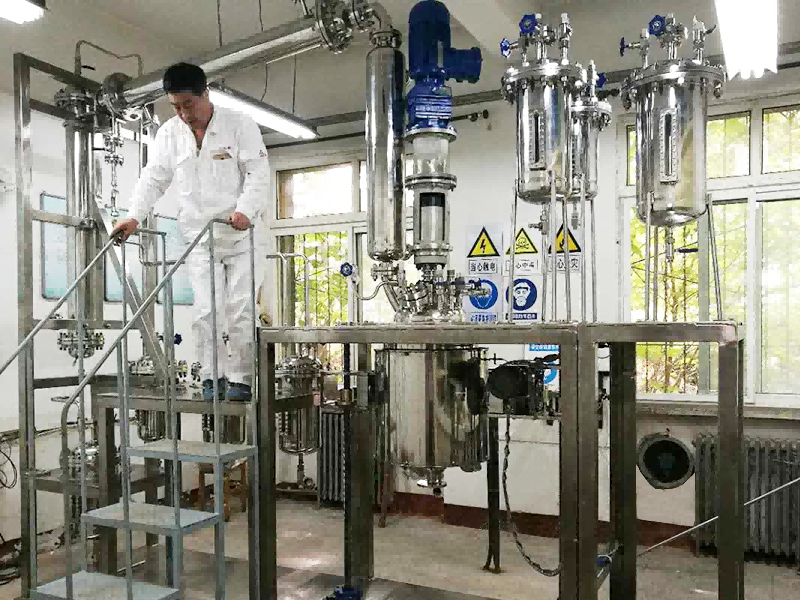

If you are also interested in other related processes, we offer a range of pilot plants. For example, our Distillation Adsorption Extraction Facility is designed for separation processes, which can be complementary to catalytic cracking. The Simulation and Semi - industrial Pilot Plant allows you to simulate industrial - scale processes and optimize your operations. Additionally, our Hydrogenation Test Unit can be used for hydrogenation reactions, which are often related to the upgrading of cracked products.
Contact Us for Procurement and Consultation
Choosing the right catalyst for your Catalytic Cracking Test Unit is a complex but essential task. Our experience and expertise can help simplify this process and ensure that you get the best results. Whether you are a petroleum refinery looking to optimize your cracking process, a research institution conducting studies on catalytic cracking, or a company involved in the development of new catalysts, we are here to assist you.
If you are interested in our Catalytic Cracking Test Units or need further information on catalyst selection, please feel free to contact us. We are more than happy to discuss your specific needs and provide you with customized solutions. Our team of professionals is ready to guide you through the procurement process and offer continuous support after the purchase.
References
- Thomas, J. M., & Raja, R. (2008). Principles and Practice of Heterogeneous Catalysis. Wiley-VCH.
- Chauvel, A., & Lefebvre, G. (2012). Handbook of Petroleum Refining Processes. McGraw - Hill.
- Corma, A. (1995). Zeolite - based catalysts for the production of light olefins from heavy feeds. Catalysis Today, 23(3), 263 - 273.


