


In the realm of chemical engineering and industrial processes, stripping towers play a pivotal role in separating components from liquid mixtures. As a dedicated supplier of stripping towers, I've witnessed firsthand the significance of accurate simulations in optimizing their performance. In this blog, we'll delve into the accuracy of stripping tower simulations, exploring the factors that influence it and the implications for industrial applications.
The Basics of Stripping Tower Simulations
Stripping towers, also known as distillation columns, are designed to separate volatile components from a liquid mixture by contacting the liquid with a vapor stream. The process relies on the difference in volatility between the components, allowing the more volatile ones to transfer from the liquid phase to the vapor phase. Simulations of stripping towers are essential for predicting their performance, designing new towers, and troubleshooting existing ones.
These simulations are typically based on mathematical models that describe the mass transfer, heat transfer, and fluid flow processes occurring within the tower. The models take into account various parameters, such as the composition of the feed mixture, the operating conditions (temperature, pressure, flow rates), and the physical properties of the components. By solving these models using numerical methods, engineers can obtain detailed information about the composition, temperature, and flow rate profiles within the tower.
Factors Affecting the Accuracy of Simulations
The accuracy of stripping tower simulations depends on several factors, including the quality of the input data, the complexity of the mathematical models, and the numerical methods used for solving the models. Let's take a closer look at each of these factors:
Input Data
The accuracy of the input data is crucial for obtaining reliable simulation results. This includes the composition of the feed mixture, the physical properties of the components (such as boiling points, vapor pressures, and densities), and the operating conditions (temperature, pressure, flow rates). Any errors or uncertainties in the input data can propagate through the simulation and lead to inaccurate predictions.
For example, if the composition of the feed mixture is not accurately known, the simulation may overestimate or underestimate the amount of each component that is stripped from the liquid phase. Similarly, if the physical properties of the components are not well-characterized, the simulation may not accurately predict the mass transfer and heat transfer rates within the tower.
Mathematical Models
The complexity of the mathematical models used for stripping tower simulations can also affect their accuracy. Simplified models that make assumptions about the behavior of the components and the processes occurring within the tower may provide a quick estimate of the tower's performance but may not capture all the details. On the other hand, more complex models that take into account a wider range of factors may provide more accurate results but may also require more computational resources and time.

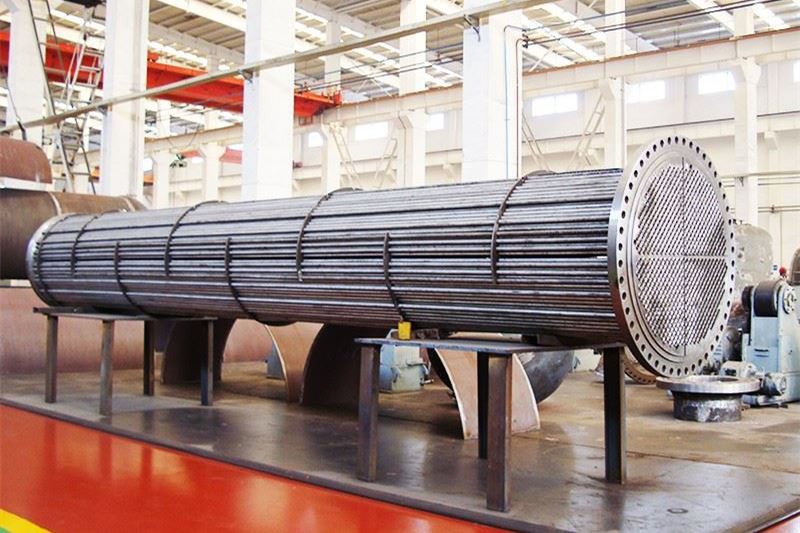
For instance, some models assume that the liquid and vapor phases are in equilibrium at each stage of the tower, which may not be true in reality. Other models may neglect the effects of heat transfer, fluid flow, or chemical reactions, which can have a significant impact on the tower's performance. Therefore, it's important to choose the appropriate mathematical model based on the specific requirements of the simulation.
Numerical Methods
The numerical methods used for solving the mathematical models can also influence the accuracy of the simulations. Different numerical methods have different levels of accuracy, stability, and computational efficiency. Some methods may converge quickly to a solution but may produce inaccurate results, while others may be more accurate but may require more computational resources and time.
For example, the Newton-Raphson method is a commonly used numerical method for solving nonlinear equations, but it may not converge if the initial guess is too far from the actual solution. Other methods, such as the successive substitution method or the relaxation method, may be more robust but may converge more slowly. Therefore, it's important to choose the appropriate numerical method based on the characteristics of the mathematical model and the available computational resources.
Validation and Verification of Simulations
To ensure the accuracy of stripping tower simulations, it's important to validate and verify the simulation results. Validation involves comparing the simulation results with experimental data or field measurements to determine if the simulation accurately predicts the behavior of the tower. Verification, on the other hand, involves checking the numerical implementation of the mathematical models to ensure that the equations are being solved correctly.
Validation can be done by conducting experiments in a laboratory or pilot plant scale and comparing the experimental results with the simulation results. If the simulation results are in good agreement with the experimental data, it provides confidence in the accuracy of the simulation. However, if there are significant discrepancies between the simulation and experimental results, it may indicate that there are errors in the input data, the mathematical models, or the numerical methods.
Verification can be done by checking the numerical implementation of the mathematical models using analytical solutions or benchmark problems. For example, if the mathematical model has an analytical solution for a simple case, the numerical solution can be compared with the analytical solution to ensure that the equations are being solved correctly. Additionally, benchmark problems can be used to compare the performance of different numerical methods and to ensure that the simulation software is working correctly.
Implications for Industrial Applications
The accuracy of stripping tower simulations has significant implications for industrial applications. Accurate simulations can help engineers optimize the design and operation of stripping towers, reduce energy consumption, and improve product quality. On the other hand, inaccurate simulations can lead to suboptimal design and operation, increased energy consumption, and poor product quality.
For example, accurate simulations can be used to determine the optimal number of stages, the reflux ratio, and the operating conditions for a stripping tower. By optimizing these parameters, engineers can minimize the energy consumption and maximize the separation efficiency of the tower. In addition, accurate simulations can be used to predict the performance of the tower under different operating conditions, such as changes in feed composition or flow rate, and to develop strategies for dealing with these changes.
Inaccurate simulations, on the other hand, can lead to overdesign or underdesign of the tower. Overdesign can result in increased capital costs and energy consumption, while underdesign can lead to poor separation efficiency and product quality. Additionally, inaccurate simulations can make it difficult to troubleshoot problems in the tower and to develop effective solutions.
Conclusion
In conclusion, the accuracy of stripping tower simulations depends on several factors, including the quality of the input data, the complexity of the mathematical models, and the numerical methods used for solving the models. To ensure the accuracy of the simulations, it's important to validate and verify the simulation results using experimental data or field measurements. Accurate simulations can have significant implications for industrial applications, helping engineers optimize the design and operation of stripping towers, reduce energy consumption, and improve product quality.
As a supplier of stripping towers, we understand the importance of accurate simulations in ensuring the performance and reliability of our products. We work closely with our customers to provide them with high-quality simulation services and to help them optimize the design and operation of their stripping towers. If you're interested in learning more about our stripping towers or our simulation services, please don't hesitate to [contact us for a procurement discussion].
References
- Seader, J. D., Henley, E. J., & Roper, D. K. (2011). Separation Process Principles: Chemical and Biochemical Operations. Wiley.
- Holland, C. D. (1975). Fundamentals of Multicomponent Distillation. McGraw-Hill.
- Smith, B. D. (1963). Design of Equilibrium Stage Processes. McGraw-Hill.


