


Hydrogenation is a crucial chemical process that involves the addition of hydrogen to a compound. A Hydrogenation Test Unit (HTU) plays a vital role in researching and optimizing this process. As a supplier of Hydrogenation Test Units, we understand the diverse range of samples that can be tested in these units, which is essential for various industries such as petrochemicals, food, and pharmaceuticals. In this blog, we will explore the different types of samples that can be tested in a Hydrogenation Test Unit.
1. Petrochemical Samples
Petrochemicals are a major area where hydrogenation tests are extensively conducted. Crude oil fractions are often tested in HTUs to improve their quality and properties. For example, naphtha, a light hydrocarbon fraction obtained from crude oil, can be hydrogenated to remove sulfur and other impurities. This process not only reduces environmental pollution but also enhances the performance of naphtha as a feedstock for the production of gasoline and other high - value products.
Another important petrochemical sample is olefins. Olefins such as ethylene and propylene are widely used in the production of plastics, synthetic rubbers, and other chemical products. Hydrogenation of olefins can convert them into more stable paraffins, which are used in the production of lubricants and other specialty chemicals. In our Hydrogenation Test Units, we can precisely control the reaction conditions such as temperature, pressure, and hydrogen flow rate to optimize the hydrogenation of these petrochemical samples.
The petrochemical industry also uses hydrogenation to upgrade heavy oils. Heavy oils have high viscosity and low quality due to the presence of large - molecular - weight hydrocarbons and impurities. By hydrogenating heavy oils in an HTU, these large molecules can be cracked into smaller, more valuable hydrocarbons, and impurities can be removed. This process can significantly improve the quality of heavy oils and increase their economic value. For more information on related chemical processing facilities, you can refer to our Distillation Adsorption Extraction Facility.
2. Food Samples
Hydrogenation is also widely used in the food industry. One of the most common food samples tested in an HTU is vegetable oils. Vegetable oils are rich in unsaturated fatty acids, which are prone to oxidation and have a short shelf - life. Hydrogenation of vegetable oils can convert some of the unsaturated fatty acids into saturated fatty acids, increasing the melting point of the oil and improving its stability.
For example, liquid vegetable oils such as soybean oil and canola oil can be partially hydrogenated to produce semi - solid fats, which are used in the production of margarine, shortening, and other food products. The degree of hydrogenation can be carefully controlled in our Hydrogenation Test Units to achieve the desired texture and properties of the final food product. However, it is important to note that excessive hydrogenation can lead to the formation of trans - fats, which are associated with negative health effects. Therefore, our HTUs are equipped with advanced monitoring and control systems to ensure that the hydrogenation process of food samples is carried out within a safe and healthy range.

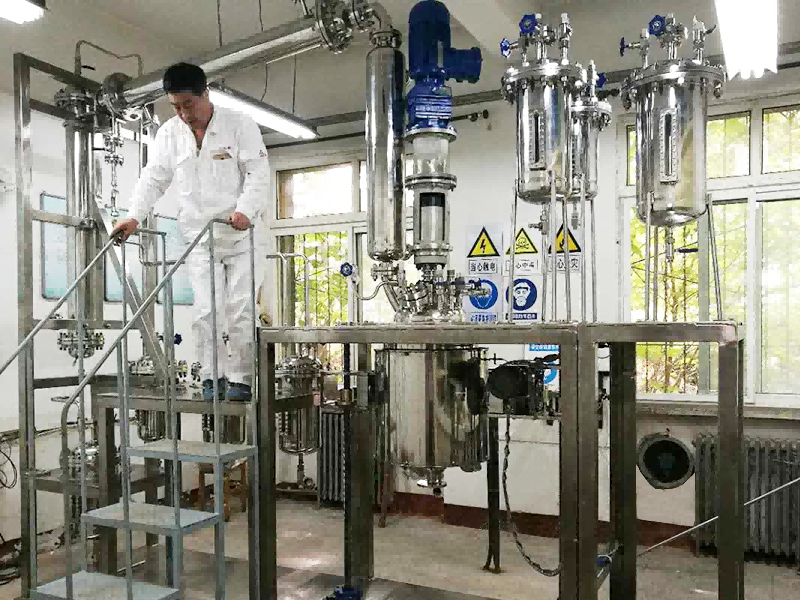
In addition to vegetable oils, other food components such as fish oils can also be hydrogenated. Fish oils are rich in omega - 3 fatty acids, which have many health benefits. Hydrogenation of fish oils can improve their stability and reduce their unpleasant odor, making them more suitable for use in food supplements and other products.
3. Pharmaceutical Samples
The pharmaceutical industry also benefits greatly from hydrogenation tests. Many pharmaceutical intermediates and active pharmaceutical ingredients (APIs) require hydrogenation steps in their synthesis. For example, some drugs contain double bonds or other unsaturated functional groups that need to be hydrogenated to improve their stability and bioavailability.
In our Hydrogenation Test Units, pharmaceutical companies can test different reaction conditions to optimize the hydrogenation of their samples. We can provide a high - purity hydrogen environment and precise temperature and pressure control to ensure the reproducibility and efficiency of the hydrogenation process. This is crucial for the development of new drugs and the improvement of existing drug synthesis processes.
Moreover, the hydrogenation of chiral compounds is also an important area in pharmaceutical research. Chiral compounds have different biological activities depending on their stereochemistry. Hydrogenation can be used to selectively reduce one enantiomer of a chiral compound or to convert a racemic mixture into a single - enantiomer product. Our HTUs can be customized to meet the specific requirements of chiral hydrogenation reactions, providing a powerful tool for pharmaceutical R & D. For those interested in laboratory - scale equipment for related processes, our Lab Autoclave can be a valuable resource.
4. Coal - related Samples
Coal is an important energy source, and hydrogenation can be used to convert coal into liquid fuels and other valuable chemicals. Coal liquefaction is a process that involves the hydrogenation of coal under high temperature and pressure conditions. In our Hydrogenation Test Units, we can simulate the coal liquefaction process and test different types of coal samples.
Coal contains a complex mixture of organic compounds, and the hydrogenation process can break down these large - molecular - weight compounds into smaller hydrocarbons. By testing different coal samples in our HTUs, we can study the influence of coal properties such as coal rank, ash content, and sulfur content on the hydrogenation process. This information is valuable for the development of more efficient coal liquefaction technologies.
In addition, coal gasification is another related process where hydrogenation may be involved. The syngas produced from coal gasification can be further hydrogenated to produce synthetic natural gas, methanol, and other chemicals. Our Hydrogenation Test Units can provide a platform for researching and optimizing these coal - related hydrogenation processes. For more details on coal - chemical pilot plants, you can visit our Coal Chemical Pilot Plant.
5. Biomass Samples
Biomass is a renewable energy source and a promising feedstock for the production of biofuels and biochemicals. Hydrogenation can be used to upgrade biomass - derived products such as bio - oils and sugars. Bio - oils are obtained from the pyrolysis of biomass, but they have high oxygen content, high acidity, and low stability. Hydrogenation of bio - oils can remove oxygen and improve their quality, making them more suitable for use as transportation fuels or as feedstocks for the production of chemicals.
Sugars, which are abundant in biomass, can also be hydrogenated to produce sugar alcohols such as sorbitol and mannitol. These sugar alcohols have various applications in the food, pharmaceutical, and chemical industries. Our Hydrogenation Test Units can be used to optimize the hydrogenation conditions of biomass samples, taking into account factors such as biomass composition, reaction temperature, and catalyst selection.
Contact Us for Purchasing and Negotiation
As a leading supplier of Hydrogenation Test Units, we are committed to providing high - quality equipment and excellent technical support. Our Hydrogenation Test Units are designed with advanced technology and reliable components, ensuring accurate and efficient testing of various samples. Whether you are in the petrochemical, food, pharmaceutical, coal - chemical, or biomass industry, our HTUs can meet your specific testing needs.
If you are interested in our Hydrogenation Test Units or have any questions about the testing of specific samples, please feel free to contact us. We look forward to discussing your requirements and providing you with the best solutions for your hydrogenation testing needs.
References
- Smith, J. M., Van Ness, H. C., & Abbott, M. M. (2005). Introduction to Chemical Engineering Thermodynamics. McGraw - Hill.
- Felder, R. M., & Rousseau, R. W. (2005). Elementary Principles of Chemical Processes. Wiley.
- Pinnau, I., & Freeman, B. D. (2000). "The upper bound revisited." Journal of Membrane Science, 175(1), 1 - 29.


