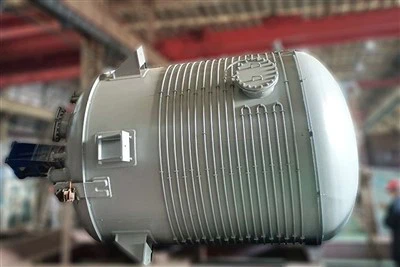
Alright, folks! As a supplier of Polymerization Reactors, I often get asked about the noise levels associated with these bad boys. So, I thought I'd take a few minutes to break it down for you.
First off, let's talk about what a polymerization reactor is. In simple terms, it's a vessel where monomers are chemically bonded together to form polymers. These reactors are used in a wide range of industries, from plastics manufacturing to pharmaceuticals. They come in different shapes and sizes, and each type has its own unique set of characteristics, including noise levels.
Now, the noise generated by a polymerization reactor can come from several sources. One of the main culprits is the stirring mechanism. Most reactors use a stirrer to ensure proper mixing of the reactants, and this stirrer can create a fair amount of noise. The type of stirrer, its speed, and the design of the reactor all play a role in how loud it gets.
For instance, a Continuous Stirred Tank Reactor is a common type of polymerization reactor. In this setup, the stirrer is constantly running to keep the reaction mixture well - mixed. The noise from the motor driving the stirrer and the agitation of the liquid can be quite significant. The speed of the stirrer is a crucial factor here. Higher speeds generally mean more noise, but they're often necessary to achieve the desired reaction rates.
Another source of noise is the mechanical components of the reactor. Things like pumps, compressors, and valves can all contribute to the overall noise level. Pumps are used to transfer reactants in and out of the reactor, and their operation can produce a steady hum. Compressors, which are sometimes used to control the pressure inside the reactor, can also be quite noisy. Valves, when they open and close, can create sharp, sudden noises.
Let's take a look at a Mechanical Seal Stirred Reactor. The mechanical seal is designed to prevent leakage of the reaction mixture, but it can also add to the noise. The friction between the seal components and the movement of the shaft can generate a high - pitched noise, especially if the seal is not properly maintained.
Crystallization can also be a factor in noise generation. In a Crystallization Stirred Reactor, the formation of crystals can cause changes in the viscosity and flow properties of the reaction mixture. This can lead to irregular agitation and increased noise levels. The growth of crystals can also cause small impacts within the reactor, adding to the overall soundscape.
Now, why does the noise level matter? Well, for one, it can be a safety concern. High - noise environments can lead to hearing damage for workers who are exposed to them on a regular basis. It can also be a nuisance in industrial areas where there are strict noise regulations. Excessive noise can lead to complaints from nearby residents or other businesses, which can cause legal and operational headaches.
From an operational perspective, excessive noise can also be an indication of a problem. For example, if the noise from a reactor suddenly increases, it could mean that there's a mechanical issue, such as a worn - out bearing in the stirrer motor or a loose valve. Monitoring the noise levels can help in early detection of these problems, allowing for timely maintenance and preventing costly breakdowns.
So, what can be done to reduce the noise levels associated with polymerization reactors? There are several strategies. One option is to use sound - absorbing materials around the reactor. These materials can help to dampen the noise and prevent it from spreading. Insulating the reactor walls with materials like fiberglass or acoustic foam can be quite effective.
Another approach is to optimize the design of the reactor and its components. Using more efficient stirrers with quieter motors can make a big difference. For example, some modern stirrers are designed with advanced bearings and gears that reduce friction and noise. Additionally, proper alignment of the mechanical components can also minimize noise.
Regular maintenance is crucial. Keeping the pumps, compressors, and valves in good working condition can prevent them from making excessive noise. Lubricating moving parts, tightening loose bolts, and replacing worn - out components can all contribute to a quieter reactor.
As a Polymerization Reactor supplier, we're always looking for ways to improve the noise performance of our products. We work closely with our customers to understand their specific needs and challenges. Whether it's a small - scale laboratory reactor or a large - scale industrial one, we can provide solutions that balance the need for efficient reaction processes with the desire for a quiet working environment.
If you're in the market for a polymerization reactor and are concerned about noise levels, don't hesitate to reach out. We can discuss your requirements in detail, show you our range of products, and provide you with all the information you need to make an informed decision. Our team of experts is ready to assist you every step of the way, from selection to installation and after - sales support.
In conclusion, noise levels associated with polymerization reactors are an important consideration. They can impact safety, compliance, and operational efficiency. But with the right approach and the right products, it's possible to manage and reduce these noise levels. So, if you're thinking about purchasing a polymerization reactor, give us a call and let's start the conversation. We're confident that we can find the perfect solution for your needs.


References
- "Polymer Reaction Engineering" by K. - H. Reichert and W. Geisler
- "Handbook of Industrial Chemistry and Biotechnology" edited by James A. Kent