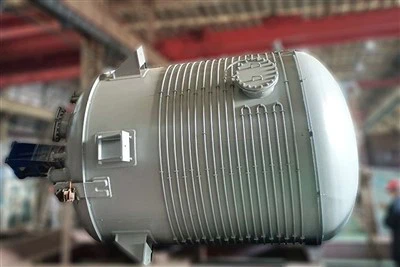
Hey there! As a supplier of stirred reactors, I'm super excited to share with you the latest developments in stirred reactor technology. It's a field that's constantly evolving, and there are some really cool advancements that are shaping the industry.
First off, let's talk about the materials used in stirred reactors. In the past, traditional materials like stainless steel were the norm. But now, there's a growing trend towards using advanced composite materials. These composites offer several advantages. They're lightweight, which makes the reactors easier to handle and transport. They also have excellent corrosion resistance, which is a big deal when you're dealing with harsh chemicals. For example, some new composites can withstand highly acidic or alkaline environments without degrading. This means longer service life and less maintenance for the reactors.
Another significant development is in the area of mixing efficiency. Stirred reactors are all about getting the right mix of substances, and engineers have been working hard to improve this process. New impeller designs are at the forefront of this progress. These impellers are designed to create more complex flow patterns within the reactor. Instead of just simple circular motion, they can generate radial and axial flows simultaneously. This results in better dispersion of reactants, which in turn leads to more efficient chemical reactions. For instance, in a Crystallization Stirred Reactor, improved mixing can lead to more uniform crystal growth, resulting in higher quality products.
Automation and control systems have also seen a huge leap forward. In the past, operating a stirred reactor required a lot of manual input and monitoring. But now, with the help of advanced sensors and control algorithms, reactors can be operated more precisely and with less human intervention. Sensors can measure various parameters such as temperature, pressure, and pH in real - time. The control system can then adjust the stirring speed, heating or cooling, and other variables to maintain optimal reaction conditions. This not only improves the quality and consistency of the products but also reduces the risk of human error. For example, in a Polymerization Reactor, precise control of temperature and stirring speed is crucial for producing polymers with the right molecular weight and properties.
Energy efficiency is another hot topic in stirred reactor technology. With the increasing focus on sustainability, manufacturers are looking for ways to reduce the energy consumption of their reactors. One approach is to use more efficient motors. Newer motors are designed to convert electrical energy into mechanical energy with less waste. They also have better power factor correction, which means they draw less reactive power from the grid. Additionally, improvements in the design of the reactor itself can contribute to energy savings. For example, better insulation can reduce heat loss, and optimized impeller designs can achieve the same mixing results with less power.
In terms of safety, there have been some great improvements as well. One of the key areas is in the sealing technology. A Mechanical Seal Stirred Reactor is a prime example. These seals are designed to prevent leaks of hazardous substances from the reactor. They use advanced materials and precision engineering to create a tight seal even under high pressure and temperature conditions. Newer mechanical seals also have self - adjusting features, which means they can maintain their sealing performance over a longer period of time without the need for frequent maintenance.
The integration of digital twin technology is also a game - changer. A digital twin is a virtual replica of the physical reactor. It uses real - time data from the sensors on the actual reactor to simulate its behavior. This allows operators to predict how the reactor will perform under different conditions and make informed decisions. For example, they can test different operating scenarios on the digital twin before implementing them on the actual reactor. This can help to optimize the production process, reduce downtime, and improve overall efficiency.
Now, let's talk about how these developments can benefit you. If you're in the chemical, pharmaceutical, or food and beverage industries, these advanced stirred reactors can give you a competitive edge. Higher mixing efficiency means faster reaction times and higher yields. Better energy efficiency translates into lower operating costs. And improved safety features protect your workers and the environment.
Whether you're looking to upgrade your existing reactors or invest in new ones, we've got you covered. Our team of experts can help you choose the right reactor for your specific needs. We offer a wide range of stirred reactors, including Crystallization Stirred Reactor, Polymerization Reactor, and Mechanical Seal Stirred Reactor. We can also provide customized solutions to meet your unique requirements.


If you're interested in learning more about our stirred reactors or discussing your project, don't hesitate to get in touch. We're here to help you take advantage of the latest stirred reactor technology and improve your production processes.
References
- Smith, J. (2022). Advances in Stirred Reactor Design. Chemical Engineering Journal.
- Johnson, A. (2023). Energy - Efficient Stirred Reactors for Sustainable Manufacturing. Journal of Sustainable Production.
- Brown, C. (2023). Digital Twin Technology in Chemical Reactors. Process Control Magazine.