


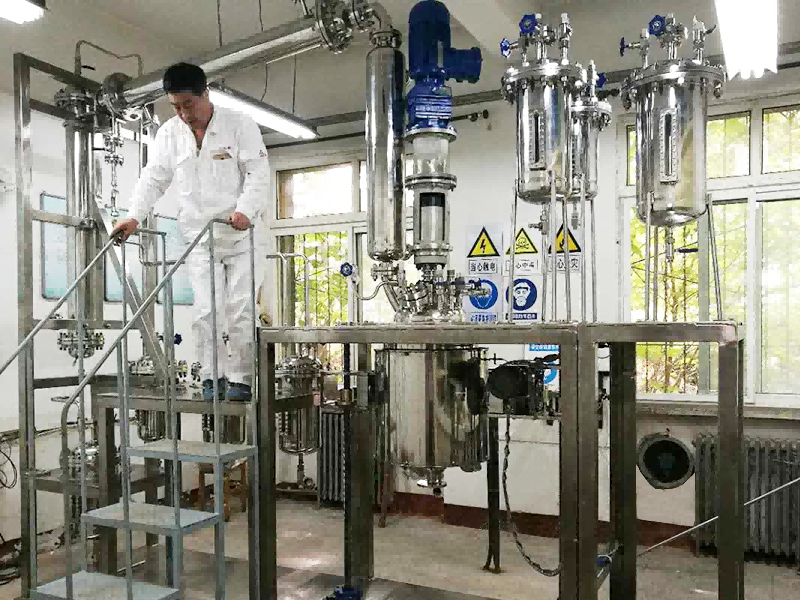
Hey there! As a supplier of pilot plants, I've had the privilege of diving deep into what makes these setups tick. Pilot plants are super important in industries like chemical, pharmaceutical, and food processing. They're like the testing grounds for new processes before they go full - scale. So, let's break down the key components of a pilot plant.
1. Reactors
Reactors are the heart of a pilot plant. They're where the chemical reactions happen. You can think of them as big mixing bowls where different substances come together to form something new. There are different types of reactors, such as batch reactors and continuous reactors.
Batch reactors are used when you want to produce a specific amount of product at a time. They're great for small - scale production and for testing new reaction conditions. You load all the reactants into the reactor at once, let the reaction take place, and then unload the product.
On the other hand, continuous reactors are used for large - scale, continuous production. Reactants are continuously fed into the reactor, and the product is continuously removed. This type of reactor is more efficient for high - volume production. For example, in a Distillation Adsorption Extraction Facility, reactors play a crucial role in separating and purifying different components.
2. Separation Units
Once the reaction is done, you need to separate the product from the reactants and any by - products. That's where separation units come in. There are several types of separation techniques used in pilot plants.
Distillation is one of the most common methods. It works by heating a mixture to separate it into its different components based on their boiling points. For instance, if you have a mixture of ethanol and water, you can use distillation to separate them because ethanol has a lower boiling point than water.
Adsorption is another important separation method. It involves using a solid material to attract and hold certain components of a mixture. This is useful for removing impurities or separating specific compounds.
Extraction is yet another technique. It uses a solvent to dissolve a particular component from a mixture. These separation units are essential for getting a pure and high - quality product.
3. Heating and Cooling Systems
Temperature control is crucial in a pilot plant. Most chemical reactions are sensitive to temperature, and you need to maintain the right temperature throughout the process. Heating and cooling systems help with this.
Heating systems can use different sources of energy, such as steam, electricity, or hot oil. They're used to raise the temperature of the reactants to start the reaction or to maintain the reaction temperature.
Cooling systems, on the other hand, are used to lower the temperature. This could be to stop a reaction once it's completed or to cool down the product before further processing. For example, in a Hydrogenation Test Unit, precise temperature control is necessary for the hydrogenation reaction to occur correctly.
4. Instrumentation and Control Systems
Instrumentation and control systems are like the brains of the pilot plant. They monitor and control all the processes happening in the plant. Sensors are used to measure different parameters such as temperature, pressure, flow rate, and concentration.
These sensors send signals to a control system, which then adjusts the process variables accordingly. For example, if the temperature in a reactor gets too high, the control system can activate the cooling system to bring it down. This ensures that the processes run smoothly and safely.
5. Pumps and Valves
Pumps and valves are used to move fluids (liquids and gases) around the pilot plant. Pumps are responsible for transferring the reactants, products, and solvents from one unit to another. There are different types of pumps, such as centrifugal pumps and positive displacement pumps.
Centrifugal pumps are commonly used for high - flow applications, while positive displacement pumps are better for low - flow, high - pressure applications.
Valves, on the other hand, are used to control the flow of fluids. They can open, close, or regulate the flow rate. For example, a valve can be used to control the amount of reactant being fed into a reactor.
6. Safety Equipment
Safety is always a top priority in a pilot plant. There are several safety equipment and measures in place to protect the operators and the environment.
Pressure relief valves are used to prevent over - pressurization in the system. If the pressure in a reactor or a pipeline gets too high, the pressure relief valve will open and release the excess pressure.
Fire suppression systems are also important. They can quickly extinguish a fire if one breaks out. Additionally, there are personal protective equipment (PPE) such as gloves, goggles, and safety suits for the operators.
7. Storage Tanks
Storage tanks are used to store the reactants, products, and solvents. They come in different sizes and materials depending on the nature of the substances being stored. For example, corrosive substances may require tanks made of special materials like stainless steel or fiberglass.
These tanks need to be properly maintained to prevent leaks and contamination. They also need to have the right ventilation and temperature control to ensure the stability of the stored substances.
8. Analytical Equipment
Analytical equipment is used to monitor the quality of the products and the progress of the reactions. There are different types of analytical techniques, such as chromatography and spectroscopy.
Chromatography is used to separate and analyze the components of a mixture. It can help you determine the purity of a product and identify any impurities.
Spectroscopy, on the other hand, uses light to analyze the chemical structure of a substance. It can provide information about the composition and properties of the product. For example, in a Lab Autoclave, analytical equipment can be used to monitor the reaction conditions and the quality of the final product.
In conclusion, a pilot plant is a complex system made up of many different components. Each component plays a vital role in ensuring the successful operation of the plant. Whether you're developing a new chemical process, testing a new product, or optimizing an existing process, having the right components in your pilot plant is essential.
If you're in the market for a pilot plant or need to upgrade your existing one, we're here to help. We have a wide range of pilot plant solutions that can be customized to meet your specific needs. Don't hesitate to reach out and start a conversation about your requirements. Let's work together to make your project a success!

References
- Chemical Engineering Design: Principles, Practice and Economics of Plant and Process Design by Gavin Towler and Ray Sinnott
- Perry's Chemical Engineers' Handbook by Don W. Green and Robert H. Perry


