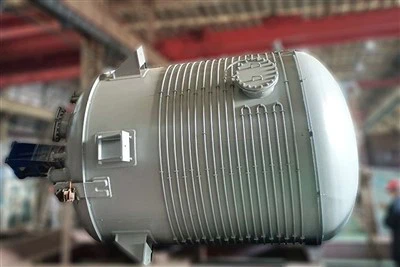
In the realm of bioprocessing, a pilot plant serves as a crucial bridge between laboratory-scale research and full-scale industrial production. It allows for the optimization of processes, the validation of technologies, and the production of small quantities of products for testing and market evaluation. One of the key steps in many bioprocesses is drying, which is essential for preserving the quality, stability, and shelf-life of biological products. In this blog, as a supplier of pilot plants, I will explore the various drying methods commonly used in a bioprocessing pilot plant.
Tray Drying
Tray drying is one of the oldest and simplest drying methods. In this process, the wet material is placed on trays, which are then loaded into a drying chamber. Hot air is circulated through the chamber to remove moisture from the material. Tray drying is suitable for a wide range of materials, including solids, pastes, and granules. It is a batch process, which means that each batch of material is dried separately.
One of the advantages of tray drying is its simplicity and low cost. It requires minimal equipment and can be easily operated. However, tray drying has some limitations. It is a relatively slow process, and the drying time can be long, especially for thick layers of material. Additionally, the drying rate may not be uniform across the trays, leading to uneven drying. This can result in variations in product quality.
Drum Drying
Drum drying is another commonly used drying method in bioprocessing pilot plants. In this process, a thin layer of the wet material is applied to the surface of a rotating drum, which is heated from the inside. As the drum rotates, the moisture in the material evaporates, leaving behind a dry film on the drum surface. The dry film is then scraped off the drum using a knife or a doctor blade.
Drum drying is a continuous process, which means that it can handle large volumes of material. It is suitable for drying heat-sensitive materials, as the drying time is relatively short. However, drum drying requires specialized equipment, which can be expensive. Additionally, the quality of the dried product can be affected by factors such as the drum speed, the temperature, and the thickness of the material layer.
Spray Drying
Spray drying is a widely used drying method in the bioprocessing industry. In this process, the liquid feed is atomized into small droplets using a spray nozzle. The droplets are then introduced into a hot air stream, where they are rapidly dried. The dried particles are collected at the bottom of the drying chamber.
Spray drying offers several advantages. It is a very fast process, and the drying time can be as short as a few seconds. This makes it suitable for drying heat-sensitive materials, as the exposure to high temperatures is minimal. Spray drying also produces a fine powder with a uniform particle size distribution, which is desirable for many applications. However, spray drying requires a high initial investment in equipment, and the operating costs can be relatively high.
Freeze Drying
Freeze drying, also known as lyophilization, is a gentle drying method that is often used for drying heat-sensitive biological products. In this process, the material is first frozen, and then the ice is removed by sublimation under vacuum. Sublimation is the process of converting a solid directly into a gas without passing through the liquid phase.
Freeze drying preserves the structure and activity of biological molecules, making it suitable for drying proteins, enzymes, and other biological products. It also produces a dry product with a long shelf-life. However, freeze drying is a very slow and expensive process. It requires specialized equipment, such as a freeze dryer, and the operating costs are high due to the energy consumption and the long drying time.
Fluidized Bed Drying
Fluidized bed drying is a popular drying method in the bioprocessing industry. In this process, the wet material is placed in a fluidized bed, where it is suspended in an upward flow of hot air. The hot air provides the heat for drying, and the fluidization ensures good mixing and uniform drying.
Fluidized bed drying is a continuous process, which can handle large volumes of material. It is suitable for drying granular and powder materials. The drying rate is high, and the drying time is relatively short. Additionally, fluidized bed drying can be easily automated, which reduces the labor requirements. However, fluidized bed drying requires a relatively high airflow rate, which can increase the energy consumption.
Comparison of Drying Methods
Each drying method has its own advantages and disadvantages, and the choice of drying method depends on several factors, including the nature of the material, the desired product quality, the production capacity, and the cost. For example, if the material is heat-sensitive, freeze drying or spray drying may be the preferred methods. If the production capacity is high, a continuous drying method such as drum drying or fluidized bed drying may be more suitable.
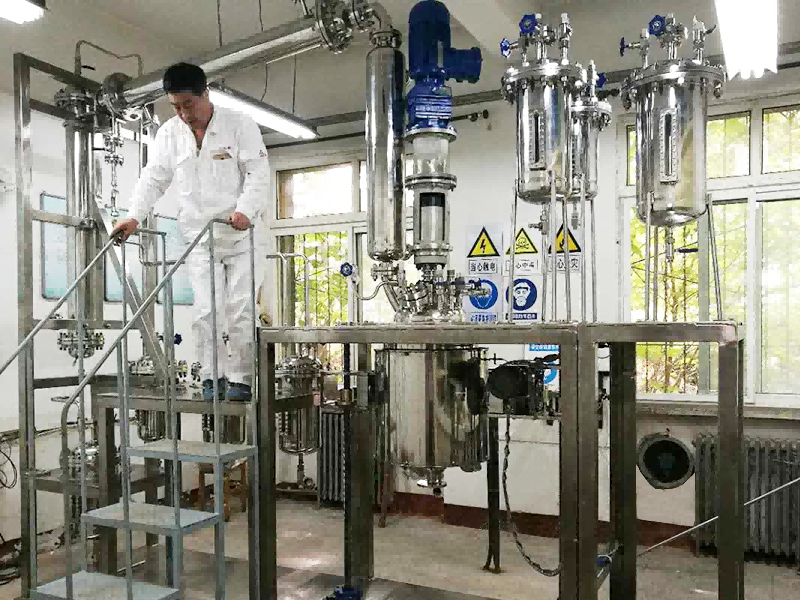
As a supplier of pilot plants, we offer a range of drying equipment to meet the diverse needs of our customers. Our Simulation and Semi-industrial Pilot Plant is designed to simulate industrial processes and optimize drying conditions. Our Coal Chemical Pilot Plant is suitable for drying coal-related products, and our Distillation Adsorption Extraction Facility can be used in conjunction with drying processes to purify and separate products.

Conclusion
In conclusion, drying is a critical step in many bioprocesses, and choosing the right drying method is essential for achieving high-quality products. Tray drying, drum drying, spray drying, freeze drying, and fluidized bed drying are some of the commonly used drying methods in a bioprocessing pilot plant. Each method has its own unique characteristics, and the choice of method depends on various factors. As a pilot plant supplier, we are committed to providing our customers with the best drying solutions to meet their specific requirements.
If you are interested in learning more about our pilot plants and drying equipment, or if you have any questions regarding bioprocessing drying methods, please do not hesitate to contact us. We look forward to the opportunity to discuss your needs and explore potential partnerships.
References
- Mujumdar, A. S. (Ed.). (2014). Handbook of industrial drying. CRC press.
- Geankoplis, C. J. (2003). Transport processes and unit operations. Prentice Hall.
- Singh, R. P., & Heldman, D. R. (2014). Introduction to food engineering. Academic press.