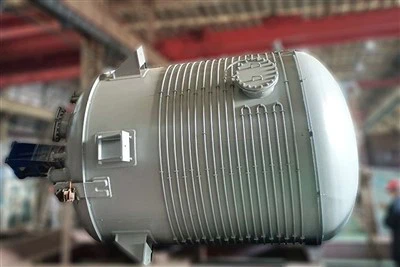
Computational Fluid Dynamics (CFD) has emerged as a powerful tool in the design, optimization, and operation of stirred reactors. As a leading supplier of stirred reactors, we have witnessed firsthand the transformative impact of CFD on the performance and efficiency of these essential pieces of equipment. In this blog post, we will explore the various applications of CFD in stirred reactors, highlighting how this technology can enhance your processes and drive better outcomes.
Understanding Computational Fluid Dynamics
Before delving into the applications, it's important to understand what CFD is. CFD is a branch of fluid mechanics that uses numerical methods and algorithms to solve and analyze problems involving fluid flows. By dividing the fluid domain into a finite number of small elements, CFD software can simulate the behavior of fluids under different conditions, including velocity, pressure, temperature, and concentration. This allows engineers and researchers to gain insights into the complex flow patterns and phenomena that occur inside stirred reactors, which are often difficult to observe experimentally.
Mixing Efficiency
One of the primary applications of CFD in stirred reactors is to improve mixing efficiency. In many industrial processes, such as Polymerization Reactor and chemical synthesis, proper mixing is crucial for achieving uniform product quality and reaction rates. CFD can be used to model the flow patterns generated by the agitator in the reactor, predicting the distribution of reactants, temperature, and other properties. By analyzing these simulations, engineers can optimize the design of the agitator, such as its shape, size, and speed, to ensure efficient mixing throughout the reactor volume.
For example, CFD simulations can reveal areas of poor mixing, such as dead zones or regions with low shear rates. By modifying the agitator design or adding baffles to the reactor, these issues can be addressed, leading to more homogeneous mixing and improved product quality. Additionally, CFD can be used to study the effect of different operating conditions, such as flow rates and temperature, on mixing efficiency, allowing for the optimization of process parameters.
Heat Transfer
Heat transfer is another critical aspect of stirred reactor operation. In many processes, such as Crystallization Stirred Reactor and distillation, maintaining the desired temperature is essential for achieving the desired product properties and reaction rates. CFD can be used to model the heat transfer processes occurring inside the reactor, including conduction, convection, and radiation.
By simulating the temperature distribution in the reactor, engineers can identify areas of high or low temperature, as well as potential hotspots or cold spots. This information can be used to optimize the design of the heating or cooling system, such as the placement of heating coils or the flow rate of the cooling fluid. CFD can also be used to study the effect of different operating conditions, such as agitation speed and fluid properties, on heat transfer efficiency, allowing for the optimization of process parameters to ensure efficient heat transfer.


Mass Transfer
Mass transfer is important in many chemical and biochemical processes, such as gas-liquid reactions and fermentation. In stirred reactors, mass transfer occurs between the different phases, such as the gas and liquid phases or the solid and liquid phases. CFD can be used to model the mass transfer processes occurring inside the reactor, predicting the concentration distribution of the reactants and products.
By simulating the mass transfer rates, engineers can optimize the design of the reactor and the agitator to enhance mass transfer efficiency. For example, CFD can be used to study the effect of different agitator designs on the gas-liquid interfacial area, which is a key factor in gas-liquid mass transfer. By increasing the interfacial area, the mass transfer rate can be improved, leading to faster reaction rates and higher product yields.
Flow-Induced Stress
In addition to mixing, heat transfer, and mass transfer, CFD can also be used to analyze the flow-induced stress on the reactor walls and internal components. In stirred reactors, the high-speed rotation of the agitator can generate significant fluid forces, which can cause stress and deformation on the reactor structure. CFD can be used to simulate the fluid flow and the resulting stress distribution on the reactor walls and agitator, allowing engineers to identify potential areas of high stress and take appropriate measures to prevent structural failure.
For example, CFD simulations can be used to optimize the design of the reactor walls and internal components, such as the thickness and shape of the walls, to reduce the stress levels. Additionally, CFD can be used to study the effect of different operating conditions, such as agitation speed and fluid properties, on the flow-induced stress, allowing for the optimization of process parameters to ensure the structural integrity of the reactor.
Scale-Up
Scaling up a stirred reactor from a laboratory scale to an industrial scale is a challenging task. CFD can play a crucial role in this process by providing insights into the flow behavior and performance of the reactor at different scales. By simulating the flow patterns and mixing efficiency in the laboratory-scale reactor, engineers can develop correlations and models that can be used to predict the performance of the industrial-scale reactor.
CFD can also be used to optimize the design of the industrial-scale reactor based on the results of the laboratory-scale simulations. For example, CFD can be used to study the effect of different agitator designs and operating conditions on the mixing efficiency and heat transfer in the industrial-scale reactor, allowing for the optimization of the reactor design to ensure similar performance to the laboratory-scale reactor.
Conclusion
In conclusion, Computational Fluid Dynamics (CFD) offers a wide range of applications in stirred reactors, from improving mixing efficiency and heat transfer to analyzing flow-induced stress and facilitating scale-up. As a supplier of Magnetically Driven Stirred Reactor and other types of stirred reactors, we are committed to leveraging the latest CFD technology to provide our customers with high-performance and efficient reactors.
If you are interested in learning more about how CFD can be applied to your specific stirred reactor application or if you are looking for a reliable stirred reactor supplier, we encourage you to contact us for a consultation. Our team of experts is ready to work with you to understand your needs and provide customized solutions that meet your requirements.
References
- Versteeg, H. K., & Malalasekera, W. (2007). An Introduction to Computational Fluid Dynamics: The Finite Volume Method. Pearson Education.
- Fluent User's Guide. ANSYS, Inc.
- Patankar, S. V. (1980). Numerical Heat Transfer and Fluid Flow. Hemisphere Publishing Corporation.