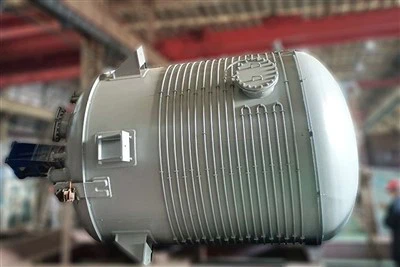
Hey there! As a supplier of Polymerization Reactors, I've been getting a lot of questions lately about how to optimize the reactor's residence time distribution in a continuous process. So, I thought I'd share some insights on this topic.
First off, let's talk about what residence time distribution (RTD) is. In a continuous process, the residence time of a fluid element in the reactor is the time it spends inside the reactor. The RTD is a statistical description of the distribution of these residence times for all the fluid elements flowing through the reactor. It's a crucial parameter because it affects the reaction conversion, selectivity, and product quality.
Why is Optimizing RTD Important?
Optimizing the RTD can lead to several benefits. For one, it can improve the reaction efficiency. When the RTD is well - optimized, the reactants spend an appropriate amount of time in the reactor, which allows the reaction to proceed to the desired conversion. This means less waste and more product yield.
It also helps in controlling the product quality. Different products may require different reaction times. By optimizing the RTD, we can ensure that each fluid element gets the right amount of reaction time, resulting in a more consistent product.
Factors Affecting RTD
There are several factors that can affect the RTD in a polymerization reactor.
Flow Pattern
The flow pattern inside the reactor is one of the most significant factors. In an ideal plug - flow reactor, all fluid elements move through the reactor at the same speed and have the same residence time. However, in real - world reactors, there can be deviations from plug - flow, such as back - mixing. Back - mixing occurs when fluid elements mix with those that have already spent a different amount of time in the reactor. This can lead to a broader RTD and affect the reaction performance.
Reactor Geometry
The shape and size of the reactor also play a role. For example, a long and narrow reactor is more likely to approach plug - flow conditions compared to a short and wide one. The presence of internal structures, such as baffles or stirrers, can also influence the flow pattern and thus the RTD.
Stirring Intensity
If the reactor is equipped with a stirrer, the stirring intensity can have a big impact on the RTD. High - intensity stirring can promote mixing, which may reduce back - mixing in some cases. But if it's too intense, it can also cause excessive turbulence and lead to an uneven RTD.
Strategies to Optimize RTD
Reactor Design
When designing a polymerization reactor, we need to carefully consider the geometry to promote a more uniform flow. As mentioned earlier, a long and narrow design can be beneficial. We can also add internal structures like baffles to direct the flow and reduce back - mixing. For example, in our Mechanical Seal Stirred Reactor, the design is optimized to ensure a more uniform flow pattern, which helps in achieving a better RTD.
Flow Control
Controlling the flow rate is another important strategy. By maintaining a steady and appropriate flow rate, we can ensure that the fluid elements have a more consistent residence time. We can use flow meters and control valves to regulate the flow accurately.
Stirring Optimization
If a stirrer is used, we need to find the right balance of stirring intensity. This may require some experimentation. We can start with a low - intensity stirring and gradually increase it while monitoring the RTD. In our Magnetically Driven Stirred Reactor, the magnetic drive allows for precise control of the stirring speed, which is very helpful in optimizing the RTD.
Multiple Reactors in Series
Using multiple reactors in series can also be an effective way to optimize the RTD. Each reactor can be designed to perform a specific part of the reaction, and the overall RTD can be adjusted by controlling the flow between the reactors. This approach can be particularly useful for complex polymerization reactions.
Case Studies
Let's take a look at a couple of case studies to see how these strategies work in practice.
Case Study 1: A Polymerization Plant
A polymerization plant was experiencing low product yields and inconsistent product quality. After analyzing the RTD, it was found that there was significant back - mixing in the reactor. The plant decided to retrofit the reactor with baffles and optimize the stirring intensity. They also installed a flow control system to maintain a steady flow rate. As a result, the RTD became more narrow, and the product yield increased by 15%, and the product quality became much more consistent.
Case Study 2: A Research Project
In a research project, a team was studying a new polymerization process. They used a series of small reactors in series to optimize the RTD. By carefully controlling the flow between the reactors, they were able to achieve a very narrow RTD, which led to a highly selective polymerization reaction and a high - quality product.


Conclusion
Optimizing the reactor's residence time distribution in a continuous polymerization process is a complex but achievable task. By considering factors such as flow pattern, reactor geometry, stirring intensity, and using strategies like proper reactor design, flow control, and multiple reactors in series, we can improve the reaction efficiency and product quality.
If you're in the market for a polymerization reactor or need help with optimizing the RTD in your existing process, we're here to assist. We offer a range of reactors, including the Mechanical Seal Stirred Reactor, Hydrogenation Reactor, and Magnetically Driven Stirred Reactor. Contact us for a consultation and let's work together to take your polymerization process to the next level.
References
- Levenspiel, O. (1999). Chemical Reaction Engineering. John Wiley & Sons.
- Fogler, H. S. (2016). Elements of Chemical Reaction Engineering. Pearson.