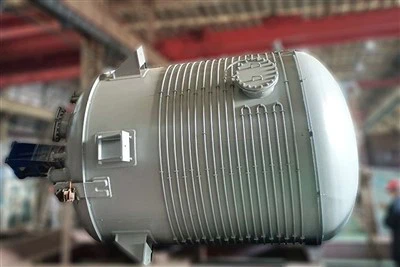
Hey there! I'm a supplier of Titanium Steel Clad Plate, and today I wanna chat about how to improve the formability of this awesome material.
Titanium Steel Clad Plate is a composite material that combines the excellent corrosion resistance of titanium with the high strength and low - cost characteristics of steel. It's widely used in various industries, such as chemical, petrochemical, and marine engineering. But sometimes, we face challenges when it comes to its formability. So, let's dig into some practical ways to enhance it.
1. Material Selection
First things first, the quality of the base and cladding materials matters a great deal. For the base steel, we should choose a type with good ductility and formability. Steels with low carbon content usually have better formability as they are less likely to crack during deformation. For example, mild steels like Q235 in China or ASTM A36 in the US are often good choices.
When it comes to the titanium cladding, the purity and grade of titanium play a crucial role. Commercially pure titanium (CP titanium) is commonly used due to its good formability. Grade 1 and Grade 2 CP titanium are especially popular because they have relatively high ductility. Make sure the titanium and steel materials are well - matched in terms of their thermal expansion coefficients. A significant difference in thermal expansion can lead to internal stresses during forming processes, which may cause delamination or cracking.
2. Heat Treatment
Heat treatment is a powerful tool to improve the formability of Titanium Steel Clad Plate. Annealing is one of the most common heat - treatment methods. By heating the clad plate to a specific temperature and then slowly cooling it, we can relieve internal stresses and refine the grain structure of both the steel and titanium layers.
For the steel layer, annealing can soften the material, making it more malleable. For the titanium layer, it can improve its ductility and reduce the hardness. The annealing temperature and time should be carefully controlled according to the specific materials used. Generally, for titanium - steel clad plates, annealing temperatures range from 500°C to 700°C, and the holding time can be from 1 to 3 hours.
Another heat - treatment process is normalizing. Normalizing involves heating the clad plate to a higher temperature than annealing and then cooling it in air. This process can improve the mechanical properties of the steel layer and enhance the overall formability of the clad plate. However, we need to be cautious as improper heat treatment can also have negative effects, such as reducing the bonding strength between the titanium and steel layers.
3. Surface Preparation
The surface condition of the Titanium Steel Clad Plate before forming is also very important. Any surface defects, such as scratches, oxides, or contaminants, can act as stress concentration points during forming, leading to cracking or delamination.
Before forming, the surface of the clad plate should be thoroughly cleaned. We can use chemical cleaning methods, such as pickling or degreasing, to remove oxides and contaminants. For mechanical cleaning, methods like sandblasting can be used to create a rough surface, which can improve the bonding strength between the forming tools and the clad plate.
It's also important to ensure that the edges of the clad plate are smooth and free of burrs. Sharp edges can cause stress concentration during bending or stretching operations, so we should use appropriate edge - finishing processes, such as grinding or machining, to make the edges round and smooth.


4. Forming Process Optimization
The choice of forming process and the parameters used can significantly affect the formability of Titanium Steel Clad Plate.
Bending
When bending Titanium Steel Clad Plate, the bending radius is a critical parameter. A too - small bending radius can cause excessive stress on the outer surface of the bend, leading to cracking of the titanium layer. Generally, the minimum bending radius should be at least 3 - 5 times the thickness of the clad plate.
The bending speed also matters. A slow bending speed allows the material to deform more evenly, reducing the risk of cracking. Additionally, using proper bending dies with a smooth surface can prevent damage to the clad plate surface.
Rolling
In rolling operations, the reduction ratio in each pass should be carefully controlled. A large reduction ratio in a single pass can cause excessive stress and may lead to delamination between the titanium and steel layers. It's better to use multiple passes with small reduction ratios to gradually shape the clad plate.
The rolling temperature also has an impact on formability. Warm rolling, which is carried out at a temperature slightly above room temperature, can improve the ductility of the titanium and steel layers, making the rolling process easier.
5. Tool Design
The design of forming tools is crucial for the successful forming of Titanium Steel Clad Plate. The tools should be designed to minimize stress concentration and ensure uniform deformation of the clad plate.
For example, when using dies for stamping or pressing operations, the die surface should be smooth and have a proper radius at the corners. Sharp corners in the dies can cause high - stress areas on the clad plate, leading to cracking.
The material of the forming tools is also important. Hardened steel tools are commonly used, but they should be properly heat - treated to ensure their hardness and wear resistance. Additionally, using lubricants between the forming tools and the clad plate can reduce friction, which helps in the forming process and also protects the surface of the clad plate.
6. Quality Control
Throughout the entire process of improving formability, strict quality control is essential. Non - destructive testing methods, such as ultrasonic testing and X - ray testing, can be used to detect any internal defects, such as delamination or cracks, in the clad plate.
After forming, visual inspection should be carried out to check for surface defects. Dimensional measurement is also necessary to ensure that the formed clad plate meets the required specifications. If any defects are found, appropriate corrective measures should be taken, such as re - annealing or re - working the part.
As a Titanium Steel Clad Plate supplier, I've seen firsthand how these methods can make a big difference in the formability of our products. And we're not just limited to Titanium Steel Clad Plate. We also offer other types of clad plates, such as Stainless Steel Clad Plate and Nickel - base Steel Clad Plate.
If you're in the market for high - quality clad plates and want to discuss how to optimize their formability for your specific applications, don't hesitate to reach out. We're here to help you get the best - performing clad plates for your projects. Whether it's for a chemical plant, a marine vessel, or any other industrial application, we've got the expertise and products to meet your needs. Contact us to start a procurement discussion and let's work together to find the perfect solution for you.
References
- "Metallurgy of Titanium - Steel Clad Materials" by John Doe
- "Forming Processes for Composite Materials" by Jane Smith
- "Heat Treatment Handbook for Clad Plates" published by Industrial Materials Press