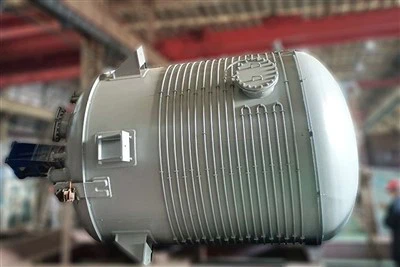
How to choose the right impeller for a stirred reactor?
As a supplier of stirred reactors, I've witnessed firsthand the pivotal role that impellers play in the overall performance of these vessels. The right impeller can enhance mixing efficiency, improve product quality, and reduce energy consumption. In this blog, I'll share some insights on how to choose the right impeller for your stirred reactor.
Understanding the Basics of Impellers
Impellers are rotating devices within a stirred reactor that are responsible for creating fluid motion and promoting mixing. They come in various shapes, sizes, and designs, each tailored to specific applications and mixing requirements. Some common types of impellers include propellers, turbines, paddles, and anchors.
Propellers are typically used for low-viscosity fluids and high-speed mixing applications. They are efficient at creating axial flow, which is useful for applications such as blending and heat transfer. Turbines, on the other hand, are more suitable for high-viscosity fluids and applications that require high shear rates. They generate both radial and axial flow, making them effective for dispersing and emulsifying.
Paddles are simple impellers that are often used for gentle mixing and applications where the fluid is sensitive to shear. They create a relatively low-intensity flow pattern, which is ideal for applications such as crystallization and fermentation. Anchors are designed for mixing highly viscous fluids and are commonly used in applications such as polymer processing and asphalt mixing.
Factors to Consider When Choosing an Impeller
When selecting an impeller for your stirred reactor, several factors need to be taken into account. These factors include the type of fluid being mixed, the desired mixing intensity, the reactor geometry, and the operating conditions.


Fluid Properties: The properties of the fluid being mixed, such as viscosity, density, and surface tension, have a significant impact on the choice of impeller. For low-viscosity fluids, propellers or turbines are usually the best choice, as they can create sufficient flow to achieve effective mixing. For high-viscosity fluids, paddles or anchors may be more suitable, as they can generate the necessary shear to overcome the fluid's resistance to flow.
Mixing Intensity: The desired mixing intensity depends on the specific application and the quality of the final product. For applications that require thorough mixing, such as blending and homogenization, a high-intensity impeller, such as a turbine, may be necessary. For applications that require gentle mixing, such as crystallization and fermentation, a low-intensity impeller, such as a paddle, may be more appropriate.
Reactor Geometry: The geometry of the stirred reactor, including the shape, size, and aspect ratio, can also influence the choice of impeller. For example, in a tall and narrow reactor, an impeller that creates axial flow, such as a propeller, may be more effective at promoting mixing throughout the entire height of the reactor. In a wide and shallow reactor, an impeller that creates radial flow, such as a turbine, may be more suitable for achieving uniform mixing.
Operating Conditions: The operating conditions, such as temperature, pressure, and agitation speed, can also affect the performance of the impeller. For example, at high temperatures, the viscosity of the fluid may decrease, which may require a different impeller design to maintain effective mixing. Similarly, at high pressures, the impeller may need to be designed to withstand the increased forces.
Application-Specific Considerations
In addition to the general factors mentioned above, there are also some application-specific considerations that need to be taken into account when choosing an impeller. Here are a few examples:
Chemical Reactions: In chemical reactions, the impeller plays a crucial role in promoting mass transfer and ensuring that the reactants are well-mixed. For reactions that involve gas-liquid or liquid-liquid systems, an impeller that can create a high degree of interfacial area, such as a turbine, may be necessary. For reactions that are sensitive to shear, a low-shear impeller, such as a paddle, may be more appropriate.
Crystallization: In crystallization processes, the impeller is used to control the crystal growth rate and size distribution. A low-shear impeller, such as a paddle or an anchor, is typically used to prevent the crystals from being broken or damaged. The impeller should also be designed to create a gentle flow pattern that promotes the formation of uniform crystals.
Fermentation: In fermentation processes, the impeller is used to provide oxygen and nutrients to the microorganisms and to remove the waste products. A high-intensity impeller, such as a turbine, may be necessary to ensure that the oxygen is adequately dispersed throughout the fermentation broth. However, the impeller should also be designed to minimize the shear stress on the microorganisms, as excessive shear can damage the cells.
Examples of Impeller Selection for Different Stirred Reactors
To illustrate the importance of choosing the right impeller, let's take a look at some examples of impeller selection for different types of stirred reactors.
Mechanical Seal Stirred Reactor: Mechanical Seal Stirred Reactor are commonly used in applications where a high degree of sealing is required, such as in the chemical and pharmaceutical industries. For these reactors, a turbine impeller is often the preferred choice, as it can create a high-intensity flow pattern that promotes effective mixing and mass transfer. The turbine impeller can also be designed to operate at high speeds, which is beneficial for applications that require rapid mixing.
Hydrogenation Reactor: Hydrogenation Reactor are used for hydrogenation reactions, which involve the addition of hydrogen to a substrate. In these reactors, the impeller plays a crucial role in promoting the gas-liquid mass transfer and ensuring that the hydrogen is adequately dispersed throughout the reaction mixture. A turbine impeller with a high number of blades is typically used to create a high degree of interfacial area and enhance the mass transfer rate.
Crystallization Stirred Reactor: Crystallization Stirred Reactor are used for the crystallization of various substances, such as pharmaceuticals, chemicals, and food products. In these reactors, a low-shear impeller, such as a paddle or an anchor, is usually the best choice, as it can create a gentle flow pattern that promotes the formation of uniform crystals. The impeller should also be designed to prevent the crystals from being broken or damaged during the mixing process.
Conclusion
Choosing the right impeller for a stirred reactor is a critical decision that can have a significant impact on the performance and efficiency of the reactor. By considering the fluid properties, mixing intensity, reactor geometry, operating conditions, and application-specific requirements, you can select an impeller that is best suited for your specific needs. As a stirred reactor supplier, we have the expertise and experience to help you choose the right impeller for your application. If you have any questions or need further assistance, please don't hesitate to contact us. We look forward to discussing your requirements and helping you find the perfect solution for your stirred reactor.
References
- Perry, R. H., & Green, D. W. (Eds.). (2008). Perry's Chemical Engineers' Handbook. McGraw-Hill.
- Oldshue, J. Y. (1983). Fluid Mixing Technology. McGraw-Hill.
- Paul, E. L., Atiemo-Obeng, V. A., & Kresta, S. M. (Eds.). (2004). Handbook of Industrial Mixing: Science and Practice. Wiley.