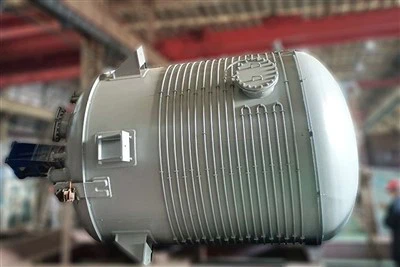
As a leading supplier of stirred reactors, I often encounter questions from clients about the optimal number of baffles in these crucial pieces of equipment. Baffles play a vital role in the performance of stirred reactors, influencing factors such as mixing efficiency, heat transfer, and overall process stability. In this blog post, I will delve into the considerations surrounding the number of baffles needed in a stirred reactor and provide insights to help you make informed decisions for your specific applications.
The Role of Baffles in Stirred Reactors
Before discussing the number of baffles, it's essential to understand their function. Baffles are vertical plates installed inside the reactor vessel, typically perpendicular to the vessel wall. Their primary purpose is to disrupt the flow pattern created by the agitator, preventing the formation of a large central vortex and promoting more uniform mixing. By breaking up the swirling motion, baffles enhance the radial and axial flow of the fluid, improving the distribution of reactants, heat, and mass transfer within the reactor.
In addition to improving mixing, baffles also help to reduce the power consumption of the agitator. Without baffles, the fluid in the reactor tends to rotate in a circular motion, creating a low-pressure zone at the center and a high-pressure zone at the periphery. This can lead to inefficient mixing and increased energy requirements. Baffles disrupt this flow pattern, allowing the agitator to operate more effectively and reducing the overall power consumption of the system.


Factors Affecting the Number of Baffles
The optimal number of baffles in a stirred reactor depends on several factors, including the reactor geometry, agitator type, fluid properties, and the specific process requirements. Here are some key considerations to keep in mind when determining the number of baffles:
Reactor Geometry
The shape and size of the reactor vessel can have a significant impact on the number of baffles required. In general, larger reactors may require more baffles to ensure adequate mixing, while smaller reactors may be able to achieve satisfactory results with fewer baffles. The aspect ratio of the reactor (the ratio of the height to the diameter) is also an important factor. Taller reactors with a high aspect ratio may require more baffles to prevent the formation of a large central vortex and promote uniform mixing throughout the height of the vessel.
Agitator Type
The type of agitator used in the reactor can also influence the number of baffles needed. Different agitators create different flow patterns, and the baffles should be designed to complement the agitator's function. For example, axial flow agitators, such as propellers, create a flow pattern that is primarily in the axial direction (parallel to the agitator shaft). In this case, baffles can be used to enhance the radial flow and improve the mixing efficiency. On the other hand, radial flow agitators, such as turbines, create a flow pattern that is primarily in the radial direction (perpendicular to the agitator shaft). Baffles can help to prevent the formation of a large central vortex and promote more uniform mixing in this type of system.
Fluid Properties
The properties of the fluid being processed in the reactor, such as viscosity, density, and surface tension, can also affect the number of baffles required. High-viscosity fluids tend to be more difficult to mix, and may require more baffles to achieve satisfactory results. Similarly, fluids with a high density or surface tension may require additional baffles to prevent the formation of a large central vortex and promote uniform mixing.
Process Requirements
The specific process requirements, such as the reaction kinetics, heat transfer requirements, and product quality specifications, can also play a role in determining the number of baffles. For example, if the reaction is highly exothermic and requires efficient heat transfer, more baffles may be needed to enhance the mixing and promote better heat transfer between the fluid and the reactor walls. Similarly, if the product quality is sensitive to the mixing efficiency, additional baffles may be necessary to ensure uniform distribution of the reactants and prevent the formation of hot spots or concentration gradients.
Common Baffle Configurations
In practice, the most common baffle configurations in stirred reactors are the four-baffle and six-baffle designs. These configurations have been found to provide a good balance between mixing efficiency and power consumption for a wide range of applications.
Four-Baffle Configuration
The four-baffle configuration consists of four vertical plates evenly spaced around the circumference of the reactor vessel. This design is widely used in industrial applications and is suitable for most types of agitators and fluid properties. The four-baffle configuration provides a good balance between radial and axial flow, promoting uniform mixing and reducing the power consumption of the agitator.
Six-Baffle Configuration
The six-baffle configuration consists of six vertical plates evenly spaced around the circumference of the reactor vessel. This design is often used in applications where more intense mixing is required, such as high-viscosity fluids or processes with strict product quality requirements. The six-baffle configuration provides a higher degree of flow disruption and promotes more uniform mixing throughout the reactor vessel. However, it also requires more power to operate compared to the four-baffle configuration.
Case Studies
To illustrate the importance of the number of baffles in stirred reactors, let's consider two case studies:
Case Study 1: Polymerization Reactor
In a polymerization reactor, the number of baffles can have a significant impact on the reaction kinetics and product quality. A client was experiencing issues with the formation of polymer lumps and inconsistent product quality in their Polymerization Reactor. After conducting a detailed analysis of the reactor design and operating conditions, it was determined that the existing four-baffle configuration was not providing sufficient mixing for the high-viscosity polymer solution. By increasing the number of baffles to six, the mixing efficiency was significantly improved, resulting in a more uniform distribution of the reactants and a reduction in the formation of polymer lumps. The product quality also improved, with a more consistent molecular weight distribution and better mechanical properties.
Case Study 2: Crystallization Stirred Reactor
In a crystallization stirred reactor, the number of baffles can affect the crystal growth rate and the size distribution of the crystals. A client was having trouble achieving the desired crystal size and shape in their Crystallization Stirred Reactor. After conducting a series of experiments, it was found that the existing four-baffle configuration was creating a non-uniform flow pattern in the reactor, leading to inconsistent crystal growth. By increasing the number of baffles to six, the flow pattern became more uniform, and the crystal growth rate and size distribution improved significantly. The resulting crystals were more uniform in size and shape, which improved the product quality and process efficiency.
Conclusion
In conclusion, the number of baffles in a stirred reactor is a critical design parameter that can have a significant impact on the mixing efficiency, heat transfer, and overall process performance. The optimal number of baffles depends on several factors, including the reactor geometry, agitator type, fluid properties, and process requirements. In general, the four-baffle and six-baffle configurations are the most commonly used in industrial applications, with the six-baffle configuration providing more intense mixing but requiring more power to operate.
As a stirred reactor supplier, we have extensive experience in designing and optimizing stirred reactors for a wide range of applications. If you are considering purchasing a stirred reactor or need to upgrade your existing system, we can help you determine the optimal number of baffles based on your specific requirements. Our team of experts can provide customized solutions to ensure that your stirred reactor meets your performance and quality goals.
If you have any questions or would like to discuss your specific application, please do not hesitate to contact us. We look forward to working with you to achieve your process objectives.
References
- Paul, E. L., Atiemo-Obeng, V. A., & Kresta, S. M. (2004). Handbook of industrial mixing: science and practice. John Wiley & Sons.
- Nienow, A. W. (1997). Mixing in the process industries. Butterworth-Heinemann.
- Tatterson, G. B. (1991). Fluid mixing and gas dispersion in agitation tanks. McGraw-Hill.