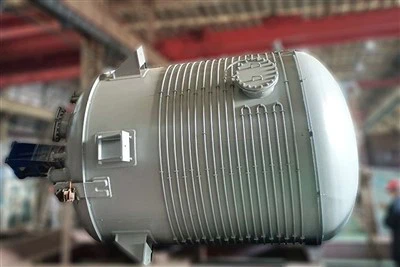
The addition sequence of reactants plays a crucial role in polymerization reactions within a reactor. As a leading supplier of Polymerization Reactor, we have witnessed firsthand the significant impact that the order of adding reactants can have on the outcome of polymerization processes. In this blog post, we will delve into the science behind how the addition sequence affects polymerization and explore the implications for industrial applications.
Understanding Polymerization Basics
Polymerization is a chemical reaction in which monomers, small molecules, are combined to form a polymer, a large molecule consisting of repeating structural units. There are two main types of polymerization reactions: addition polymerization and condensation polymerization. In addition polymerization, monomers add together without the loss of any atoms, while in condensation polymerization, monomers react with each other to form polymers and release small molecules such as water or methanol.
The success of a polymerization reaction depends on several factors, including the nature of the monomers, the reaction conditions (such as temperature, pressure, and catalyst), and the addition sequence of the reactants. The addition sequence can influence the reaction kinetics, the molecular weight distribution of the polymer, and the physical and chemical properties of the final product.
Impact of Addition Sequence on Reaction Kinetics
The order in which reactants are added to the reactor can significantly affect the reaction kinetics. For example, in a free radical polymerization reaction, the initiator is typically added first to generate free radicals, which then initiate the polymerization of the monomers. If the monomers are added before the initiator, the reaction may not start or may proceed at a very slow rate because there are no free radicals to initiate the polymerization.
On the other hand, if the initiator is added too late, the monomers may start to react with each other through other mechanisms, such as thermal polymerization or chain transfer reactions, leading to the formation of low molecular weight polymers or side products. Therefore, the addition sequence of the initiator and the monomers is critical to control the reaction rate and the molecular weight of the polymer.
In some cases, the addition of a chain transfer agent can also be used to control the reaction kinetics. A chain transfer agent is a compound that can react with the growing polymer chain and transfer the radical to another molecule, thus terminating the growth of the polymer chain. By adding the chain transfer agent at the appropriate time, the molecular weight of the polymer can be controlled, and the formation of high molecular weight polymers can be avoided.
Influence on Molecular Weight Distribution
The addition sequence of reactants can also have a significant impact on the molecular weight distribution of the polymer. In a batch polymerization process, if all the monomers are added at once, the polymerization reaction may proceed rapidly, leading to the formation of polymers with a broad molecular weight distribution. This is because the monomers react with each other at different rates, and some polymers may grow faster than others.
To obtain polymers with a narrow molecular weight distribution, a controlled addition of the monomers can be used. For example, in a semi - batch polymerization process, the monomers are added gradually to the reactor over a period of time. This allows for better control of the reaction rate and the molecular weight of the polymer. As the monomers are added slowly, the concentration of the monomers in the reactor remains relatively constant, and the polymerization reaction proceeds more uniformly, resulting in polymers with a narrower molecular weight distribution.
Effects on Physical and Chemical Properties
The physical and chemical properties of the polymer, such as its melting point, glass transition temperature, solubility, and mechanical properties, are also affected by the addition sequence of the reactants. For example, in a copolymerization reaction, where two or more different monomers are used to form a copolymer, the addition sequence can determine the distribution of the monomers along the polymer chain.
If the monomers are added in a random order, a random copolymer is formed, where the monomers are randomly distributed along the polymer chain. On the other hand, if the monomers are added in a block - like sequence, a block copolymer is formed, where the polymer chain consists of blocks of different monomers. Block copolymers often have unique physical and chemical properties compared to random copolymers, such as the ability to form self - assembled structures in solution or in the solid state.
In addition, the addition sequence can also affect the degree of cross - linking in the polymer. Cross - linking is the formation of covalent bonds between polymer chains, which can improve the mechanical strength, chemical resistance, and heat resistance of the polymer. By controlling the addition sequence of the cross - linking agent and the monomers, the degree of cross - linking can be controlled, and polymers with different cross - linking densities can be obtained.


Industrial Applications and Our Role as a Reactor Supplier
In industrial polymerization processes, the addition sequence of reactants is carefully optimized to achieve the desired product quality and performance. Our Polymerization Reactor is designed to provide precise control over the addition of reactants, allowing for the implementation of various addition strategies.
Our reactors are equipped with advanced dosing systems that can accurately control the flow rate and the timing of the addition of reactants. This enables our customers to perform batch, semi - batch, and continuous polymerization processes with high reproducibility and efficiency. Whether it is a simple homopolymerization reaction or a complex copolymerization reaction, our reactors can be customized to meet the specific requirements of each application.
In addition to the Polymerization Reactor, we also offer other types of reactors, such as the Crystallization Stirred Reactor and the Magnetically Driven Stirred Reactor. These reactors can be used in combination with the polymerization reactor to perform multi - step processes, such as crystallization after polymerization or to provide a more efficient mixing and reaction environment.
Contact Us for Procurement and Consultation
If you are involved in the polymerization industry and are looking for high - quality reactors to optimize your processes, we invite you to contact us. Our team of experts is ready to provide you with detailed information about our reactors, including their features, specifications, and performance. We can also offer customized solutions based on your specific needs and requirements. Whether you are a small - scale research laboratory or a large - scale industrial manufacturer, we have the right reactor for you.
References
- Odian, G. Principles of Polymerization. John Wiley & Sons, 2004.
- Seymour, R. B., & Carraher, C. E. Polymer Chemistry. Marcel Dekker, 1992.
- Allen, G., & Bevington, J. C. Comprehensive Polymer Science. Pergamon Press, 1989.